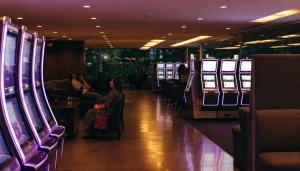
Gaming-room availability can differ from a venue’s general opening hours, so current, venue-specific information matters.
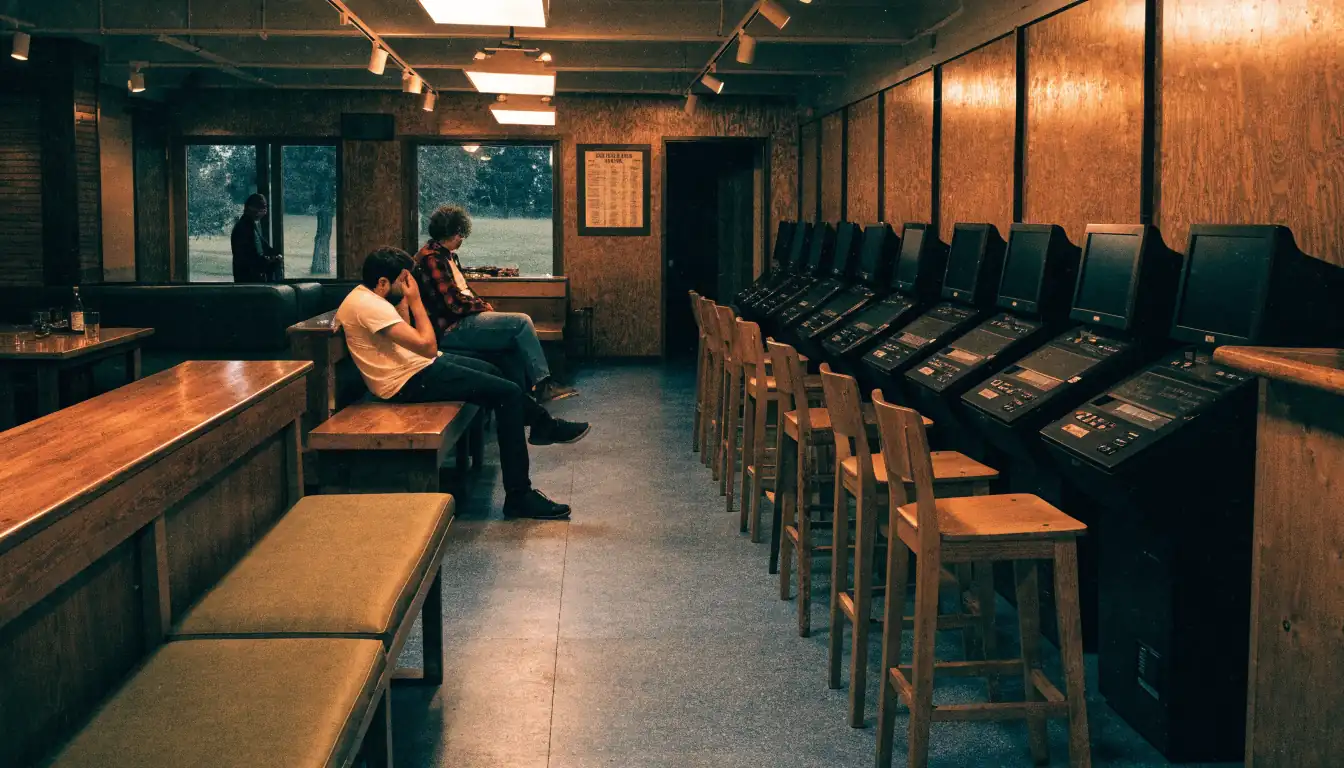
A venue’s opening status and the availability of its gaming room are separate checks. A hotel, club or other venue may be open for food, drinks or accommodation while its pokies are unavailable. A listing that says “open” can therefore answer only part of the practical question.
I have seen this distinction cause wasted trips: the door is open, but the part of the venue someone came for is not operating. Opening information is often presented as a single set of business hours because that is simple to publish. It does not necessarily describe every service inside the building.
Before travelling, check the venue’s own current information rather than relying on a general map listing alone. Look for a notice specifically about the gaming room or pokies, and note whether the information applies to the day and time in question. If the wording is unclear, contact the venue and ask whether the gaming area is open at that time. A direct confirmation is more useful than assuming that the venue’s main opening hours cover every facility.
Map and directory listings can help establish whether a venue appears to be trading, but they may not be updated at the same time as the venue’s own notices. They can also use “open” to describe the whole business, without saying which areas are accessible. Treat that label as a starting point, not as confirmation that pokies are available.
The same caution applies to search results that show a time beside a venue name. The time may refer to the venue’s general hours, a different service, or information that has not kept pace with a change. A page that looks current is not necessarily a live status update.
 Best Pokies in Adelaide: Hours, Access and Online SearchesLearn what venue hours can reveal about gaming-area access, how to interpret Adelaide venue reporting, and where online pokies searches meet Australia's…
 Online pokies in Australia: legality, payments and bonusesLearn how the Interactive Gambling Act treats offshore operators and what withdrawal checks, bonus turnover and payment methods do—and do not—tell you.
When a venue has several facilities, the wording matters. “Open” is broad; “gaming room open” is more specific. If no separate status is published, the distinction remains unresolved until the venue confirms it. Small detail. Big difference.
Questions about early-morning or late-night access need a venue-specific answer. A general claim that pokies in Tasmania are open at a particular hour does not establish that every gaming room is operating then. Nor does a venue’s listed opening time prove that its machines are available from the moment the doors open.
For a planned visit near the start or end of a day, check the exact venue and date. If the published information gives only general business hours, ask whether those hours also apply to the gaming room. This is especially useful when the trip depends on that facility being available: uncertainty about one service should not be mistaken for a confirmed opening.
Public holidays and special events can also make ordinary listings less useful. A venue may publish a temporary notice separately from its standard hours, or change its arrangements without the update appearing across every directory. Check the latest venue-controlled notice, then confirm directly if the timing is important.
Venue information is not only about trading hours. Changes to signage or responsible-gambling arrangements may also affect what is displayed on site. A report by regionriverina.com.au described a one-month grace period for venues to remove signage and introduce responsible gambling officers. That is a transition detail, not a timetable for a gaming room’s daily opening.
The distinction is worth keeping clear. A notice about staffing or signage does not, by itself, tell anyone whether a gaming area is open at a particular moment. For an immediate visit, the relevant information is the venue’s current status and a direct confirmation of gaming-room availability.
I would not treat an old photograph, an archived notice or a customer comment as a reliable update. Each may describe a real situation, but not necessarily the one in place now. A venue’s own current communication is the better reference; a phone call settles ambiguity when the published wording is broad.
The check can be brief: identify the venue, confirm its general opening status, then establish whether the gaming room is available during the intended visit. If the venue publishes separate notices, use the one that specifically addresses gaming. If it does not, contact the venue rather than filling the gap with an assumption.
This matters whether the planned visit is early, late or at an ordinary time. “The venue is open” and “the pokies are available” are not interchangeable statements. One confirms access to the business; the other answers the question that determines whether the trip serves its purpose.
Choosing pokies in Tasmania for 2026 means finding an option that suits your preferences and checking the details that matter to you. This list offers a concise starting point, with each verdict based only on the available information.
Uptown Pokies
Uptown Pokies has operated since 2017 under a Curacao license. The minimum deposit is A$20.
JustCasino
JustCasino is licensed by the Curacao Gaming Control Board. This provides a specific licensing detail to consider.
WinSpirit Casino
WinSpirit Casino lists a Curacao eGaming license, OGL/2024/923/0383, held by Antillephone N.V. Its minimum deposit is A$30.
MrPacho
MrPacho lists crypto payouts in 30–120 minutes and fiat payouts in 24–72 hours. The minimum deposit is A$30.
Kingmaker
Kingmaker lists crypto payouts at around 90 minutes and fiat payouts in 1–5 days. Its minimum deposit is A$30.
DragonSlots Casino
DragonSlots Casino lists a Curacao Gaming Authority license associated with Jumpman Gaming Ltd. This gives readers a licensing detail to consider.
Thor Casino
Thor Casino lists a Curacao license from Antillephone N.V., associated with Versus Odds B.V. The minimum deposit is EUR 20.
Wild Tokyo
Wild Tokyo lists crypto payouts in 30–60 minutes and fiat payouts in 1–5 days. The minimum deposit is A$10, and it operates under a Curacao license.
Neospin
Neospin lists a Curacao Gaming Control Board license, OGL/2023/176/0095, held by Hollycorn N.V. This licensing information is its notable detail in the available information.
LuckyVibe
LuckyVibe lists a Curacao Gaming Control Board license, OGL/2023/176/0095, held by Hollycorn N.V. The available information highlights its licensing details.
“Best-paying” sounds like a simple comparison: find the pokie with the largest return figure and expect it to pay more. In practice, that label leaves out a key detail. A published return may describe one available configuration of a game, not necessarily the setting used wherever that game is installed.
A specialist review has reported that some game providers let casinos choose between multiple return-to-player (RTP) settings for the same pokie. If that applies, two venues can offer the same game with different configured returns. The title and artwork may look identical; the underlying setting need not be. That does not establish that every provider offers a choice, or that any particular Tasmanian venue has selected a specific setting.
RTP is a theoretical measure of the share of stakes a game is designed to return over extended play. It is not a promise about what a machine will pay during a visit, nor a forecast for an individual player. A figure without its context can therefore give a false impression of certainty.
The wording matters. A return shown in game material may refer to a version or configuration, while a venue’s machine may be set differently if the provider permits venue selection. The figure alone does not identify which configuration is in use. Nor does a game’s name prove that every installation has the same setting.
I have seen how easily a clean number becomes a sales shorthand. “High return” sounds like a practical edge; what remains unsaid is whether the published figure matches the machine being discussed. Without that link, the claim is incomplete.
A useful comparison starts with the exact game and the exact return claim, then asks what the figure applies to. Is it attached to the game generally, a particular version, or a specific venue’s configuration? If the information does not make that clear, it cannot support a confident venue-to-venue comparison.
The distinction matters for Tasmania casino pokies just as it would anywhere else: a game’s advertised or published return should not automatically be treated as the return configured at every location. A list of games with attractive figures may help identify claims worth examining, but it cannot, by itself, establish which machine has the highest setting in a Tasmanian gaming room.
The same caution applies to claims about the best-paying pokies in Tasmania. “Best” needs a basis. A published RTP figure is one possible basis only when its scope is clear and comparable figures refer to equivalent configurations. If the source does not connect the figure to the venue or machine setting, the ranking may compare unlike things.
No clear setting, no solid comparison.
When a figure appears beside a pokie, treat it as information about a stated configuration, not as a prediction of a result. Look for wording that identifies the version or setting and whether the claim is tied to a particular venue. If those details are absent, the safer reading is limited: the game has a published return figure, but that figure may not tell the whole story about a specific installation.
Return-to-player (RTP) is a theoretical measure of the share of stakes a game is designed to return over extended play, not a forecast for an individual player or a promise of what a machine will pay during a visit.
That is especially important when the same title appears in more than one place. Similar cabinets and identical game names can create an impression that the machines are interchangeable. The reported provider option means that appearance alone cannot settle the question. A return claim needs configuration detail, not just a familiar title.
A higher stated RTP also does not make a machine a reliable way to win, or tell anyone what will happen during a session. It describes a theoretical return under the stated setting over extended play. It cannot be converted into a personal outcome or used to promise a result.
For anyone weighing up the best pokies in Tasmania, the useful conclusion is narrow but important: published returns can help only when their scope is clear. The phrase “best-paying” is not proof that a particular venue uses the highest available setting. The setting is the missing link.
“Near the airport” sounds precise until the destination is checked. It may mean a venue close to an airport, one convenient after landing, or a place someone expects to find inside the terminal. Those are different questions. A map result can help with the first, but it does not establish that pokies are available at the airport itself.
I have seen travel plans built around a pin on a map, only for the pin to represent a broad search area rather than a confirmed venue entrance. The useful check is the venue’s own address, matched against a current map. Then assess the actual route from the terminal: the distance shown, transport options, and whether the destination is reachable without relying on an assumed airport connection. A nearby point is not necessarily an easy stop.
The same distinction applies to searches for pokies near a Tasmanian CBD. “CBD” can refer to a central area, not a particular building or street. A result may be a short walk from one edge of the centre and much less convenient from another. Before setting out, confirm the street address and compare it with the intended starting point. If the plan depends on public transport, check the route separately rather than treating a map’s straight-line distance as a journey estimate.
“Near me” is even more dependent on context. A phone may use its current location, while a search made before travel may show results around a different place. Location permissions and the map’s selected area can change what appears. I treat the result as a starting point, not a confirmed list of places within a useful distance.
Tasmania-wide wording also needs narrowing. A search for pokies in Tasmania can return results spread across the state, which says little about whether any one is practical from an airport or city centre. A northern Tasmania search is more specific, but still does not identify a starting point or a route. The destination should be checked against the actual town or travel stop, not just the regional label.
Practical Venue Check
Identify the starting point
Establish your actual starting location, such as a specific airport terminal or CBD street.
Confirm the address
Match the venue's own address against a current map to avoid relying on broad search pins.
Verify the route
Check the actual travel distance and transport options rather than treating straight-line distance as a journey estimate.
Validate destination
Confirm the venue is in the intended state and city to avoid location mix-ups.
Wording that combines Tasmania and Victoria can reflect a location mix-up rather than a venue category. Tasmania and Victoria are separate places; a result associated with one should not be assumed to be accessible from the other. Confirm which state and destination the plan concerns before relying on a listing.
There is also a difference between finding a venue and being eligible to gamble there. In Australia, the legal gambling age, including for pokies, is 18. That rule does not change because a venue is close to an airport, a CBD or a hotel. A map establishes geography, not eligibility.
The practical sequence is plain: identify the actual starting point, confirm the venue address, check the route, and make sure the result refers to the intended destination. Airport proximity is not airport access. A pin is not a plan.
Information about Tasmanian pokies venues can help describe their scale and oversight, but it cannot settle which one is “best”. A machine count is a measure of capacity, not a rating. A larger room may offer more choice; that alone says nothing about the quality of the experience, the way a venue is managed or whether it suits a particular visitor.
I learned to separate a number that describes a venue from a number that evaluates it. Counts, where published, are useful for understanding the size of a gaming operation. They are not evidence that more machines produce better outcomes, or that a smaller venue is less well run. The same caution applies to promotional language such as “leading” or “premier”: those words need a clear measure behind them before they can be compared.
Venue information can also describe governance. Policies and reporting requirements indicate what a business is expected to do when concerns arise; they do not prove how consistently that process works in practice. Nor does the presence of a policy tell us whether a particular incident occurred. Those are different kinds of evidence.
A report published by regionriverina.com.au says venues will be required to maintain a gambling incident register, including details of occasions when a patron’s behaviour suggests they may be at risk of, or experiencing, gambling harm. Such a register is an oversight record, not a scorecard for ranking venues. Its purpose is to capture and document relevant events, rather than certify that a venue is safer, more entertaining or more suitable than another.
That distinction matters when comparing venues across Tasmania, including places described as being in a CBD. A location label tells where a venue is; it does not reveal the quality of its oversight. Likewise, a public figure about a venue may describe one aspect of its operation while leaving out the context needed to judge it fairly.
The useful approach is to read each detail for what it actually establishes. A count may indicate scale. A policy may show a stated procedure. A required register may show that incident recording forms part of oversight. None of these, alone, is proof of superior management or a reason to call a venue the best pokies venue in Tasmania.
From behind the counter, I saw how easily operational details became advertising claims once they were stripped of context. The underlying information can still be useful, but only when its limits stay attached. More machines is not a verdict. A record is not a ranking.
A search for pokies on the Spirit of Tasmania points to a question about gambling during a ferry journey. That is different from looking for an online casino: one concerns a named transport service, the other concerns remote play. The wording alone does not establish that pokies are available onboard. I have learned to treat a search phrase as a request for information, not as proof of what a venue or service provides.
The same distinction matters when Tasmania is attached to a casino name. A search mentioning Crown and Tasmania does not establish that a Crown casino operates there, or that a particular venue has pokies. Names can be combined in searches without accurately describing a location or its facilities. In venue research, that gap between what a phrase suggests and what an operator actually offers is where assumptions creep in.
Online offers raise a separate issue. A promotion described as “no deposit” may sound like a way to try pokies without paying in, but the label does not change the legal status of the service. Nor does adding Tasmania to an offer make it a local product. The relevant distinction is whether a company is legally able to offer real-money online pokies to people in Australia.
The Interactive Gambling Act 2001 prevents companies from providing real-money online pokies to Australians unless they hold a domestic licence. Australia has not issued such licences, and there is no Australian-licensed online casino. So an online offer should not be read as an authorised Tasmanian casino service merely because it mentions the state, uses Australian currency or advertises a bonus.
That is the point where wording matters. “No deposit” describes a promotion; it does not prove that the operator has approval to provide real-money casino games in Australia. Likewise, “real money” describes the stakes, not the service’s legal standing. Marketing language can make an offshore offer appear local. It cannot create a domestic licence.
I have seen how a neat label can carry more weight than its terms justify. The offer gets attention; the operating status is often less prominent. Keeping those questions separate avoids confusing a ferry-related enquiry, a physical venue search and an online promotion as though they were all the same kind of gambling option.
For Spirit of Tasmania, the name identifies the travel context, not a verified gaming facility. For a casino name paired with Tasmania, the words do not establish a local venue. And for online pokies, a bonus label does not alter the law. Different questions. Different checks.
“24-hour pokies” sounds like a simple promise: the venue is open, so the machines are available. In practice, those are two separate operating conditions. A venue may advertise round-the-clock access to some of its facilities without saying that its gaming machines run continuously. The wording matters. Venue hours describe access to the premises; machine hours describe when play is actually available.
I have seen the distinction get lost in broad directory listings. A venue’s name beside “open now” can look definitive, but that label may refer to the venue, not its gaming room or machines. The useful detail is a current, venue-specific statement about gaming-machine availability. If the listing does not make that clear, the label alone cannot settle the question.
Attention A venue's general opening hours do not guarantee that gaming machines are operating or that a required responsible gambling officer is on duty.
That is why “24-hour” should be read as a claim to verify, not as a guarantee about every part of a venue. Hours may be presented in a way that suits the whole business, while the gaming area has a separate schedule or operating condition. A general opening-hours page can therefore answer whether the doors are open without answering whether pokies are operating.
There is also a staffing requirement to keep in view. A report by regionriverina.com.au says that, from 1 July, a Tasmanian venue operating more than 20 gaming machines must have a dedicated responsible gambling officer (RGO) on duty for as long as those machines are running. That requirement is tied to machine operation, not simply to the venue’s advertised opening hours. The distinction is practical: a venue’s schedule does not by itself tell whether the required officer is present or whether machines are operating at that moment.
I would treat a current venue listing as a starting point, then look for wording that specifically covers the gaming room or pokies. If the details remain unclear, direct confirmation from the venue is more useful than assuming its general opening time applies to the machines. A past listing or a broad “open” label can become stale, too.
The same care applies to phrases such as “all night” or “open around the clock”. They are not interchangeable with a clear statement that gaming machines are available throughout those hours. For a late visit, the distinction can determine whether the trip serves its purpose. Read the claim narrowly. Check the machine hours.
A run of losses can make the next spin feel as though it ought to pay. A recent win can create the opposite impression: that the machine has already had its turn. Neither reading follows from the way a pokie spin works. Each spin is generated as a separate random event, rather than as the next step in a sequence that remembers what happened before.
That independence is easy to lose sight of during play. People naturally look for patterns: a symbol that nearly lined up, a long quiet stretch, or several wins close together. Those events can feel like clues. They are observations about past outcomes, not evidence that the next result is owed or ruled out.
I have seen the same reasoning attach itself to a machine described as one of the best pokies in Tasmania. A label, a familiar theme or a promising stretch can make a game feel readable. But none makes an individual result predictable. Randomness does not promise a win after a losing run, and a previous win does not establish that another is less likely on the next spin.
This is separate from a game’s configured return. A return figure describes a broader mathematical setting; it does not forecast the result of the next play. A single spin can land far from any long-run expectation without contradicting it. The scale of the claim matters. Long run, not next spin.
Each pokie spin is generated as a separate random event. This independence means that a run of losses does not make a machine "due" for a win, and a recent win does not make another less likely on the next spin.
Searches about maximum bets or the largest cash payout concern different questions again. They do not, by themselves, explain what a particular spin will produce. The amount staked and the result are not a reliable way to read what the random process will do next. A higher stake should not be mistaken for a way to make the machine “ready” to pay.
The same point applies whether someone is considering pokies in Tasmania or a particular venue elsewhere in the state. Location does not turn a sequence of random outcomes into a pattern that can be decoded. Nor does a machine become more predictable because its recent history is visible or memorable.
The practical distinction is modest but important: records of past spins describe what has already happened; they are not a forecast. I used to give too much weight to streaks because they make a tidy story. The machine’s next result does not owe that story an ending.
I have seen the distinction between a player’s position and an operator’s obligations get blurred in online gambling copy. It matters. Under Australia’s Interactive Gambling Act 2001, the prohibition is directed at companies providing real-money online casino games to people in Australia, not at individual players. Australians may legally play on offshore sites that accept them. That does not make those services Australian-licensed or bring them within Australian consumer protections.
The practical gap appears when a withdrawal becomes a dispute. If an offshore casino refuses to pay winnings, an Australian player has no legal recourse in Australia to compel payment. A site may display rules, support contacts and a formal complaints process, but those features do not create an Australian remedy. The promise is not the protection.
That is the point easily missed when browsing from Tasmania. A website can be reachable and present itself as serving Australian customers without being an Australian casino. Its acceptance of a deposit, account registration or play does not change the legal position. Nor does a search for online pokies close to Tasmania turn a remote offshore service into a local venue. Physical proximity and legal jurisdiction are different things.
The same distinction applies when a site markets itself with language about high limits or “best-paying” play. Those are promotional claims, not proof that an Australian authority supervises the operator or can resolve a payment dispute. I learned to separate what a site says it will do from what a player can enforce if it does not. Those are not the same test.
Australian law also treats the operator and the player differently. A company offering prohibited interactive gambling services to Australians may face enforcement; that does not mean an individual player is committing an offence merely by playing on an offshore site that accepts them. But the absence of player liability should not be mistaken for a safety net. In particular, it does not supply a local route to recover winnings when an offshore operator withholds them.
There is a blunt limit here. An account may function, and a game may load, while the protections associated with an Australian service remain absent. A polished interface cannot fill that gap. Nor can the fact that the site accepts people in Australia.
For a Tasmanian reader, the useful distinction is not between a nearby and distant website. It is between a land-based venue and an offshore online operator, and between being legally permitted to play and having a remedy when something goes wrong. One does not guarantee the other.
Legal Protection Risk
Offshore online casinos are not Australian-licensed; if they refuse to pay winnings, Australian players have no legal recourse in Australia to compel payment.
A club’s address in central Hobart or another Tasmanian CBD says where it is, not whether its pokies are better. “Best” can sound like a machine comparison, but a central location, a club’s name or the presence of gaming machines does not establish that one venue offers better play than another. I would keep those questions separate: location is one matter; how a venue identifies and records gambling-related concerns is another.
A report by regionriverina.com.au says venues will be required to keep a gambling incident register. The register is intended to capture details of occurrences, including situations where a patron’s behaviour indicates they may be at risk of gambling harm or already affected by it. That is an oversight record, not a public scorecard. It does not, by itself, show which club has the most machines, the best pokies or the most attentive day-to-day response.
The distinction matters because a record of an incident is not the same as evidence that a venue has prevented harm. Nor does a CBD club’s visibility tell anyone what its staff record, how concerns are handled, or what support is available. Those are operational questions, and they should not be answered by turning a venue’s location or machine count into a quality claim.
For someone considering self-exclusion, a club’s register should not be mistaken for an exclusion service. BetStop applies to Australian-licensed operators and does not bind offshore sites; it is not a basis for assuming that every venue’s own procedures are identical. The practical details of any venue-level exclusion arrangement need to be checked with that venue rather than inferred from its CBD address.
I have seen how easily a simple label such as “top club” can collapse several different things into one: where the venue sits, what machines it has, and how it deals with gambling harm. Those are not interchangeable measures. Incident records matter because they can document warning signs, but they do not rank pokies or prove that one club is a better choice. A record is a record.
“Cashless” can describe two different things. A payment service moves money between accounts; a cashless pokie would handle play without the familiar cash-in process. One does not establish that the other is available. A payment option mentioned in a general description is not evidence that a Tasmanian venue has cashless machines, or that its machines accept that method.
PayID is an identifier service within Australia’s New Payments Platform (NPP). It lets a transfer be addressed using an email address, mobile number or ABN rather than bank-account details. Major banks participate in the platform, and its transfers are protected with end-to-end encryption. Those are features of the payment infrastructure, not a certification of a gambling product.
I have seen payment language do too much work in promotional copy. A familiar transfer method can sound like a quality mark, but it says nothing by itself about a venue’s machines, their operation or the status of an online service. PayID should not be read as proof of licensing, fairness or published return settings.
The phrase “cashless pokies in Tasmania” may point to interest in payment technology, but it does not confirm that any particular venue offers it. Newcastle wording is a separate location reference; it is not evidence of a Tasmanian venue or a machine feature. The distinction is practical: confirm the specific venue’s own information rather than treating a payment label as a description of its gaming floor.
BetStop is also not a general safeguard across every gambling service. It applies to Australian-licensed operators and does not bind offshore sites. That boundary matters when payment terminology appears beside online gambling claims: a transfer method cannot change the legal status of the service receiving it.
Payment rail, not machine feature.
Yes, Australians can legally play on offshore sites that accept them, but no Australian-licensed online casino exists. The law prohibits companies from offering real-money online pokies to Australians without a domestic licence, and no such licences have been issued; players have no legal recourse in Australia if an offshore casino withholds winnings.
You must be at least 18 years old to gamble online in Australia.
It is the amount you must bet before bonus winnings can be withdrawn, usually calculated as a multiplier. For example, a $500 bonus with a 40x requirement means you must place $20,000 in bets.
E-wallets such as Skrill and Neteller are popular for their speed. Most casinos require identity verification before your first withdrawal, so completing that check can also affect how quickly you receive funds.