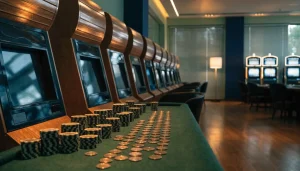
Online tables may use software-generated outcomes or a live video stream of a dealer; the screen alone does not establish a physical table.
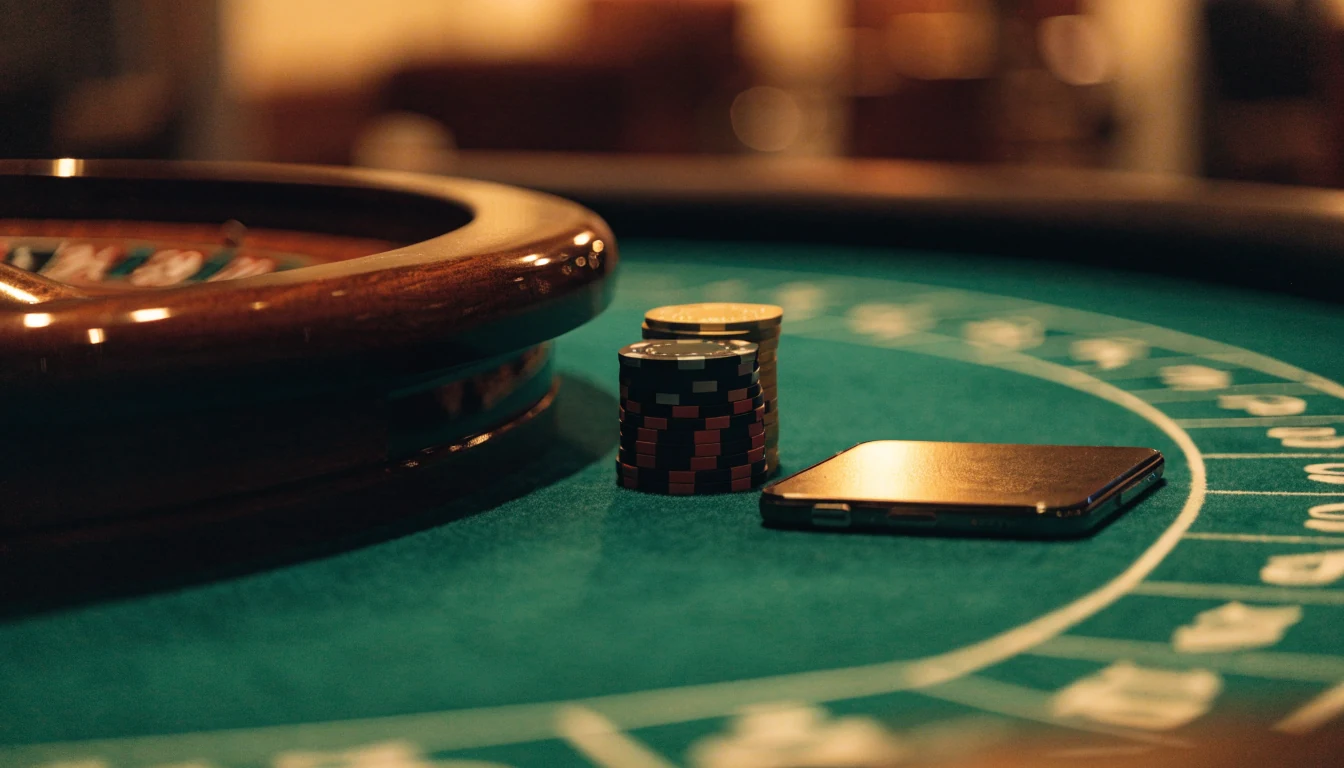
Online table games are presented in two broad formats: outcomes can be generated by software, or play can be shown through a live video stream of a dealer using casino equipment. The screen may make both formats look like versions of the same table experience. Behind it, however, the source of the result is different. That distinction matters when describing how the games work; it does not change the Australian legal position on offering them for real money.
In a software-based game, a Random Number Generator (RNG) determines the outcome. In a card game, it selects the cards dealt; in online roulette, it determines where the ball lands. The table, cards or wheel are represented on screen, but the result is produced by the game software rather than by a physical dealer acting in a streamed session.
That can make the pace and presentation feel consistent from one round to the next. The interface displays the game state and accepts the actions that the software permits, then reveals the generated result. The visual table is an interface, not evidence that a physical table is involved. In operational terms, the central distinction is simple: the result comes from a random process within the software.
A live dealer format uses a different production setup. A real dealer operates real casino equipment, and a live video feed carries the session to viewers. The camera shows events as they happen, while the online interface connects the streamed table with the game’s digital presentation. The physical action is real; the route by which it reaches a player is digital.
The label “live” describes that streamed production, not a general promise about the service or its legal status. A camera and a dealer do not make a real-money online casino lawful in Australia. Nor does a software-generated game become a different kind of service simply because it is automated. The two formats explain how a table-game result is presented and produced. They are not exceptions to the rules governing the offer itself.
This is a point that is easy to blur in promotional language. “Real table” may refer to equipment visible in a stream, while a digital table may show graphics standing in for cards or a wheel. Those descriptions concern presentation. The legal question concerns the provision of the gambling service to people in Australia. Different mechanics; same regulatory boundary.
Under Section 5 of Australia’s Interactive Gambling Act, operators based within Australia are prohibited from offering real-money interactive casino games to residents. The Act’s restriction covers the provision of the service, rather than just the way a particular game is displayed. A live stream is still online casino gambling when it is offered as a real-money interactive game; an RNG interface is not outside the rule because no dealer appears on screen.
The Australian Communications and Media Authority (ACMA) enforces compliance and blocks unlicensed domestic platforms. This enforcement context is part of any accurate account of online casino table games in Australia. It would be misleading to describe the two formats as ordinary local entertainment choices or to frame one as a lawful alternative to the other. The mechanics can be explained without presenting either format as an invitation to play.
I have seen how the distinction can become blurred in a product description: a polished stream is made to sound like access to a venue, while a software table is described as though the interface itself were the game. Neither phrase changes what is happening. One uses a live dealer and real equipment; the other uses software to determine outcomes. Both descriptions are about format, not permission.
This overview is informational. It explains the difference between RNG-generated and live-dealer presentation, not how to access or fund a real-money gambling service. “Live” is not a legal safeguard. “Digital” is not a loophole. The format changes the machinery behind the screen; it does not remove the Australian restriction on operators offering real-money online casino games to residents.
That is the useful distinction. The software format generates outcomes within a game interface. The live format streams a dealer working with physical casino equipment. For Australian readers, those definitions should be kept separate from any suggestion that either is available as a lawful real-money online casino service. Mechanics are one question. The law is another.
Legal Restriction
Under Section 5 of the Interactive Gambling Act, operators based within Australia are prohibited from offering real-money interactive casino games to residents.
“Bitcoin table games” can sound like a distinct category of play. It is not. Bitcoin is a payment method; a table game is defined by its rules and how its outcomes are produced. Using a cryptocurrency to move funds does not, by itself, change the cards, dice, wheel or rules. Nor does it establish that a particular game is available, well designed or favourable to a player.
That distinction matters because payment language often gets folded into claims about the game. A page may present “BTC casino table games” as if Bitcoin brought a special version of blackjack, roulette or poker with it. The label says nothing about the game’s mechanics. It describes a payment option, where one is offered. It does not tell us what games are available or how they compare.
The same applies to searches for the “best” table games at a Bitcoin casino. Bitcoin does not provide a basis for ranking games, judging their quality or identifying which has the best odds. Those are separate questions, and a payment method cannot answer them. From the operator side, payment and game configuration are different parts of the service. They should not be treated as one feature simply because promotional copy places them together.
There is also a legal boundary in Australia that should not be blurred by payment terminology. Under the Interactive Gambling Act 2001, it is illegal for operators to provide real-money online casino games, including table games, to people physically located in Australia. Calling a service a Bitcoin casino does not change that rule. This is an explanation of the distinction, not an offer or endorsement of online gambling.
The one practical point about cryptocurrency withdrawals is timing: a specialist review reports that processing may take 10–30 minutes, with the remaining delay dependent on blockchain confirmations rather than banking procedures. That is a report from one review, not a general service standard or a promise about any particular transaction. Confirmation timing is part of transferring cryptocurrency; it says nothing about the quality or availability of a table game.
That is where the comparison between Bitcoin and “normal” casino table games stops being useful. One is a payment mechanism; the other is a form of play. A comparison would need to keep those categories separate. Payment does not determine whether a table is live or software-based, and it does not establish the rules, outcome probabilities or payout terms. Those details belong to the game and its operator, not to Bitcoin.
The phrase “casino table games open” can also imply immediate access. A payment method cannot establish whether a service is open to Australian residents, legally available or accessible in practice. In Australia, the prohibition concerns operators providing the real-money casino service to people in the country. A different currency does not create an exception.
So, “best Bitcoin casino table games” is not a meaningful category on its own. The useful distinction is narrower: Bitcoin concerns how a transfer is made, while the game concerns what happens at the table. One does not certify the other. Payment is not play.
Cryptocurrency Withdrawals
A specialist review reports that processing may take 10–30 minutes, with further delay dependent on blockchain confirmations rather than banking procedures.
A request for the table games with the “best odds” sounds like a request for a simple ranking. In practice, that ranking is only meaningful when the comparison specifies the game, the wager and the rules governing it. A game name alone does not tell the whole story: different bets within the same game can have different chances and payouts.
That is why a casino table-games house-edge chart needs more than a column of game titles. It needs a defined basis for comparison, including the probability attached to each outcome and the payout for a winning bet. Without those details, a label such as “best” or “worst” is not a reliable measure. It may refer to a higher chance of winning a particular bet, a larger payout when it wins, or a lower expected loss over repeated play. Those are related, but not interchangeable.
Consider a table where players can bet on their hand, the Banker’s hand, or a tie. These are distinct betting choices, not three names for the same wager. A sound comparison would need to account for how likely each outcome is and what the table pays when that outcome occurs. Merely listing the choices does not establish which has the best odds, nor does it support a ranking against other table games.
This distinction is easy to lose in promotional language. “Better odds” can sound like a property of a whole game, when the actual comparison may concern only one bet under particular rules. A headline can also blur probability and return: a bet that wins more often is not automatically the one with the most favourable overall terms if its payout differs. The number that matters depends on the precise question being asked.
I learned to treat broad odds claims cautiously. A chart is useful only when its assumptions are visible and its entries compare like with like. If the rules behind one figure differ from those behind another, the neat rows create an impression of precision without delivering a fair comparison. A table of numbers is not proof by itself.
For the same reason, naming a game as having the best or worst odds without game-specific probability and payout information would overstate what can be established. A defensible answer needs details for the relevant wager, not general impressions about the game category. It also needs a consistent way to compare outcomes across games; otherwise, “best odds at a casino table” remains an undefined claim.
The practical reading is narrow but important: a choice between betting on a hand, the Banker’s hand, or a tie identifies different outcomes to back. It does not, by itself, reveal the relative chance of those outcomes, their payouts, or the expected return. Until those elements are set out together, a best-to-worst list would be guesswork dressed as analysis.
No ranking follows. Just the distinction.
Blackjack and craps organise a round around different things. In blackjack, the central object is a hand of cards and the comparison is with the dealer’s hand. In craps, the action centres on a pair of dice, while the wager is tied to the outcome of the roll. That difference shapes what players are watching: a hand’s value in one game, a dice result in the other.
The objective is to finish with a hand value closer to 21 than the dealer’s hand.
The action centres on rolling a pair of dice and placing bets on the resulting outcome.
The blackjack objective is to finish with a hand value closer to 21 than the dealer’s. The player is not trying to assemble the strongest hand at the table or beat every other player. The relevant comparison is direct: the player’s hand against the dealer’s. In practical terms, the number 21 acts as the reference point, while the dealer’s hand supplies the opposing result.
That is the basic structure—not a full rulebook. A description of the objective should not be mistaken for an account of every table procedure. The core mechanic is the comparison of hand values against the same target. The dealer is part of the game’s structure, not simply a host overseeing a contest among players. Clear enough.
Craps has a different centre of attention. Players roll a pair of dice and place bets on the outcome. The roll produces the event; the wager identifies which outcome a player is backing. So the basic loop is not a hand-versus-dealer comparison. It is a dice roll and a bet connected to what that roll produces.
That distinction matters when learning how to play table games at a casino. Blackjack is framed around the value of a hand in relation to the dealer and 21. Craps is framed around a pair of dice and the outcome on which a bet is placed. Both are table games, but knowing one format does not automatically explain the other. The mechanics are different before questions of pace, table procedure or strategy even arise.
I have seen promotional copy call a game “easy” when it means only that its headline objective can be summarised quickly. That word can conceal the difference between understanding the aim and knowing the full procedure. For blackjack, the aim is the hand comparison. For craps, it is the connection between a dice result and a wager. A short explanation can orient someone; it cannot stand in for all table rules.
These mechanics also explain why a generic guide to popular casino table games can be misleading. “Table game” names a broad category, not one shared method of play. A card hand measured against a dealer and a dice roll linked to bets require different kinds of attention. The useful first step is identifying what generates the result and what the player’s position is relative to it.
This is an informational description, not an invitation to gamble. Australia’s Interactive Gambling Act 2001 prohibits operators from providing real-money online casino games to people in Australia. The mechanics can be described without presenting access to those services as an option.
“Near me” has a literal meaning when the subject is a physical casino: it points to a venue at a location, with table games conducted there. An online live table is a different format. It is not a nearby room, even when the screen shows a real dealer and casino equipment. The video is streamed to players; the dealer and equipment remain elsewhere.
That distinction matters because the two experiences can look similar on a screen while operating in different places. At a physical venue, the table, dealer and equipment are part of the venue. In a live-streamed format, the camera carries the table view to a remote device. The image may be live, but it does not place the player in the casino or make the streamed table a local venue.
I have seen location language blur that line. A phrase such as “live casino” can describe the streamed presentation, not a building in the area. “Table games nearby” points instead to a physical location. Those are different meanings, and treating them as interchangeable can leave an impression that a remote service is simply another nearby casino.
For Australia, the distinction also has a legal boundary. The Interactive Gambling Act 2001 makes it illegal for operators to provide real-money online casino games, including table games, to people physically located in Australia. That restriction concerns the online service; a live video feed does not change its character. The Australian Communications and Media Authority enforces the rules and blocks unlicensed domestic platforms.
So a search for a closest casino with table games is about finding a physical venue, not identifying an online stream. Conversely, a live dealer broadcast is a remote format, not evidence of a local casino or a lawful online option for someone in Australia. A screen can make the table appear close. Location and legality do not move with the camera.
The wording used by a service can obscure that difference. “Real dealer” describes who handles the game and what appears on camera. “Live” describes the streamed video. Neither term establishes that the table is physically nearby, nor does either one override Australia’s restrictions on online casino services. The label is not the jurisdiction.
This is why I keep the two categories separate: a venue is a place; a streamed table is a transmission. The first is assessed by where it is located. The second is assessed as an online gambling service, even if the broadcast shows a real dealer using real casino equipment. Similar appearance, different setting—and, in Australia, a different legal issue.
Locality is not a visual effect. A dealer shown on a screen is not a dealer across town, and a streamed table should not be read as a directory entry for nearby venues. The distinction is basic, but easy to lose when promotional language uses “casino” for both the room and the broadcast. A camera changes the view, not the place.
Choosing a real-money table-games casino means looking beyond the games themselves and checking the operator details available to you. This list offers a concise reference for considering those details before making a choice.
Uptown Pokies
Uptown Pokies has operated since 2017 under a Curacao license. Its minimum deposit is A$20.
JustCasino
JustCasino is licensed by the Curacao Gaming Control Board. This is the licensing detail provided for the operator.
WinSpirit Casino
WinSpirit Casino lists a Curacao eGaming license, OGL/2024/923/0383, issued through Antillephone N.V. Its minimum deposit is A$30.
MrPacho
MrPacho lists crypto payouts of 30–120 minutes and fiat payouts of 24–72 hours. The minimum deposit is A$30.
Kingmaker
Kingmaker lists crypto payouts at around 90 minutes and fiat payouts at 1–5 days. Its minimum deposit is A$30.
DragonSlots Casino
DragonSlots Casino lists a Curacao Gaming Authority license, with Jumpman Gaming Ltd named in connection with it.
Thor Casino
Thor Casino lists a Curacao license through Antillephone N.V., with Versus Odds B.V. also named. Its minimum deposit is EUR 20.
Wild Tokyo
Wild Tokyo lists a Curacao license and crypto payouts of 30–60 minutes; fiat payouts are listed at 1–5 days. The minimum deposit is A$10.
Neospin
Neospin lists a Curacao Gaming Control Board license, OGL/2023/176/0095, associated with Hollycorn N.V.
LuckyVibe
LuckyVibe lists a Curacao Gaming Control Board license, OGL/2023/176/0095, associated with Hollycorn N.V.
A casino table game is defined by the way play is organised, not by whether it appears on a physical table or a screen. In the conventional format, a dealer and casino equipment form the setting for play. Online, the same broad category can be represented by software or by a live video stream. The word “table” describes the game format; it does not, by itself, tell how an outcome is produced.
That distinction matters because two games with a similar on-screen layout may work differently behind it. In a software-generated version, a Random Number Generator determines outcomes. For example, it can select the cards dealt or determine where a roulette ball lands in the digital game. The screen presents the result, but no physical cards or wheel are required for that outcome.
A live dealer game uses a real dealer and real casino equipment, with video streamed to players. Here the image comes from a real table rather than a wholly software-rendered scene. The stream is part of the format’s definition. A polished interface alone does not make a game live; the relevant distinction is whether the dealer and equipment are physically present in the streamed setting.
From years around casino operations, I learned to separate the visible presentation from the mechanism underneath. A felt-style background, animated cards or a dealer’s image can make interfaces look alike. Those visual cues are not enough to identify how play is run. The useful question is whether software generates the outcome or whether a live dealer and equipment are being shown.
The term “casino table games” therefore covers a category with more than one delivery method. It is not a promise that a venue has tables open, nor a statement that a particular online service is lawful or accessible. In Australia, the Interactive Gambling Act 2001 prohibits operators from providing real-money online casino games to people physically located in the country. That legal boundary is separate from the vocabulary used to describe game formats.
The phrase “table-game software” can also be used loosely. In a game, it may refer to software that generates outcomes and displays play. That is different from the live stream of a dealer at real equipment. The two formats may share a table-game label while relying on distinct presentation and outcome mechanisms. Format first. Interface second.
A table-game category is easier to understand by looking at what players do than by treating it as a single style of play. Some formats centre on a hand of cards; others use dice and wagers on an outcome. Poker belongs to the first broad group, while a dice-based table game follows a different structure. Those distinctions are more useful than a catalogue that implies every table game works alike.
In the dice format described here, players roll a pair of dice and bet on the outcome. The dice provide the central event; the wager is tied to what happens when they are rolled. That is enough to distinguish this style from card play, where the focus is on forming or assessing a hand. It does not make the two formats interchangeable. Different action, different structure.
Poker is organised around players trying to build the best possible hand. The central contest is among the hands, rather than a wager on the result of a dice roll. That broad description does not identify a particular poker variant or set out its rules. The shared label tells only part of the story; the details depend on the game being played.
I have found that broad labels can conceal important differences. “Table games” sounds like one tidy product group, but it is really an umbrella for different forms of play. A card table and a dice table may sit in the same category while asking players to follow different events and judge different outcomes. The label is useful for sorting, not a substitute for the rules of an individual game.
That distinction also matters when describing live table games. “Live” identifies a delivery format, not a game in itself: the underlying play may still involve cards, dice or another table setup. A list of casino table games can therefore mix two kinds of information—what the game involves and how it is presented.
In Australia, the format description does not change the legal position. The Interactive Gambling Act 2001 prohibits operators from providing real-money online casino games, including table games, to people physically located in Australia. This is an informational explanation of game categories, not an offer to play.
The practical shorthand is simple: identify the action first, then the format. Dice and poker illustrate distinct kinds of table play; neither example defines the whole category. A label is not a rulebook.
Card table games can use cards yet ask players to relate to the outcome in different ways. The useful distinction is not simply which cards appear; it is what a wager is tied to. In blackjack, the player’s hand is measured against the dealer’s. In baccarat-style betting, a wager can instead be placed on a hand, the Banker’s hand, or a tie.
In blackjack, the central contest is direct: the player aims for a hand value closer to 21 than the dealer’s. The dealer is the opposing reference point, not just the person handling the cards. That structure shapes how the game is understood. The question is how the player’s hand compares with the dealer’s hand.
Baccarat-style betting presents a different frame. The available choices include backing a hand, backing the Banker’s hand, or betting that the result will be a tie. The wager is therefore linked to which named outcome is selected, rather than being described as a player-versus-dealer contest in the same terms as blackjack. The distinction is small in wording and important in practice: it changes what a bet represents.
From the industry side, that difference is often obscured by broad labels such as “classic” or “simple.” Those words describe a sales pitch, not the table’s competitive structure. A clearer comparison starts with the relationship between the wager and the outcome. Blackjack centres on one hand being closer to 21 than the dealer’s; baccarat-style betting offers choices among the hand, the Banker’s hand, and a tie. No odds ranking follows from that description.
This is why “card table games” is a broad category rather than a single format. A shared deck does not make two games function alike. The names of the possible bets matter, as does the role each hand plays in the comparison. The mechanics should be understood before any table is judged by its presentation.
These are descriptions of game structure, not an invitation to play. Under Australia’s Interactive Gambling Act 2001, providing real-money online casino games to people in Australia is prohibited. The distinction between blackjack and baccarat-style betting remains useful as terminology, but it does not change that legal position.
Different contests. Different wagers.
Roulette is recognised by its wheel, numbered pockets and a ball, but the wheel is not identical across every version. In online casino table games, European, French and American roulette are the main formats a player is likely to encounter. The useful distinction here is physical and easy to check: how many numbered pockets there are, and which green zero pockets appear.
European and French roulette each have 36 numbered pockets and a single green pocket marked 0. The American wheel has those numbered pockets alongside two green pockets: 0 and 00. That extra pocket is the clearest structural difference between the American wheel and the other two. It is a matter of layout, not a signal that one version is automatically better.
I have found that promotional labels often make the variants sound more distinct than the wheel itself does. For a basic comparison, start with the pocket markings rather than wording such as “classic” or “premium”. Those are sales descriptions, not rules. The green pocket or pockets are part of the table’s structure and shape how its layout is presented; they do not change the simple fact that players are looking at different wheel designs.
French roulette shares the single-zero structure with European roulette. The name alone does not establish a different pocket count: both have 36 numbered positions and one green 0. Beyond that shared layout, a game’s displayed rules should be read on their own terms rather than inferred from its title. That is the practical limit of the comparison.
Casino table games rules are easier to keep straight when the wheel is treated as the starting point. European and French mean 36 numbers plus 0; American means 0 and 00 as well as the numbered pockets. No odds ranking follows from that description alone. It identifies the equipment, not a promise about results.
Free-play labels, rental setups and casino table games promotion ideas do not alter this distinction. Whether the wheel is shown on a screen or in a physical setting, the relevant variant is indicated by its numbered and green pockets. Check the layout, not the sales copy. Simple, but decisive.
Poker is defined by a contest between players: each tries to build the best possible hand. That objective gives casino poker table games a different centre of gravity from games described mainly by a player’s contest with a dealer. The table is still a casino setting, but the central comparison is between the hands players are trying to make.
I have found that the word “poker” can make a table sound more self-explanatory than it is. The essential idea is straightforward; the label alone does not explain every detail of play. At its broadest, poker brings players into competition over hand strength. The particular form determines how that contest is arranged, so the name should not be treated as a complete description of every table.
That distinction matters when describing types of casino poker games. A general overview can say what unites them without suggesting that every version works in exactly the same way. The shared point is the effort to form the best possible poker hand in competition with others. Beyond that, assumptions about a round, available choices or how a winner is decided need a specific game’s rules behind them.
In practical terms, poker is not simply a card table with a single, universal procedure. Its identity rests on the hand-building contest. The phrase “best possible” carries the point: players are trying to produce the strongest hand within the game being played, while competing against the other players at the table.
That is the useful starting point for understanding poker table games at a casino. It describes the competitive purpose without turning one version into a stand-in for all the others. The objective is clear. The details depend on the particular game.