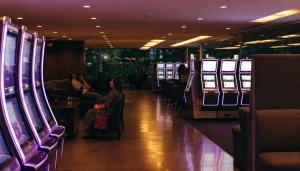
A general listing does not establish whether a venue is operating or its gaming area is accessible at a particular time.

“Open” sounds like a simple status. In practice, it needs a venue attached to it. A broad statement that Geelong pokies are open does not establish that a particular venue is operating, that its gaming area is accessible, or that machines are available at the time in question. I would not treat a general label as confirmation of any of those things.
That means it would be misleading to say that pokies are open now, or to describe the city’s venues as currently operating, without a current confirmation tied to a specific place. The distinction matters: a claim can sound definite while leaving out the detail that makes it useful.
A venue directory answers a different question. It may identify businesses in an area, but a listing is not proof that the business is open at this moment. Nor does a general venue listing necessarily say whether gaming machines are accessible. Those are separate pieces of information, and one should not be substituted for another.
This is where promotional wording tends to flatten the details. “Open” may refer to a venue’s doors, a bar or dining service, or a gaming area. Those are not interchangeable. A venue may offer more than one service, and a listing that gives an overall status may not clarify which one it covers. From the counter side, the operational detail is the part that changes the answer. The label is not the answer.
The time-sensitive wording makes this more important. “Open now” is only meaningful in relation to a particular moment and a particular venue. A page that was accurate when first published can become stale; a search result may preserve an old description after conditions have changed. I would treat any broad, undated claim with caution rather than read it as a live local update.
The same applies to early-opening claims. A statement that a Geelong venue opens early, or that machines are available at a particular time, needs to be checked against that venue’s current information. Guessing from common hospitality patterns would be poor reporting. A plausible assumption is still an assumption.
There is also a difference between an opening announcement and an ongoing schedule. An announcement may describe a change or a particular occasion, while a schedule is meant to describe regular operations. Neither should be stretched beyond what it says. If a claim does not identify the venue and the relevant service, it cannot settle whether machines are accessible at the time being considered.
I have seen how quickly one loose word can become a firm expectation. Someone hears “open,” arrives expecting the gaming area to be available, and discovers that the word described something else. That is not a minor distinction for a person making a trip. It is why I separate venue status from machine access, and current confirmation from a listing that merely looks current.
A careful report on Geelong would therefore avoid naming an open venue or assigning an opening status unless the claim is tied to a specific, current confirmation. That is not a reason to fill the gap with a guess, a copied directory entry, or a confident-sounding city-wide summary.
The useful standard is plain: a claim about Geelong pokies being open needs to say which venue and what is open. Without that, the claim should not be treated as confirmation. Clear limits are better than invented certainty.
Choosing pokies in Geelong for 2026 means considering the practical details behind each option, not just the games. This list highlights the available licensing, deposit and payout information to help you decide what to look into further.
Uptown Pokies
Uptown Pokies has operated since 2017 under a Curacao license. Its minimum deposit is A$20.
JustCasino
JustCasino is listed with a Curacao Gaming Control Board license. The available information for this entry is limited to its licensing.
WinSpirit Casino
WinSpirit Casino lists a Curacao eGaming OGL/2024/923/0383 license held through Antillephone N.V. Its minimum deposit is A$30.
MrPacho
MrPacho lists crypto payouts in 30–120 minutes and fiat payouts in 24–72 hours. The minimum deposit is A$30.
Kingmaker
Kingmaker lists crypto payouts at around 90 minutes and fiat payouts in 1–5 days. Its minimum deposit is A$30.
DragonSlots Casino
DragonSlots Casino lists a Curacao Gaming Authority license associated with Jumpman Gaming Ltd. The available information for this entry is limited to its licensing.
Thor Casino
Thor Casino lists a Curacao license through Antillephone N.V. (Versus Odds B.V.). Its minimum deposit is EUR 20.
Wild Tokyo
Wild Tokyo lists a Curacao license, with a minimum deposit of A$10. Its listed payout times are 30–60 minutes for crypto and 1–5 days for fiat.
Neospin
Neospin lists a Curacao Gaming Control Board OGL/2023/176/0095 license held by Hollycorn N.V. The available information for this entry is limited to its licensing.
LuckyVibe
LuckyVibe lists a Curacao Gaming Control Board OGL/2023/176/0095 license held by Hollycorn N.V. The available information for this entry is limited to its licensing.
“Best-paying” sounds like a straightforward label: one pokie returns more, so it must be the better choice. In practice, the phrase compresses two different ideas. A game’s published return setting describes a theoretical long-run rate; it does not predict what a particular person will receive, or what will happen in the next session. I have seen promotional language make that distinction disappear. It should not.
A specialist review reports that some game providers let casinos choose between different return-to-player, or RTP, settings for the same pokie. If that applies to a particular title, its name alone cannot establish which setting is in use at a given casino. The version presented at one venue may not have the same stated return as the version elsewhere. That is a configuration question, not a property that can be settled by recognising a familiar game title.
This matters when claims are made about the best-paying pokies in Geelong. A title described as generous in one setting is not automatically the same proposition in another. Nor does a high stated RTP tell the whole story about the shape of play: it does not say when wins occur, how large they are, or whether a particular session will finish ahead. Those details cannot be read from the adjective “best”.
A game's published return setting describes a theoretical long-run rate; it does not predict what a particular person will receive or what will happen in the next session.
The distinction is familiar from inside the business. A product name is useful for identification; it is not a complete disclosure of the version supplied. Where return settings can vary, the meaningful comparison is between the actual settings offered, not between titles in isolation. If a setting is not clearly available for inspection, a ranking based on the game name alone has a weak foundation.
Then there is randomness. Each pokie spin is an independent event determined by a Random Number Generator. The previous result does not make a win due, and a run of wins does not make the next spin more likely to pay. A machine does not remember that someone has lost for a while. No pattern in a short sequence turns into a reliable forecast.
That point can sound obvious until a session is under way. People naturally look for rhythm: a feature has appeared several times, a screen has gone quiet, or a machine seems to be “warming up”. The language is persuasive because it gives a random sequence a story. It does not change the mechanism. Independent outcomes remain independent.
A return percentage, where one is disclosed, is a statistical measure over a very large number of plays. It is not a promise that the same proportion comes back during one visit, and it does not identify a likely winning moment. Individual results can vary sharply from that long-run expectation. The gap between a theoretical rate and an individual session is where many “best-paying” claims become misleading.
The same caution applies to comparisons around Geelong, whether the wording refers to a city venue, a CBD location, or an online game. Location does not establish the RTP setting, and the phrase “casino pokies” does not reveal which version is available. Without a confirmed setting for the specific game in the specific context, calling it the best-paying choice would present an inference as a fact.
I would separate three things when judging such a claim: the game title, the configured return setting, and the random results of actual spins. They answer different questions. The title says what game is being discussed; the setting, if disclosed, gives a theoretical long-run measure; the RNG determines each outcome. Mixing those layers is how a marketing superlative starts to sound like evidence.
A careful description can say that a stated RTP is higher than another stated RTP, provided the comparison is like for like and the settings are known. It cannot turn that comparison into a guarantee of a better session. “Best-paying” is therefore not a dependable verdict on what will happen, and it is not enough to identify a best pokie in Geelong. The setting matters. Each spin remains random.
A search for online pokies connected with Geelong can sound like a question about local venues, but it points to a different legal issue. A physical venue and an online casino are not interchangeable: the rules governing real-money play over the internet are set nationally, not by a venue’s proximity to Geelong.
The Interactive Gambling Act 2001 prohibits companies from providing real-money online casino games, including pokies, to people in Australia unless they hold a domestic licence. No Australian online casino licences have been issued. In practical terms, there is no Australian-licensed online casino offering real-money pokies.
That distinction matters when a site describes itself as “available in Australia”. The phrase may mean that its pages load or that it accepts Australian customers; it does not establish that the operator holds an Australian casino licence. There is no such licence to check against. A local-sounding name, a Geelong reference or a payment option does not change the legal status of the service.
The law is directed at operators, rather than making individual players its target. That does not make the online service lawful: the prohibition concerns companies providing the games to people in Australia. The distinction is easy to lose in promotional wording, which can present access as if it were official approval. It is not.
 Regional Pokies: Australian City and State SearchesExplore regional searches for Australian pokies and casinos, from city and state terms to online play, live dealers, keno and payout topics.
 Best pokies in South Australia: returns and venue checksLearn why RTP is a long-run theoretical figure, not a session forecast, and what venue listings, opening hours and online-pokies claims can…
Some offshore sites may accept Australian customers, but that leaves a significant practical risk. If an offshore casino refuses to pay winnings, an Australian player has no legal recourse in Australia to compel payment. A balance displayed on a screen is not the same as money protected by an Australian casino-licensing system.
I treat claims about “real money”, “no deposit” offers and high betting limits as commercial terms, not evidence of legal standing. A bonus headline says nothing about whether an operator is authorised in Australia. Nor does a site’s willingness to take a deposit establish that it will honour a withdrawal. The central issue is not the size of an offer; it is the absence of an Australian-licensed online casino and the limited remedy available if an offshore operator disputes a payout.
This is also why online claims should not be mixed with questions about pokies in Geelong itself. A result mentioning Geelong does not verify a local venue, machine or connection to a physical casino. It may simply be a website using a place name to attract attention. Different subject. Different rules.
The Australian Communications and Media Authority (ACMA) enforces the Interactive Gambling Act 2001. It blocks access to illegal offshore gambling sites, and Australian internet service providers are required to follow its blocklist. A blocked site may therefore be inaccessible through an Australian connection.
Legal Risk
If an offshore casino refuses to pay winnings, an Australian player has no legal recourse in Australia to compel payment.
Blocking is an enforcement measure, not a sign that every offshore site has been reviewed or that an accessible site is approved. Access can change, but the underlying legal boundary does not. A site loading successfully is not proof of authorisation, and a site being blocked does not provide a player with a route to recover disputed winnings.
I keep the distinction plain: physical Geelong pokies belong to venue questions; online real-money pokies fall under the national interactive-gambling rules. A location in the search wording cannot turn an offshore service into a local, licensed one. No local shortcut.
“Near” sounds precise, but it can conceal several different claims: a venue is inside an airport, lies close to it, or is simply somewhere in the wider Geelong area. Those are not interchangeable. I would not treat a general Geelong listing as proof of airport proximity, or a CBD reference as proof that pokies are inside a central venue.
That leaves the practical question unanswered: whether a particular place has machines, and how far it is from a named landmark. A location-based claim needs an identifiable venue and a reliable address before proximity can be assessed. Without those, “near the airport” is a label, not useful directions.
The airport wording needs particular care. A search for pokies at Geelong Airport can mean machines within the airport itself, or places nearby that someone expects to reach from there. Neither meaning establishes that the airport has pokies or that a nearby venue does. I would keep those claims separate unless a venue listing and its address support them.
 Best Pokies in Melbourne: What Location Can Tell YouLearn why a map pin cannot confirm a venue has pokies or the conditions under which machines operate, and why “near Melbourne…
 Best Pokies in Tasmania: Venue Hours and ChecksLearn how to check gaming-room hours, venue-level information and travel details, and why a venue being open does not mean its pokies…
The same applies to North Geelong. A suburb name may narrow a location, but it does not identify a particular venue or confirm that pokies are available there. Nor does the phrase “near Geelong” settle whether the intended area is the CBD, the airport, North Geelong or somewhere else in the region.
For CBD searches, the distinction is between being in central Geelong and being close to it. Those descriptions can sound equivalent in a short listing, but they carry different implications for walking, driving or choosing a meeting point. Without an address to check against the CBD, I would not turn one into the other. No reliable distance should be inferred from a suburb label alone.
This is where local directory claims can become misleading. A result may place a venue under a broad city heading, while its actual position remains unclear. A map pin or category label, on its own, does not establish what facilities are inside the venue. The underlying address and venue details matter. Otherwise, “near me” becomes a guess dressed as a location.
I have seen how location wording works in listings: the broadest label often gets the most attention, while the detail that would make it useful is the address. For searches around Geelong, that detail is essential. A named suburb does not verify a venue; a reference to the airport does not establish airport access; and “CBD” does not prove a central address.
Attention: A suburb name or a general city heading does not verify a specific venue's existence or the facilities available inside it.
That is not a claim that such a venue does not exist. It is a refusal to turn an unconfirmed location into a recommendation. Location first. Everything else follows.
A venue’s reputation and its oversight arrangements are separate questions. Calling somewhere the “best” pokies venue says nothing, by itself, about how staff respond when gambling appears to be causing harm. From my experience of how venue policies work, the useful detail is not the promotional label but whether responsibilities are assigned and incidents are recorded.
A report on changes to venue requirements says that, from 1 July, a venue operating more than 20 gaming machines must have a dedicated responsible gambling officer (RGO) on duty while those machines are in use. The report also describes a one-month grace period for venues to remove signage and put the RGO arrangements in place. Those details describe a reported requirement; they do not establish which Geelong venues meet the machine threshold, or confirm the arrangements at any particular local venue.
The role matters because oversight is meant to have a person attached to it, rather than being left as a general statement of good intentions. An RGO on duty can provide a point of responsibility while machines are operating. That is different from assuming that every staff member has the same remit, or that the presence of an officer guarantees a particular outcome. A policy on paper is only one part of the picture.
The same report says venues will have to maintain a gambling incident register. It is intended to record events, including occasions when a patron’s behaviour suggests they may be at risk of gambling harm or already affected by it. A register creates a record of what was observed and how the venue handled it; it is not a public ranking system and does not, on its own, show how effectively a venue intervenes.
That distinction is easy to lose in broad claims about Geelong pokies venues. Reporting requirements can explain what a venue may be expected to do, but they cannot establish the quality of its day-to-day practice. Nor do they provide a basis for naming a best venue in Geelong or comparing clubs in the CBD. Those claims need venue-specific evidence, not a general description of oversight.
For anyone assessing a venue, the practical question is whether its stated procedures are clear and whether staff can explain who handles a concern. I would treat vague assurances such as “supportive” as advertising language until the actual process is made clear. A clear process is more useful than a slogan.
The report’s timing also matters: the 1 July start and grace period are described as parts of a change, not proof that every venue has already completed it. Oversight has rules. Local compliance still needs evidence.
A claim that pokies are available around the clock is more specific than a venue’s general opening-hours notice. A club, hotel or other venue may publish trading hours without saying when its gaming area is accessible. The two details should not be treated as interchangeable.
A venue may publish general trading hours without specifying when its gaming area is accessible; the two are not interchangeable.
I would not read “open 24 hours” as confirmation that a Geelong venue offers continuous access to pokies. That wording needs to be tied to the venue itself and to the part of the premises it describes. A directory entry or map label can be useful for finding a business, but it may not distinguish general trading from gaming-room access, or reflect a later change to a venue’s schedule.
“Open now” is also a time-sensitive claim. It depends on the time the information was checked and whether the stated hours apply to the relevant area. A listing that once showed late trading can remain visible after a schedule changes; a venue’s current notice is a stronger basis for interpreting its hours. Even then, the notice should be read for what it actually covers rather than treated as a blanket promise of access to every facility.
This distinction matters because opening times can be presented compactly in directories, while conditions and exceptions sit elsewhere. A public holiday, private function or temporary operational change may affect access. None of those possibilities establishes that a particular Geelong venue is open or closed at a given moment. It only explains why a single hours label cannot settle the question.
From the other side of the counter, “24-hour access” is the kind of phrase that sounds definitive while leaving the practical detail unclear. Does it refer to the whole venue, a bar or accommodation service, or the gaming area? Unless the venue’s own current information answers that, the phrase is not enough to establish when pokies can be used. Fine print matters.
No local hours should be inferred from the wording of a search result alone.
The careful reading is straightforward: venue trading hours and pokies access are separate details, and a 24-hour claim needs local confirmation. A listing is a lead. Not a schedule.
Putting “Crown” and “Geelong” together does not establish that Crown operates a venue in Geelong, or that a Geelong venue has machines associated with Crown. I would treat that as a claim requiring a reliable local listing, not as a fact supplied by the wording itself. A familiar casino name can appear beside a city because people are comparing places, remembering a visit, or combining terms without knowing whether they refer to the same venue.
That distinction matters when a page appears to describe a Crown pokies room in Geelong. The wording may sound definite while leaving the central point unanswered: which physical venue is meant? Without a verifiable address and an authoritative venue record linking it to the name, the description should not be used to plan a visit or infer what is available there.
The same care applies to claims about a “best” room. That label is a judgement, not a venue detail. It does not establish that a particular room exists locally, nor does it identify a measurable standard for comparing rooms. I have seen promotional wording do a lot of work while supplying very little that can be checked. The label is not evidence.
A familiar casino name appearing beside a city does not establish that the operator has a venue in that specific location.
A claim about a maximum cash payout is more specific, but it still needs context. The limit could refer to a machine, a venue process, or a particular form of payment; those are not interchangeable. Without a named, confirmed venue and its current terms, a figure attached to a Geelong search cannot be safely treated as a local rule.
I would look for the venue’s own published information or confirmation from the venue before relying on any stated payout arrangement. If the claim does not identify where it applies, it cannot answer what happens at a particular Geelong location. A number without that connection can sound precise and still mislead.
This is not a technicality. Venue names, machine availability and payment procedures are separate claims. Evidence for one does not automatically establish the others. A listing might establish that a place exists, but not that it operates under the name attached to it, has a particular room, or follows a stated payout procedure.
So the useful distinction is simple: Crown-related wording is not proof of a Crown venue in Geelong. A room description is not proof of a local listing. And a payout figure is not a venue policy unless it can be tied to that venue. Until those links are clear, the responsible account keeps the claims separate rather than filling in the gaps.
Geelong’s central clubs may appear in conversations about pokies, but a club name or a “best” label does not explain what playing there involves. I have seen how quickly venue choice can be reduced to a row of machines or a claim of better play. That leaves out the part that matters once someone sits down: the controls available to keep gambling within chosen boundaries.
Responsible-gambling tools include deposit limits, loss limits and session time limits. Each addresses a different point in the cycle. A deposit limit restricts how much money can be put into play; a loss limit sets a boundary around losses; a session time limit creates a stopping point based on time rather than the balance. The settings are not interchangeable. A person focused only on money may still spend longer than intended, while a time boundary does not itself set a loss ceiling.
Self-exclusion is another tool. It is intended to prevent access to gambling for the period covered by the arrangement, rather than simply remind someone to stop. The practical question is whether the exclusion applies to the venue or system being used and how it is put in place. The label alone is not the whole process.
That distinction matters for searches about self-exclusion and pokies in Geelong. A club setting and an online account are not automatically the same environment, and an exclusion should not be assumed to carry across every operator or venue. BetStop applies to Australian-licensed operators; it does not bind offshore sites. It is not a universal switch.
Restricts the amount of money that can be put into play.
Sets a specific boundary around total losses.
Creates a stopping point based on time spent rather than balance.
I have also learned not to treat a responsible-gambling feature as proof that a particular club is suitable for every person. A limit can support a decision made in advance, but it does not make gambling risk-free or turn a “best pokies” claim into a meaningful measure of safety. The useful comparison is between the controls and the circumstances in which they operate, not promotional language.
The legal age for gambling in Australia, including pokies played online, is 18. Age eligibility and responsible play are separate matters: meeting the age requirement does not remove the need for limits or make a session harmless. For central Geelong clubs, the grounded approach is to understand the available controls before play and use them as boundaries, not as guarantees.
Limits help. They do not promise outcomes.
The word “Parkes” does not, by itself, identify a pokies venue in Geelong. It may refer to a place, a business name or wording attached to a listing, but without a clearly identifiable venue there is no sound basis for connecting it to a particular set of machines. I would not turn that ambiguity into a location claim.
That distinction matters when assessing requests for pokies in Geelong more broadly. A search phrase can point towards a local venue without confirming which venue it means, whether the listing is current or whether the place actually offers pokies. A name appearing beside “Geelong” is not enough to establish those details.
Nor does “best pokies” resolve the uncertainty. “Best” might mean a preferred game, a particular venue or a claim about returns. Those are different questions, and a venue name alone cannot settle them. I keep the categories separate. No shortcut.
A reliable local description needs an identifiable venue and information tied to that venue.
This is less satisfying than a neat directory entry, but it is more useful than a confident guess. Geelong pokies searches can be broad or imprecise; they do not automatically resolve into a confirmed local listing. Until the place and venue are clearly identified, the sensible account remains narrow: Parkes cannot be linked to a specific Geelong pokies venue, and no venue-level comparison follows from the wording alone.
“Cashless pokies” can describe more than one thing. It may refer to how money is loaded or moved during play, or to a machine designed for cashless use. Those are different features, and the phrase alone does not establish which one a venue provides. I have seen promotional language blur that distinction: a payment option is not automatically proof of a cashless machine, and a machine feature says nothing by itself about the venue’s other arrangements.
That is the useful boundary. A listing, advertisement or conversation needs to identify the venue and describe the actual system before the claim can be treated as a local service. Without that detail, “cashless” is a label, not a specification. No inference should be made from the wording alone.
The Newcastle-Geelong wording is separate. It could bring two places together as a comparison, or reflect an interest in both locations. It does not show that a Newcastle venue operates in Geelong, that the two places share a venue, or that a machine found in one is available in the other. Location names are not evidence of a local listing.
I would keep the checks narrow: establish which place is meant, identify the specific venue, then confirm whether the cashless description refers to the pokie itself or another part of the payment process. Until those points line up, a claim about cashless play in Geelong remains unconfirmed.
That distinction matters because a search phrase can compress several assumptions into a few words. “Cashless” sounds precise; without a named venue and a clear description, it is not.
You must be at least 18 years old to gamble online in Australia.
No Australian-licensed online casino can offer real-money pokies: no domestic licences have been issued. The law targets operators, not players, and Australians can legally play on offshore sites that accept them, but they have no legal recourse in Australia if a site refuses to pay.
It is the number of times you must bet the bonus, or sometimes the deposit plus bonus, before you can withdraw. For example, a $500 bonus with a 40x requirement means $20,000 in bets; a 35x requirement on a $500 deposit plus a $500 bonus means $35,000.
Compare the required turnover with the bonus and check for cash-out caps on winnings. For example, a $500 bonus with a 40x requirement entails $20,000 in bets, while 35x on a $500 deposit plus a $500 bonus entails $35,000.