Litecoin availability does not establish that an offshore casino can lawfully offer real-money games in Australia.
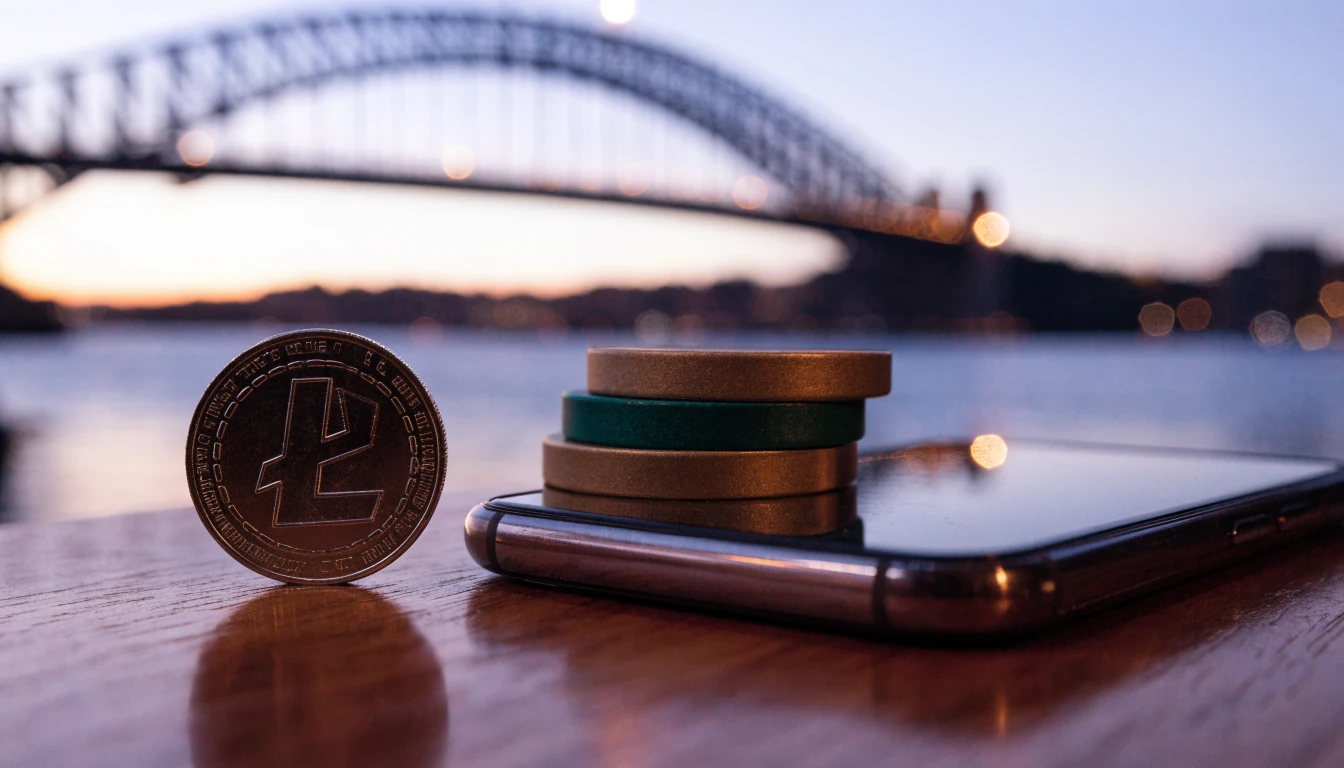
A Litecoin payment method does not change the legal status of an online casino in Australia. The relevant boundary is the service being offered, not the currency used to fund it.
Under the Interactive Gambling Act 2001, operators cannot provide online casino games to people in Australia. That covers real-money casino services offered to Australian residents, including when the operator is based offshore. The law is directed at the provider: it does not explicitly make an Australian player’s use of an offshore casino a criminal offence. Those are separate points, and treating them as interchangeable gives a misleading picture.
In practice, offshore status is no guarantee of access. The Australian Communications and Media Authority, or ACMA, administers enforcement of the Act and can act against prohibited services. Enforcement includes measures that restrict access to offshore gambling sites. A page or payment option appearing online is not proof that an operator may lawfully offer casino games to people in Australia.
I have seen payment language do a lot of work in casino marketing. “Accepts Litecoin” sounds like a straightforward technical feature; it says nothing by itself about whether the underlying service is lawful for Australian customers, whether it is accessible, or what protection applies if something goes wrong. The payment rail and the legal permission are different questions.
There is a further practical gap: Australian consumer law does not protect people using offshore casinos. That matters if a dispute arises over an account, a balance, or an operator’s terms. The absence of explicit criminal liability for the player should not be mistaken for the protections that come with a locally regulated consumer service. They are not the same thing.
So the phrase “casinos that accept Litecoin in Australia” should not be read as a statement that such casinos are authorised to offer real-money games here. The Australian framework prohibits operators from providing those games to people in the country, while ACMA enforces that restriction. Litecoin does not create an exception. A technical option is not legal cover.
 Casinos That Accept Mastercard in Australia: What to CheckLearn why everyday card use and a Mastercard logo do not confirm casino deposit acceptance, and why withdrawal claims need separate verification.
 Casinos That Accept Neteller in Australia: What to KnowLearn how Neteller labels relate to payment availability, Australian audience claims and authorisation—and why they do not verify withdrawal or bonus terms.
A phrase such as “online casino with Litecoin” combines two separate ideas: an online casino and a payment method. In ordinary language, it describes a service that someone expects to accept Litecoin. It does not, by itself, establish that a particular operator accepts the currency, that a payment route works for Australian residents, or that the service may lawfully offer casino games in Australia.
That distinction is easy to lose in promotional writing. A page can repeat a payment label, place it beside casino terminology and create the impression of confirmed support without showing what the claim rests on. From the other side of the counter, I learned to separate a label from a working payment option. The label is a claim. Evidence would need to identify the operator, the relevant terms and the conditions that apply to the transaction. None follows from the wording alone.
The same applies when Litecoin is paired with words such as “mobile,” “live” or “pokies.” Those combinations describe what someone has in mind: access by phone, a live-dealer format, or casino-style games. They do not confirm that a service offers those features, that Litecoin is accepted for them, or that access is available in Australia. A search phrase is not a product specification.
There is also a legal distinction that changes how the subject should be described. Under the Interactive Gambling Act 2001, it is illegal for operators to provide real-money online casino games to people physically located in Australia. The Australian Communications and Media Authority is responsible for enforcing that law. So a description of an offshore service cannot be treated as a straightforward account of a casino option available to Australian residents. Language that implies availability or invites participation would obscure the central point: the operator is prohibited from providing the service here.
Legal Restriction
Under the Interactive Gambling Act 2001, it is illegal for operators to provide real-money online casino games to people physically located in Australia.
That legal position does not turn a payment claim into a verified one. Even where a website mentions Litecoin, the mention alone says nothing conclusive about whether it supports deposits, withdrawals, both, or neither. Nor does it establish how a transaction would be handled or whether any stated arrangement applies to people in Australia. Those are distinct claims, and each would require its own reliable, current evidence. No such detail can be inferred from a general description of Litecoin as a cryptocurrency.
This is why broad labels can mislead even when they sound precise. “Litecoin casino in Australia” might suggest a local service, while “Australian players accepted” might suggest that an offshore site is authorised to serve people here. Neither implication follows from a phrase on a page. The governing rule concerns the operator’s provision of real-money casino games to people in Australia; a payment method does not change that rule.
Australian consumer law does not protect people who use offshore casinos. That is not a minor term hidden in a cashier. It affects the basic assumptions a reader might bring from ordinary Australian purchases, where familiar payment methods and local consumer protections are part of the transaction. A cryptocurrency label should not be mistaken for local oversight, a domestic remedy or a guarantee about how a dispute would be handled.
I have seen how interface language can do quiet work: a logo, a currency symbol, or a short “accepted” label can make a complicated relationship look settled. It is not settled by appearance. A payment option, if genuinely present, would still be separate from the legal status of the casino service and from the protections available to a customer. Three different questions. No shortcut between them.
 Casinos That Accept POLi in Australia: What’s KnownLearn why POLi payment claims do not establish casino acceptance or legality, and how to distinguish deposit support from withdrawals and game…
 Casinos That Accept PayPal in Australia: Key ChecksLearn how Australian law treats online casino services, what ACMA’s role means, and why payment listings alone do not verify PayPal acceptance.
The careful reading, then, is narrow. Such wording signals an intended combination of online casino terminology and Litecoin. It does not verify operator acceptance, establish Australian availability, or make the underlying real-money casino service lawful to provide in Australia. General claims about cryptocurrency transfers cannot fill those gaps, and references to mobile access or live play cannot do so either. The wording identifies a subject; it does not prove a service exists in a usable or lawful form for Australians.
“Best” sounds like a conclusion. In casino copy, it is often just a label placed above a selection. For an online casino said to accept Litecoin, the label only means something if the underlying comparison is clear: what was checked, when it was checked, and which features were compared. Without that, the word does not establish that a site accepts Litecoin, or that one option is better than another.
I have seen rankings built around details that can be checked, such as stated payment methods or published terms. Even then, a payment logo or a line in an old review is not proof that a method is currently available to Australian customers. Payment arrangements can change, and a listing can remain online after the underlying details have changed. A confident headline does not fix that gap.
Naming a site anyway would turn an untested claim into a recommendation. Calling it a “top pick” would not make it more reliable.
Attention: A payment logo or an old review is not proof of current availability for Australian customers, as payment arrangements can change.
The distinction matters because acceptance and quality are separate claims. A service might claim to support a coin without providing enough information to establish how that support works for Australian customers. Even confirmed payment acceptance would not, by itself, settle questions about customer terms, access, withdrawals or dispute handling. Those details cannot be supplied by the word “best.”
A useful comparison normally exposes its method. It says what counts toward the result and applies the same criteria to each entry. If one listing is praised for a payment option, another for a bonus, and a third for game variety, the ranking may be combining unlike things rather than measuring a consistent standard. When the criteria are hidden, the order on the page is not evidence of a meaningful difference.
The word “online” does not change the legal position. Under the Interactive Gambling Act 2001, operators are prohibited from providing real-money online casino games to people physically in Australia. The law does not explicitly criminalise an individual for using an offshore site, but that is not the same as a lawful Australian casino offer. The Australian Communications and Media Authority enforces the Act, and Australian consumer law does not protect people using offshore casinos.
That makes promotional language particularly important to read plainly. In a permitted comparison, “best” should summarise an explained assessment. In casino promotion, it can instead steer attention toward an unlawful service while concealing the absence of a fair comparison. A disclaimer elsewhere on a page does not turn an endorsement into neutral information.
A search for the best online casino using Litecoin can therefore express an understandable wish for a clear answer, while still having no defensible winner. The responsible answer is not to fill the space with familiar operator names or polished descriptions.
This is not a verdict on every offshore site, nor evidence that a particular operator does or does not support Litecoin. In this market, restraint is not a weak review. It is the difference between analysis and advertising.
No ranking. No implied endorsement.
For an Australian player considering Litecoin casinos in 2026, the key is to check both the operator’s stated credentials and whether Litecoin is actually available for deposits and withdrawals. The details below provide a concise reference, but do not confirm Litecoin support for any operator.
Uptown Pokies
Uptown Pokies has operated since 2017 and lists a Curaçao license. Its minimum deposit is A$20; the supplied details do not specify Litecoin availability.
JustCasino
JustCasino lists a Curaçao Gaming Control Board license. The supplied details do not include deposit terms or confirm Litecoin availability.
WinSpirit Casino
WinSpirit Casino lists Curaçao eGaming license OGL/2024/923/0383, issued through Antillephone N.V., and a A$30 minimum deposit. Litecoin availability is not specified in the supplied details.
MrPacho
MrPacho lists crypto payouts in 30–120 minutes and fiat payouts in 24–72 hours, with a A$30 minimum deposit. The details do not identify Litecoin as a supported cryptocurrency.
Kingmaker
Kingmaker lists crypto payouts at about 90 minutes and fiat payouts in 1–5 days, with a A$30 minimum deposit. The supplied details do not confirm that Litecoin is supported.
DragonSlots Casino
DragonSlots Casino lists a Curaçao Gaming Authority license, with Jumpman Gaming Ltd named in connection with it. No deposit terms or Litecoin information are provided.
Thor Casino
Thor Casino lists a Curaçao license through Antillephone N.V. (Versus Odds B.V.) and a minimum deposit of EUR 20. The supplied details do not specify Litecoin availability.
Wild Tokyo
Wild Tokyo lists crypto payouts in 30–60 minutes and fiat payouts in 1–5 days, plus a A$10 minimum deposit. The details do not say whether Litecoin is among its supported cryptocurrencies.
Neospin
Neospin lists Curaçao Gaming Control Board license OGL/2023/176/0095, associated with Hollycorn N.V. The supplied details do not include deposit terms or confirm Litecoin support.
LuckyVibe
LuckyVibe lists Curaçao Gaming Control Board license OGL/2023/176/0095, associated with Hollycorn N.V. No deposit or Litecoin details are provided.
A search for a leading casino associated with Litecoin sounds like a request for a comparison. In practice, the wording alone does not establish that any particular operator accepts the cryptocurrency, serves people in Australia, or offers the features implied by its advertising. A page calling something “best” is making a claim; the label is not evidence.
I have seen comparison language do two jobs at once: make a service sound established and compress several separate conditions into one reassuring word. A genuine comparison would need to distinguish payment acceptance from access, and both from the rules governing games, withdrawals and account use. Without clear, current terms for a named service, there is no sound basis for ranking one above another.
That matters especially in Australia. The Interactive Gambling Act 2001 prohibits operators from providing real-money online casino games to people physically located in the country. Offshore access does not turn that offer into a locally lawful one. Australian consumer law does not protect people using offshore casinos, either. The gap between an appealing comparison and a dependable remedy is substantial.
A comparison can only be useful if its criteria are specific and verifiable. For a cryptocurrency payment claim, that means establishing what the operator accepts and under what terms—not inferring support from a search result, a logo, or a general statement about digital currency. For the broader service, it also means being able to assess the relevant conditions rather than relying on promotional adjectives.
The word “latest” has a similar weakness. It suggests that a page reflects a current change, but a date or confident headline does not by itself establish that payment terms or access conditions have been checked. Information can become stale; a label cannot keep it current.
I would treat a list of supposed Australian sites with the same care. A collection of names is not a verified comparison, and adding a bonus claim does not strengthen it. It simply introduces another claim that needs its own evidence. No shortlist should be inferred from a page’s title.
“Best bonus” is often presented as if it were a straightforward measure of value. It is not. The headline may omit the conditions attached to an offer, and a prominent figure can draw attention away from the terms that determine how it works. Without verifiable offer details, naming or ranking bonuses would be speculation—not useful guidance.
 Bitcoin Cash Casinos in Australia: Legal and Payment ChecksLearn how BCH payment options differ from casino authorisation, what to compare in deposits and withdrawals, and how the Interactive Gambling Act…
 Casinos That Accept Apple Pay in Australia: What’s KnownLearn why Apple Pay’s widespread use in Australia does not confirm casino acceptance, and how to assess payment claims when no operator…
There is also a more basic issue here: real-money online casino services are prohibited for operators to provide to people in Australia. Describing an offer in promotional terms risks making an unlawful service sound like a recommendation. A search for casino bonuses does not change that legal position.
The same distinction applies when general searches combine a casino, Litecoin, games and an offer in one phrase. Those are separate assertions, not proof that a single service supports all of them. Treating them as interchangeable is how a broad marketing claim acquires a false air of specificity.
No shortcut.
For an Australian reader, the practical meaning of a “best” label is therefore limited unless the underlying claims can be established—and even then, an offshore casino remains outside the protections available under Australian consumer law. A ranking cannot remove that exposure, and a bonus headline cannot make the service lawful to offer locally.
“Bonus” is a label, not a complete description of a promotion. Paired with Litecoin and slot-related wording, it can suggest several different things: an advertised welcome incentive, a deposit-linked offer, a no-deposit promotion, or a claim that play is free. Those phrases do not, by themselves, establish that an offer exists, that Litecoin is accepted, or that any particular game is available.
A "free" or "no deposit" label is a promotional description; the actual conditions for using or withdrawing balances are found only in the full terms.
That distinction matters because promotional language compresses several separate conditions into a few words. A welcome bonus describes when an offer is presented; it does not state what must be done to qualify. A deposit bonus links the advertised incentive to a payment, but the label alone says nothing about the payment method, applicable terms, or whether the offer can be used with Litecoin. “No deposit” describes an apparent absence of an initial deposit requirement, not the full conditions attached to an offer. The headline is only the front of the transaction.
I have seen how a short label can carry more certainty than its wording supports. “Free” sounds like a settled fact. In practice, that word cannot answer whether there are restrictions, qualification rules, or conditions on using or withdrawing any resulting balance. Without the full terms, it remains a promotional description, not a reliable account of what a customer would receive. Fine print does the actual work.
The same caution applies to claims about Litecoin video slots or online slots. A payment method in a promotional phrase does not prove that a particular product supports that currency. Nor does an apparent link between a bonus and a game establish that the game, promotion, and payment option are available together. Each is a separate claim. Combining them in one headline does not verify the combination.
“Best” adds another layer of suggestion, but it is not a measurable attribute on its own. A claim that one Litecoin slots offer is best would need a clear basis for comparison. Without specified, substantiated terms, the word is an advertising judgement rather than useful evidence. I have learned to separate a confident headline from the mechanics it leaves unstated.
There is also a legal boundary behind these phrases in Australia. The Interactive Gambling Act 2001 makes it illegal for operators to provide real-money online casino games, including slots, to people located in Australia. ACMA is responsible for enforcing that law. Australian consumer law does not protect people using offshore casinos, so promotional wording should not be mistaken for a safeguard or a dependable promise about an offshore service. That is a material risk, not a footnote.
Accordingly, labels such as “Litecoin welcome bonus,” “no-deposit bonus,” or “free slots” should not be read as proof of an Australian-facing offer. They do not establish lawful availability, an operator’s ability to provide the advertised service, or the protections that would apply if a dispute arose. A polished promotion can make a proposition look complete while leaving the decisive conditions elsewhere. And in this market, the underlying service is prohibited.
The useful distinction is between a phrase and an enforceable set of terms. A phrase can suggest a bonus; it cannot settle its conditions, confirm payment compatibility, or make an unlawful service lawful. The word “free” does not remove those gaps. The word “Litecoin” does not fill them. A headline remains a headline.
A casino game and its payment method are separate parts of a service. A reference to Litecoin may describe how someone hopes to fund an account; it does not, by itself, establish which games an operator offers or whether Litecoin is accepted. The distinction matters because game names and payment badges can appear together in promotional language without proving that either is available to Australian residents.
In Australia, the Interactive Gambling Act 2001 covers real-money online casino-style games, including poker, blackjack, roulette, and pokies.
In Australia, the legal position sets a further boundary. The Interactive Gambling Act 2001 bars operators from providing real-money online casino-style games to people in the country. That category includes poker, blackjack, roulette and pokies. The law’s focus is the operator’s provision of the service, rather than a player’s act of accessing an offshore site. The Australian Communications and Media Authority enforces the Act. Offshore use also sits outside the protection of Australian consumer law.
That is the practical context for searches combining Litecoin with casino games. A phrase such as “play casino games with Litecoin” can sound like a description of a functioning service, but wording alone does not establish a game catalogue, a payment connection, or lawful availability in Australia. Those are separate questions. The label does not answer them.
I have seen product language do a lot of work with very little detail. “Crypto games” may refer to games at a site that also mentions cryptocurrency, rather than games built around Litecoin. A game’s title, format or rules do not show how it is funded. Nor does a Litecoin logo establish that a deposit method is active for Australian users. Marketing shorthand. Not proof.
The same caution applies to claims about anonymous play or a Litecoin casino bonus. Neither phrase establishes that identity checks are absent, that a bonus is offered, or that any stated condition applies. Online casinos typically require customers to complete a Know Your Customer assessment before financial transactions. A payment method does not, on its own, remove that process.
Searches may also name a “Litecoin slot game” or refer broadly to Litecoin pokies. Those terms do not identify a particular game or confirm that it can be played with Litecoin. In Australia, pokies offered for real money online fall within the prohibited-service category, so presenting a game as an available local option would misstate the position.
The useful distinction is simple: game information concerns what is played; payment information concerns how a transaction is handled. Neither proves the other, and neither changes the Australian restriction on operators providing real-money online casino games.
“Play with Litecoin” sounds like a single feature. Operationally, it bundles separate questions: whether a service accepts Litecoin, how a payment is connected to an account, and what checks apply before financial activity. Those are not interchangeable. A payment method named on a page, for instance, would not by itself establish that an Australian resident can lawfully access the service or use it for real-money casino play.
That distinction matters in Australia. Under the Interactive Gambling Act 2001, operators must not provide real-money online casino services to people in the country. ACMA enforces the law, and Australian consumer law does not protect people using offshore casinos. A Litecoin option does not change any of that. Payment integration is not an exemption.
Attention: Claims of "no KYC" at sign-up do not establish that identity verification will not be required later for financial transactions.
From the counter side, the phrase “no KYC” is often treated as if it described the whole account relationship. It does not. Online casinos commonly ask customers to complete identity checks before handling financial transactions. A claim about skipping checks at sign-up would not establish that no verification can be required later, nor would it tell anyone how a Litecoin payment is processed. The distinction is material. Promotional shorthand leaves it out.
There are also two different systems involved in a crypto payment: the casino’s account and cashier process, and the wallet or service used to move the cryptocurrency. I would not infer those mechanics from a Litecoin logo or a general claim that crypto is accepted.
The same caution applies to searches about playing casino games using Litecoin. They express an intended combination of payment and entertainment; they do not prove that a named service offers it to Australian residents. Nor can the word “play” make an otherwise prohibited offering lawful. No shortcut around the legal position.
A grounded assessment therefore separates payment claims from access, account checks and consumer protections. If any of those details are absent or vague, the practical arrangement remains unclear. That is not a minor footnote: it determines what a payment label actually means, and what it does not.
Deposit speed and withdrawal speed are separate questions. A payment arriving in an account does not establish how quickly a later withdrawal would be reviewed, approved or sent. I have seen “instant” used as if it covered the whole journey. It does not: the word can blur distinct stages and leave fees, limits and conditions unstated.
That distinction matters for Litecoin. General statements about cryptocurrencies cannot establish Litecoin-specific terms. Bitcoin and Ethereum, for instance, may offer instant deposits and withdrawals with limited or no fees; that does not confirm the same timing or cost for Litecoin at any casino. Nor does a claim about a Litecoin deposit settle how a withdrawal would work.
“Instant withdrawal” is particularly imprecise. It may refer to an operator approving a request, rather than funds reaching a wallet. Those are not the same event. Without clear, Litecoin-specific terms, a promise of a fast or immediate payout cannot be treated as a confirmed processing time. The same applies to deposit claims: the speed of a transfer is not evidence that a casino accepts it.
Limits and charges need separate scrutiny too. A payment method’s general reputation for low fees says nothing conclusive about an individual operator’s conditions. A withdrawal may be governed by different rules from a deposit, and a stated processing time, where one exists, may not describe every stage from request to receipt. No assumption should fill those gaps.
I would read “no deposit” language as a separate promotional claim, not as evidence about whether Litecoin deposits or withdrawals are supported. Bonus wording cannot establish payment access or payout speed. Different mechanics. Different terms.
Deposit speed does not establish withdrawal speed; these are separate processes with different review, approval, and sending timelines.
In practical terms, searches for casinos accepting Litecoin deposits or offering fast Litecoin withdrawals express two distinct intentions. Neither phrase, on its own, verifies a service, an available payment route, a processing window, a fee or a transaction limit. “Top” wording adds no payment evidence either. A credible comparison would need current terms that identify Litecoin specifically and distinguish deposits from withdrawals. Without that detail, an instant-withdrawal label is marketing language, not a dependable timing commitment.
A live-dealer label describes how a table is presented: a human dealer appears on a video stream, while the game interface records decisions and outcomes. It does not, by itself, establish anything about how a casino handles Litecoin. The table service and the payment arrangement are separate parts of an operator’s setup.
That distinction matters because “accepts Litecoin” can mean different things in promotional wording. It might refer to a deposit option, a balance held in cryptocurrency, or a broader claim about transactions. None of those meanings automatically confirms support for a live-dealer table. Nor does a live broadcast establish that a particular payment method is available.
I treat those as separate claims. A live-dealer casino accepting Litecoin would need to establish both the live service and the payment connection; one cannot be inferred from the other. The phrase “crypto casino” is not proof of a specific coin, and a Litecoin reference is not proof that live tables are included.
There is also a legal boundary that changes the context in Australia. The Interactive Gambling Act 2001 prohibits operators from providing real-money online casino games to people in Australia, and the Australian Communications and Media Authority enforces that law. The Act does not explicitly criminalise a player’s use of an offshore site, but Australian consumer law does not protect someone using an offshore casino. That is not a recommendation to use one.
The practical point is narrow: live-dealer presentation and Litecoin payment support are distinct features, and neither should be assumed from a general label. I would not treat an operator’s broad cryptocurrency wording as confirmation of a live-dealer arrangement. Specificity matters.
“Licensed” can sound like a simple quality mark. In gambling, it only has meaning when the licence, the issuing authority and the activity it covers are clear. A foreign licence does not make an online casino lawful to offer real-money games to people in Australia.
The Interactive Gambling Act 2001 prohibits operators from providing online casino games, including slots, to people physically in Australia. The Australian Communications and Media Authority enforces that law. It is a rule about the operator’s conduct, not a local approval system for offshore casino websites.
That distinction matters when Litecoin is part of the description. A payment option and a licence are separate claims: accepting a cryptocurrency would not establish that an operator is authorised to provide casino games in Australia. Nor does calling a service “trusted” identify who regulates it or what protections apply.
I have seen “licensed” used as if the word settled the question. It does not. The useful detail is the jurisdiction and the scope of the authorisation; without those, the label says little about the service’s status for Australians. No local permission follows from a foreign badge.
There is a further practical gap behind the phrase “Litecoin slots”: it can suggest a recognised combination of payment method and game access, but that wording is not proof of either. A licence claim cannot fill in the payment terms, and a Litecoin claim cannot establish that slot games are offered under a particular authorisation. Separate claims need separate evidence.
Australian consumer law does not protect people using offshore casinos. That leaves a sharp difference between a website displaying licensing language and a service authorised to operate for Australian customers. The distinction is not cosmetic. It changes what the word “licensed” can honestly promise—and what it cannot.
Limits are set by each casino and can vary. Check the casino’s cashier or payment terms for its current Amex deposit and withdrawal limits.
Jackpot City Casino, Spin Palace, Ruby Fortune, Ignition Casino, Joe Fortune and PlayAmo are listed as accepting Amex deposits for Australian players.
Amex deposits are processed instantly. Withdrawals can take up to five days to clear.
Check whether Amex or your Australian bank is blocking gambling transactions to that website, then contact the card issuer or casino for help.
Amex deposits typically have no fee, but a casino may charge a 1.5% surcharge, and currency conversion can incur a 3% fee. Withdrawal fees may also apply.
Check the casino’s cashier or payment information for Amex, and review its terms for deposit eligibility, fees and withdrawal options.
Look for American Express in the site’s cashier or payment information. Confirm the applicable terms, since some casinos accept Amex deposits but do not allow withdrawals to the card.