Contactless payments are common in Australia, but each online casino’s payment options need separate confirmation.
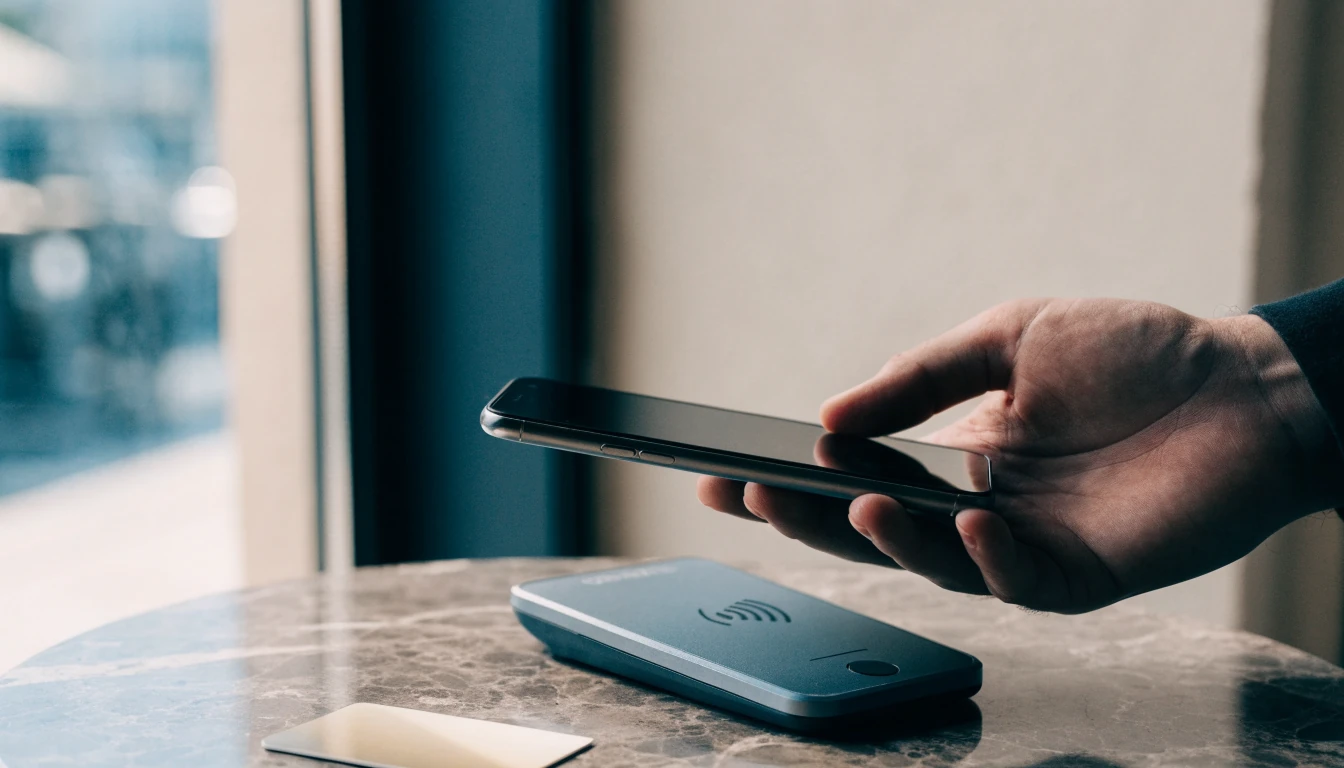
In Australia, paying by tapping a card or phone is an ordinary part of everyday commerce. Contactless credit and debit cards are accepted almost everywhere, and mobile wallets such as Apple Pay and Google Pay are also accepted almost everywhere. That describes the wider payment environment. It does not, by itself, tell us which payment methods a particular online service makes available.
I keep those two questions separate because the same payment brand can work differently across settings. A wallet may be familiar at a shop counter, yet its availability on a website depends on that site’s own payment arrangements. The fact that Australians commonly use Apple Pay therefore cannot establish that an Australian-facing online casino offers it. Familiarity is not confirmation.
The distinction is easy to miss in a market where people move between payment tools without much ceremony. A person might tap a card for one purchase, use a phone wallet for another, then use a service linked to a bank account, such as PayPal. Australians are comfortable switching among cards, mobile wallets and bank-linked services. That flexibility says something about consumer habits; it does not mean every merchant supports every option.
Apple Pay availability is not specified in the information provided for these casinos, so check the cashier before relying on it. The notes below highlight only the available operator details.
Uptown Pokies
Uptown Pokies has operated since 2017 under a Curacao license, and its minimum deposit is A$20. The available information does not confirm whether it accepts Apple Pay.
JustCasino
JustCasino is licensed by the Curacao Gaming Control Board. Apple Pay availability is not specified in the available information.
WinSpirit Casino
WinSpirit Casino holds the Curacao eGaming license OGL/2024/923/0383, issued through Antillephone N.V., and has a A$30 minimum deposit. The available information does not confirm Apple Pay support.
MrPacho
MrPacho lists crypto payouts at 30–120 minutes and fiat payouts at 24–72 hours, with a A$30 minimum deposit. Apple Pay availability is not specified.
Kingmaker
Kingmaker lists crypto payouts at around 90 minutes and fiat payouts at 1–5 days, with a A$30 minimum deposit. The available information does not say whether Apple Pay is accepted.
DragonSlots Casino
DragonSlots Casino is licensed by the Curacao Gaming Authority, with Jumpman Gaming Ltd named in the license information. Apple Pay availability is not specified.
Thor Casino
Thor Casino is licensed in Curacao by Antillephone N.V. for Versus Odds B.V. Its stated minimum deposit is EUR 20, and the available information does not confirm Apple Pay support.
Wild Tokyo
Wild Tokyo lists crypto payouts at 30–60 minutes and fiat payouts at 1–5 days, with a A$10 minimum deposit. Apple Pay availability is not specified.
Neospin
Neospin holds the Curacao Gaming Control Board license OGL/2023/176/0095, associated with Hollycorn N.V. The available information does not confirm whether it accepts Apple Pay.
LuckyVibe
LuckyVibe holds the Curacao Gaming Control Board license OGL/2023/176/0095, associated with Hollycorn N.V. Apple Pay availability is not specified in the provided details.
From the payment side of the counter, the name on a wallet is only one part of the transaction. The merchant’s checkout has to present the method, and the transaction has to be accepted through the relevant payment arrangements. A card stored in a phone wallet is not automatically equivalent to entering that card directly on a website. The customer-facing experience can look simple; the payment route behind it is more specific.
That is why broad claims about an “Apple Pay casino” need careful reading. The phrase can sound like a settled feature, when it may only reflect that Apple Pay is widely used in Australia. A general statement about mobile payments cannot carry the weight of a claim about a named online service. The wording may be familiar. The evidence is not interchangeable.
The same caution applies to searches for Australian online casinos or pokies that accept Apple Pay. Those phrases express a clear interest in using a mobile wallet, but the country’s widespread wallet use does not answer whether a particular cashier offers that option. Nor does the popularity of contactless payments establish that an online gambling service is available or lawful to use in Australia. Payment convenience and market status are separate matters.
 Payments & Crypto for Australian Online CasinosExplore Australian casino payment topics, including cryptocurrency, cards, e-wallets and local payment services, in one focused guide.
 Casinos That Accept Litecoin in Australia: Legal FactsLearn how Australian rules apply to offshore casino services, what Litecoin acceptance can establish, and why operator claims remain unverified.
I have seen payment language do more work than it should. “Accepted” can mean that a method is common in a country, that a payment provider supports a category of transactions, or that a specific checkout currently displays the option. Those are different claims. When a page moves between them without saying so, the reader may mistake a general description of Australian habits for a current operator-level confirmation.
A useful starting point is modest: Australians widely use contactless cards and mobile wallets, and they are accustomed to changing between payment services. Apple Pay belongs in that everyday landscape. Nothing about that pattern makes it a universal online payment option, and it should not be read as one. The cashier is where a service’s displayed payment choices become concrete, not a national trend.
This is especially relevant when a site uses broad language such as “mobile-friendly payments.” That phrase can describe a layout that works on a phone, rather than a wallet payment method. A checkout being usable on a mobile device does not itself mean Apple Pay is enabled. The distinction is basic, but promotional wording often compresses device compatibility and payment acceptance into one impression.
So the Australian context establishes consumer familiarity, not operator coverage. Cards, Apple Pay, Google Pay and bank-linked services are part of ordinary payment behaviour across the country. Moving from that fact to a claim about a specific online cashier requires a separate, direct basis. Without that separation, a familiar payment habit can be mistaken for a confirmed service feature. That is the line to keep clear.
A payment method can be familiar across Australia without being available in every online cashier. That distinction matters with Apple Pay. Contactless payments in shops and mobile-wallet use say something about everyday payment habits; they do not, by themselves, establish that a particular online service offers Apple Pay for deposits.
The cashier is where a deposit method becomes a real option. A logo elsewhere on a site, a general statement about mobile payments, or the fact that Apple Pay works with a card in other settings is not the same as Apple Pay appearing as a selectable method for that transaction. The wording can sound interchangeable in promotional copy. The mechanics are not.
I have seen how a payment label can do more work in advertising than it does at checkout. “Mobile payments accepted” may describe a broad category, while a cashier presents only specific methods. A wallet may also be mentioned in general terms without the deposit flow identifying it as an available choice. The useful distinction is between a method being widely used and a cashier actually offering it. Plain wording matters.
A casino deposit via Apple Pay would mean more than an Apple Pay icon being visible on a page. It would mean that Apple Pay is shown as a deposit method in the cashier and can be selected for the transaction. A deposit amount entered elsewhere in the process does not establish which payment routes are available.
 Bitcoin Casinos in Australia: Payments and Legal ContextLearn how wallet transfers, blockchain confirmations and casino account crediting differ, and why an on-chain record does not establish operator authorisation.
 Casinos That Accept Neteller in Australia: What to KnowLearn how Neteller labels relate to payment availability, Australian audience claims and authorisation—and why they do not verify withdrawal or bonus terms.
That is also why a search for a small Apple Pay deposit does not settle the question. The amount and the payment method are separate parts of a transaction. A cashier might set its own deposit conditions, but a small amount cannot turn an unsupported method into a supported one. Nor does the presence of Apple Pay on a phone establish that a casino has configured its cashier to accept it.
This sounds technical. It is mostly a matter of keeping labels in their proper place. A wallet’s reach in ordinary retail payments is not a cashier’s payment menu.
Deposit details about another method illustrate the difference. A specialist review has reported that American Express deposits are available at some Australian online casinos. That is a statement about Amex, not Apple Pay; one cannot be used as evidence for the other. The reported Amex process involves selecting the method in the cashier, entering card details and an amount in Australian dollars, then submitting the payment. Even that description applies only to the stated method and does not establish an Apple Pay route.
Amex and Apple Pay are not alternative names for the same thing. Apple Pay is a wallet, while Amex is a card network and payment brand. A wallet may be associated with a card, but that relationship does not mean every merchant that accepts the card also offers the wallet in its online cashier. A cashier’s labels have to be read as specific options, not as clues that can be extended to other payment methods.
There is another step that can precede a deposit. Online casinos typically require customers to complete a Know Your Customer assessment before financial transactions. That requirement concerns customer verification; it does not identify which deposit methods the cashier supports. Completing an identity process and seeing a payment logo are different stages, and neither should be treated as proof of the other.
American Express Process
Method Selection
Select American Express as the deposit method within the casino cashier.
Detail Entry
Enter the required card details and the deposit amount in Australian dollars.
Payment Submission
Submit the payment to complete the transaction.
I used to regard a familiar payment brand as a shortcut: if it worked in one context, perhaps it would work in the next. That assumption is easy to make and poor at predicting a cashier’s actual options. Payment acceptance is set at the point where the service presents and processes a method, not by a consumer’s general ability to use a wallet elsewhere.
The same caution applies to phrases such as “Apple Pay deposits.” They can describe a confirmed cashier option, or they can be loose shorthand for the broader use of mobile payments. The distinction is consequential when a deposit decision depends on a particular route. A specific method needs a specific confirmation.
No shortcut.
A label such as “Apple Pay casino” compresses several separate claims into one. It may suggest that a payment method is available, that it works for Australian customers, or that it is a strong choice among alternatives. Those are not interchangeable conclusions. I treat the wording as a claim to be tested, not as proof of what a cashier currently offers.
The distinction matters because payment pages and promotional summaries can be broad, while a cashier presents the options relevant to a particular account and transaction. A general statement about mobile wallets in Australia cannot establish what an individual online service accepts. Nor does a page that mentions Apple Pay, without a clear connection to the operator and its current payment options, settle the question.
A useful assessment separates the claims:
If one part is not established, the whole claim should not be upgraded by implication. A description of a wallet as popular, familiar or widely used says something about consumer behaviour; it does not answer whether a particular cashier lists it. That is the gap behind many confident-sounding summaries.
I also look at how a page handles uncertainty. “Best” is a ranking word, not a payment fact. It needs a stated basis and evidence that the named services meet the condition being ranked. Without that, the label adds confidence but not information. A polished comparison can still rest on an untested assumption.
The same care applies to phrases like “accepts Apple Pay.” The statement may sound definitive, but its scope can be unclear: it might describe a general payment trend, a feature mentioned in a review, or an option actually presented by an operator. Those meanings should not be collapsed. If the wording does not say which one it means, it cannot support a firm conclusion.
Assessment Criteria
To evaluate a payment claim, check if Apple Pay is explicitly identified, tied to the specific service, available for Australian customers, and consistent with the operator's current details.
A specialist review has a different role from an operator’s own cashier information. A review can point to a claim worth checking, but its wording should not be treated as a live confirmation merely because it is specific. Payment arrangements can change, and a third-party summary may not show when or how its information was checked. Attribution helps readers judge the claim’s status; it does not turn that claim into an operator confirmation.
One specialist review says Visa may be accepted more broadly at Australian online casinos than Amex. That is a limited comparison attributed to that type of source, not a reliable rule for every service or a basis for inferring Apple Pay availability. Similar-sounding payment claims need their own support. One method’s reported acceptance cannot stand in for another’s.
In practice, I would keep three levels distinct: a general statement about payment habits, a third-party claim about a service, and confirmation in the operator’s own current payment information. Each carries a different weight. A claim should remain qualified if it has not reached the level it implies. No operator list can be responsibly presented as verified merely because several pages repeat the same wording.
This is less tidy than a ranked table. It is also more honest. Names and ordering can make a page look conclusive while hiding whether the underlying acceptance claim was checked at all. Where a specific service cannot be substantiated, the accurate description is uncertainty—not a recommendation disguised as a finding.
“Instant” can describe one stage of a payment and still say nothing reliable about the time taken for a withdrawal. That distinction matters when a casino payment claim uses the word without making clear which method and transaction it refers to. A deposit and a withdrawal are not interchangeable evidence: a recorded deposit time does not establish how quickly winnings can be returned through the same service, let alone through another one.
The specific timing reported for Amex casino deposits is instant. A specialist review gives a different figure for Amex withdrawals: they can take up to five days to clear. That is a method-specific statement, not a general timetable for casino cashouts. It should not be carried over to Apple Pay, cards, bank transfers or any other route.
The tempting shortcut is to treat all wallet payments as one category. In practice, a label such as “mobile wallet” identifies a broad kind of service, not a shared withdrawal process or a shared settlement time. Apple Pay and Amex are distinct payment methods. Even where both are associated with card payments, one method’s stated timing does not establish the other’s.
There is another wording problem. “Instant withdrawal” can sound like a promise about the whole journey, when a payment description may refer only to a particular step. Without a clearly defined start and end point, the word gives little useful information. A deposit described as instant is about money going into an account; a withdrawal concerns money going out. The direction changes, and so does the claim that needs substantiation. Different transaction, different evidence.
I have seen payment copy turn a narrow operational detail into a broad selling point. The wording may be technically attached to a deposit while the surrounding text encourages an impression of immediate access to funds. That impression does not follow from the deposit timing. Nor does it prove that Apple Pay is available as a withdrawal route. Advertising language can travel farther than the condition it was meant to describe.
Withdrawal Timings
Attention: A recorded instant deposit time does not establish how quickly winnings can be returned, nor does it prove Apple Pay is available for withdrawals.
For an Apple Pay withdrawal claim to be meaningful, it would need to identify Apple Pay as the actual payout method and state the timing that applies to that withdrawal. A general reference to fast payments, or a timing attached to Amex, does not answer either point. The distinction is not pedantic: payment method and transaction direction are the basic conditions that make a speed statement interpretable.
The same caution applies to claims about instant withdrawals from Australian casino sites or pokies. Adding “real money” or “new” to the description does not alter the evidence needed to support a processing-time claim. A new label is not a payment condition. And an instant-deposit description cannot be repackaged as an instant-withdrawal promise.
I would keep the Amex timing in its proper lane: the specialist review reports that deposits are processed instantly and that withdrawals may take up to five days to clear. Those are not Apple Pay timings. Transferring either statement to Apple Pay would make the wording more confident than the underlying detail allows. No shortcut.
Apple Pay is accepted almost everywhere in Australia. That describes the broader payment environment, not the settings of an individual online cashier. A wallet’s everyday availability cannot establish that a particular gambling service offers it, or that it is available to customers in Australia.
I treat “accepts Apple Pay” as a specific claim about a cashier option, not as shorthand for modern payment technology. The distinction is easy to blur. A business may accept contactless payments in person while its online payment arrangements are different. Even where a website supports card payments, that alone does not show that Apple Pay is an option. The label has to refer to the actual service and the actual payment route.
There is also a difference between a wallet appearing somewhere in a payment flow and being accepted by the operator. A device may present a wallet button, but that does not by itself settle whether the operator processes the transaction, whether the option is available to an Australian account, or whether the service is permitted to provide the underlying gambling product here. Those are separate questions.
From the operational side, a payment label is only useful when it describes what the cashier makes available, rather than what a customer’s phone can do elsewhere. The phrasing “pay with Apple Pay” sounds simple; behind it are the operator’s payment arrangements and the conditions attached to the service. Familiarity at the checkout is not proof of those arrangements.
That is why broad statements such as “Australian casinos take Apple Pay” need careful reading. They can turn a national habit into an unsupported claim about individual operators. A wallet can be commonplace across Australian shops and services without confirming its availability at any particular gambling cashier. The two statements are not interchangeable.
The same caution applies to wording such as “casino with Apple Pay” or “Apple Pay accepted.” Without a clear, current statement tied to the specific service and the Australian market, the wording leaves important details unresolved. It may refer to general wallet use, a payment brand shown on a page, or an actual cashier option. Those meanings are not equivalent.
I would reserve the phrase “accepts Apple Pay” for a directly stated option in the relevant cashier, with the market and transaction context made clear. That would still describe payment availability, not the legality or consumer protection status of an online casino service in Australia. Common technology is not confirmation. Nor is it an endorsement.
A payment method and a game catalogue answer different questions. A cashier can show how an account may be funded; it does not establish which games are available, or whether a particular game can be paid for through Apple Pay. The transaction and the game are separate parts of an operator’s system.
That distinction matters because the phrase “Apple Pay casino games” can suggest a direct link that may not exist. Apple Pay, where offered as a cashier option, would relate to moving funds into an account. It would not by itself confirm that any game is available to Australian residents, or that a payment can be assigned to a particular game. I have seen marketing language blur those steps. The wording sounds specific; the underlying claim may only concern a general payment route.
There is also a more basic issue in Australia. The Interactive Gambling Act 2001 prohibits operators from providing online casino games to people in Australia. That prohibition concerns the operator’s service, not a particular payment button. A mobile interface or a familiar wallet does not change the legal position of the underlying activity.
The Act does not explicitly make it a criminal offence for an individual to use an offshore site. That is not the same as approval, or a guarantee that a service is lawful for an operator to provide. The distinction is important: payment access should not be read as a signal that a game offering is permitted.
In practice, payment and game claims need to be assessed on their own terms. A cashier display may describe payment acceptance; a game catalogue may describe what an operator lists. Neither statement proves the other. Nor does a mobile casino interface make those questions interchangeable. A phone can present both account tools and game content on one screen, but that is a design choice, not evidence of a confirmed connection between Apple Pay and any particular game.
For Australian readers, the legal boundary comes first. A payment label cannot make a prohibited service permissible, and a general reference to Apple Pay cannot establish game-specific funding. Separate claims. Separate checks.
Apple Pay does not change the legal status of an online casino. In Australia, the Interactive Gambling Act 2001 makes it unlawful for operators to provide real-money online casino games to people in the country. A payment method may be familiar in everyday commerce, but that does not make an offshore casino service lawful to offer here.
Legal Prohibition
The Interactive Gambling Act 2001 makes it unlawful for operators to provide real-money online casino games to people in Australia.
The distinction falls on the operator, not on the payment button. The Act does not expressly make an individual player’s use of an offshore casino a criminal offence. That is not the same as approval, regulation or a guarantee of recourse. The Australian Communications and Media Authority (ACMA) administers enforcement of the Act, with its role directed at compliance by gambling service providers.
Consumer protection is a separate limit. Australian consumer law does not protect players using offshore casinos. If an operator disputes a balance, changes its terms or fails to process a transaction, the protections available for an Australian domestic service cannot simply be assumed to apply. A familiar wallet does not create a local relationship or give the casino Australian regulatory standing.
That is the part payment pages leave out. “Available” may describe a button in a cashier; it says nothing about whether the underlying service is lawful to provide to Australians or whether local consumer remedies cover a dispute. Apple Pay acceptance, if claimed, cannot settle either point.
In my experience, payment branding can make a service feel closer to ordinary retail than it is. The legal position remains attached to the gambling service, not to the route used to move money. No payment badge changes the Act.
For Australian residents, the relevant distinction is therefore between the operator’s obligations under national law and the player protections that may be absent when dealing with an offshore casino. Those are not interchangeable questions, and a wallet logo answers neither.
A deposit method and a withdrawal route are separate permissions. I have seen payment descriptions blur them together, as if money could simply travel back through the channel it arrived on. The American Express conditions show why that assumption is unsafe: withdrawals to Amex require an earlier deposit made with Amex. Even then, the route is not assured. A specialist casino review reports that some operators may refuse Amex withdrawals or add a fee, and that not every Australian online casino permits them.
Those are Amex-specific conditions, not a template for Apple Pay. A cashier that accepts Apple Pay for deposits would not, on that fact alone, establish that winnings can be sent back to Apple Pay. The wallet may appear as a payment option while the withdrawal process uses a different route, or offers no matching route at all. The details have to be stated separately.
That distinction matters when assessing claims about a casino withdrawal through Apple Pay. “Supports Apple Pay” can describe only a deposit option; it does not necessarily describe withdrawals, eligibility rules, or fees. The wording may be technically accurate and still leave out the part that determines how a balance can be paid out. Small print matters.
I would look for an explicit withdrawal condition naming Apple Pay, rather than treating its presence in the cashier as proof of a return route. The same check applies to any claim about an online casino with Apple Pay withdrawals: the withdrawal terms need to identify the method and explain any eligibility restrictions. Amex offers a concrete comparison because prior use is required for its withdrawal route, while permission and fees can vary by operator. None of those conditions can be transferred to Apple Pay.
So, “Apple Pay accepted” is not enough to establish an Apple Pay withdrawal option. Deposit access and payout access are different claims. Separate them.
A payment method and a game are different parts of an online service. Apple Pay, where offered, is a way to move money through a cashier; it does not by itself identify which games an operator makes available or how any particular game is funded. The phrase “Apple Pay slots” can make those questions sound like one feature. They are not.
I have seen payment language do this kind of double duty: a method is described broadly, then readers are left to infer that it works across every part of a service. That inference is not a payment condition. A cashier option would need to be confirmed for the operator and account in question, while game access is a separate matter. Keep the two claims apart.
The same applies to requests for an Apple Pay pokies list. A list would suggest confirmed operators and a specific connection between the wallet and their game offerings. Naming operators on that basis would turn an unconfirmed association into a recommendation. I would not treat a general statement about mobile wallets in Australia as evidence for a casino cashier, still less as proof of a game-level arrangement.
There is a practical distinction here. A transaction is handled through the payment route selected in the cashier; a game title does not establish which route is available. The wording on a payment page matters, but so does what it actually confirms: whether Apple Pay is an option, where it can be used, and whether the statement concerns deposits, withdrawals or both. Without those particulars, “pay by Apple Pay” is too broad to settle the question.
So the useful conclusion is narrow. Apple Pay’s everyday use in Australia does not establish Apple Pay support for casino games or pokies. No game-specific claim follows from the wallet’s general popularity. Keep the labels separate.
A bonus and a payment method are separate terms, even when an offer page places them side by side. “Apple Pay bonus” can sound like a promotion triggered by paying with that wallet; in practice, the wording would need to be backed by an explicit condition from the operator. Without that condition, the phrase establishes neither that Apple Pay is accepted nor that using it qualifies for an offer.
I have seen how promotional copy can compress several rules into one attractive label. The detail that matters sits in the terms: which deposits count, whether a particular cashier option is eligible, and whether the offer has other restrictions. Those are operator-specific conditions, not facts that can be inferred from the popularity of mobile wallets in Australia.
The same caution applies to claims about a casino bonus for Apple Pay users. A payment option might be available without being eligible for a promotion; a promotion might be advertised without confirming that the named wallet can be used. Neither claim proves the other. Separate checks. Separate terms.
There is also a more basic distinction: a bonus headline cannot confirm that an online casino offers Apple Pay at checkout. That needs to be stated as an available cashier method, while any promotional link needs its own clear wording in the offer rules. General references to “new players” or “first deposits” do not, by themselves, establish an Apple Pay condition.
So a claim that paying by Apple Pay unlocks a casino promotion should not be treated as established unless the operator’s own current terms say so plainly. The wording should identify the qualifying payment method and the relevant offer conditions. Without that, the connection is marketing language, not a confirmed benefit.
Jackpot City Casino, Spin Palace, Ruby Fortune, Ignition Casino, Joe Fortune and PlayAmo are listed as supporting Amex deposits for Australian players. Check the cashier to confirm it is available for your transaction.
Check whether American Express appears as a selectable deposit method in the casino’s cashier. A logo or general mention of mobile payments does not confirm that Amex is available.
Not always: some casinos do not allow withdrawals to Amex, and withdrawal options and limits are set by each casino. Where supported, you must have previously deposited with Amex, and withdrawals can take up to five days to clear.
Amex deposits are typically free, but a casino may charge a 1.5% surcharge on transfers. Amex cards can also incur a 3% currency conversion fee, and withdrawal fees may apply.
Amex deposits typically have no fee, though a casino may apply a 1.5% surcharge to transfers. A 3% currency conversion fee may also apply to Amex cards.
Open the casino cashier and check whether American Express is offered as a deposit method. If it is available, select it, enter your card details and deposit amount in AUD, then submit the payment.