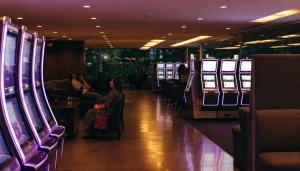
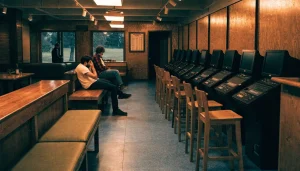
A venue’s general opening status does not confirm that its gaming area is operating, so schedules need checking by place and day.

“Open now” is a time-sensitive description, not a statewide timetable. It can help identify a venue that appears accessible at the moment of checking, but it does not establish when its gaming area opens, whether those hours apply on another day, or whether every NSW venue follows the same schedule. I have seen the wording do more work than it can support. One status label is not a promise of access.
There is also a practical distinction between a venue being open and pokies being available. A club or other premises may have its own general opening information, while access to a particular area may be described separately. A listing that says a venue is open therefore should not be treated, by itself, as confirmation that its gaming facilities are operating. The detail that matters is the venue’s current information about access to those facilities.
Opening details need to be checked against the place and the date in question. A result that was accurate when it was posted may not describe the current schedule; a general listing may not clarify whether it refers to the whole premises or to gaming access. When published information is unclear, the venue is the appropriate place to confirm it. That is less convenient than trusting a short label, but it avoids turning an assumption into a plan.
Choosing online pokies for New South Wales in 2026 calls for checking the details that are available before deciding whether an option suits you. This list gives a concise reference to each operator’s stated licensing, deposit, or payout information.
Uptown Pokies
Uptown Pokies has operated since 2017 and lists a Curaçao licence. Its minimum deposit is A$20.
JustCasino
JustCasino lists a licence from the Curaçao Gaming Control Board.
WinSpirit Casino
WinSpirit Casino lists Curaçao eGaming licence OGL/2024/923/0383, issued through Antillephone N.V. Its minimum deposit is A$30.
MrPacho
MrPacho states crypto payouts take 30–120 minutes and fiat payouts 24–72 hours. Its minimum deposit is A$30.
Kingmaker
Kingmaker states crypto payouts take about 90 minutes and fiat payouts 1–5 days. Its minimum deposit is A$30.
DragonSlots Casino
DragonSlots Casino lists a Curaçao Gaming Authority licence, with Jumpman Gaming Ltd identified in the licensing information.
Thor Casino
Thor Casino lists a Curaçao licence through Antillephone N.V., with Versus Odds B.V. identified. Its minimum deposit is EUR 20.
Wild Tokyo
Wild Tokyo lists a Curaçao licence and states crypto payouts take 30–60 minutes, while fiat payouts take 1–5 days. Its minimum deposit is A$10.
Neospin
Neospin lists Curaçao Gaming Control Board licence OGL/2023/176/0095, with Hollycorn N.V. identified.
LuckyVibe
LuckyVibe lists Curaçao Gaming Control Board licence OGL/2023/176/0095, with Hollycorn N.V. identified.
The same care applies when looking for early or late access. A request for pokies before the usual daytime period, or later in the evening, does not prove that a venue offers those hours. Nor does one venue’s schedule establish the schedule of another venue elsewhere in NSW. The useful answer is venue-specific and current, not a broad statewide claim.
I would treat a map result or directory status as a starting point, not final confirmation. Check whether the information is dated, whether it refers to the relevant day, and whether it says anything about access to the gaming area. If those points are absent, the status remains uncertain. Short listings often compress several conditions into a single word. Convenient wording. Limited detail.
An “open” label says nothing about a pokie’s payout percentage. Opening access and game return are separate matters, and a venue’s hours cannot be used to infer how a machine performs. That distinction matters because availability is easy to observe, while a payout claim needs its own explanation and evidence. A venue shown as open is not, on that basis, a “best paying” venue.
The label also does not establish that access is suitable for everyone. In NSW, the legal age for gambling on poker machines is 18, and venues must check identification for poker-machine gambling. Trying to gamble without meeting the age requirement can carry legal consequences. Opening information is not an exception to that rule.
My practical reading is narrow: “open now” may indicate that a venue is currently listed as open, but it cannot settle every question about gaming access. Confirm the relevant venue’s current details before making a trip, and do not assume the same hours apply across the state. If gambling is part of the visit, set a session budget in advance and do not raise bets to recover losses. Chasing losses changes the decision, not the odds.
“Best paying” sounds like a simple comparison. In practice, a game title alone cannot tell anyone what a particular session will return. I have seen the label do a lot of work in promotional copy: it makes a long-run statistical measure sound like a near-term promise. It is not one.
Names that may appear in discussions of pokies include:
That is a list of titles, not a ranking. Their names do not establish which pays more, which is available at a particular venue, or which will suit a particular player. A “best pokies in NSW” list that ranks games needs comparable, relevant information behind it; popularity or a striking jackpot feature is not the same thing.
The central mechanic is the Random Number Generator, or RNG. Every online pokie uses one to determine spin outcomes. Each spin is independent: the RNG does not keep a score of earlier results and use it to decide what comes next. A run of losses does not make a win due, and a recent win does not make the next spin less likely to pay. The previous spin is over. That is the point.
This is why patterns can be persuasive without being predictive. A sequence of similar symbols, near misses or repeated losses may feel like evidence that a result is approaching. It is not a reliable way to read the next outcome. Increasing a bet to recover losses does not change the RNG’s independence; it only puts more money at risk. I would not chase losses, and I would set a session budget from money available for gambling rather than money needed elsewhere. Stop when that budget is gone. No recovery system.
RTP, or return to player, is another term often squeezed into “best paying” claims. It describes the theoretical share of wagered money a game returns across a very large number of spins. It is a long-run statistical measure, not a forecast for one player, one visit or one short session. Results in an individual session can differ sharply from that theoretical figure. A quoted RTP, on its own, cannot promise a payout or show how a particular session will unfold.
That distinction gets blurred in casino copy. A number attached to a game can look precise, but its meaning depends on the scale over which RTP is calculated. It does not mean a player gets that share back after a set of spins. Nor does it tell the player when a win will arrive. “High paying” is an advertising phrase unless it is tied to a clearly explained measure—and even then, the measure describes a model, not a personal result.
Progressive jackpot pokies work differently in one visible respect: a small portion of each bet is added to a growing jackpot. The prize can therefore build as play contributes to it. That feature does not make a jackpot predictable, nor does it turn a game into a dependable way to win. The growing figure attracts attention; the underlying uncertainty remains.
When comparing casino NSW pokies or games described as the best paying pokies in NSW, the useful distinction is between a title, a mechanic and a claim. Dragon Link or Mega Moolah is a title. An RNG describes how outcomes are generated. RTP describes theoretical long-run returns, while a progressive jackpot describes how a prize pool grows. None of those, separately or together, guarantees what happens in a session.
That is what the slogan leaves out.
An online pokie appearing in a search or being named in a promotion does not mean it can be accessed from NSW. Online casino operators can restrict games by country, and that restriction may apply to a particular software provider as well as to an entire site. The visible catalogue is therefore not necessarily the same for every location.
The restriction can be based on the internet protocol (IP) address, which indicates a device’s apparent geographic location. If a game is blocked for Australian access, it may not appear in the lobby at all. A title that does appear may still fail to load if a location check identifies a restriction. That is an access control, not evidence that the game has stopped operating or that a particular NSW venue offers it.
The legal distinction matters. Under the Interactive Gambling Act, an Australian-run online casino cannot offer real-money casino games to people in Australia. That includes pokies. Offshore platforms are treated differently in the sense that Australian players’ use of them is technically not illegal, but those platforms are not regulated under Australian law. That does not make them locally approved or give their customers the protections of an Australian-regulated online casino market. A grey area is not a safeguard.
Country-based blocking can make a title unavailable before a player reaches the game itself. Providers may also restrict their own games, so a platform can show other pokies while omitting particular titles. In practical terms, a blank search result, a missing lobby entry or a failed launch can all reflect a geographic restriction.
I have seen promotional language make this look like a temporary technical nuisance: try another link, refresh the page, or switch location. That framing leaves out the reason the block exists. If access is restricted by location, trying to disguise that location does not resolve the underlying restriction.
A VPN can alter the apparent digital location by routing a connection through another country. Using one to reach region-blocked pokies breaches the site’s terms of service and may lead to account suspension. The displayed catalogue may change, but that does not turn an offshore platform into a service regulated under Australian law or guarantee that access, an account, or winnings will be protected. A workaround is not a licence.
Labels such as “no deposit”, “real money” or “high limit” describe marketing claims, not whether a service may lawfully offer online casino games in Australia. Nor does a bonus or a stated maximum bet establish that a game is available to someone connecting from NSW. Those details can be subject to location restrictions and the operator’s terms.
The same applies to claims about the “best paying” pokies. A game’s presence in a promotional list says nothing about whether it is accessible from an Australian IP address, and it should not be read as a promise of returns. Availability and payout claims are separate questions.
For searches about online pokies in NSW, the useful distinction is between what a platform advertises and what it permits from an Australian connection. Australian-run operators cannot legally provide real-money online casino games to people in Australia; offshore services are outside Australian regulation, and games may be blocked by country. Neither a bonus label nor a VPN changes those conditions.
VPN Risks
Using a VPN to access region-blocked pokies breaches site terms of service and may lead to account suspension.
Location wording can make a listing sound more precise than it is. “Near the airport” might refer to a venue inside an airport precinct, somewhere in the surrounding area, or simply a result that has been tagged for the broader city. Those are different claims. I treat the label as a starting point, not proof of a particular address or how close it is.
The same caution applies to a request for pokies near a NSW airport. NSW is not a single airport location, and a result associated with the state does not, by itself, establish that a venue is at or beside any airport. The useful detail is the venue’s own address, stated plainly. If that is absent, a map pin or promotional description cannot settle the question.
A “near me” result is also shaped by the location a device or service can identify. That may help sort results geographically, but it does not confirm that a venue is open, that poker machines are available there, or that a distance claim is accurate. I have seen location labels do a lot of work while leaving the practical point unsaid: where the place actually is.
CBD wording needs the same discipline. A result tagged to a central business district may be in the district, on its edge, or merely associated with it. “CBD” is a broad location label, not an address. It should not be read as confirmation of a particular club or machine inventory. That distinction matters because a map category can make a nearby place look like a CBD destination without explaining the boundary being used.
Cross-border searches create another ambiguity. A request involving NSW and Victoria may mean a venue close to the state line, a route that crosses between the two states, or a search that combines both areas. The wording alone cannot identify which. A venue’s address establishes which state it is in; proximity language does not. Crossing a state border changes the location being described, not the meaning of a search label.
For north NSW, a regional description narrows the broad area but still does not identify a town, address, or particular venue. A result using “north” may cover a wide stretch of the state. Without a confirmed address, it is not sound to turn that phrase into a claim about what is nearby.
My rule is simple: separate the place name from the proximity claim. An address can identify a location; “near,” “airport,” “CBD” and “north” need context before they can support a useful comparison. No shortcut.
A “best” label can make a venue comparison sound settled when it is not. In NSW, clubs are part of the physical pokies landscape, but one measurable distinction does not tell the whole story. Club Liverpool leads NSW clubs in the number of poker machines currently operating. That is a comparison by machine count, not a verdict that it is the best venue for every purpose.
Machine Count
Club Liverpool leads NSW clubs in the number of operational poker machines.
I have seen how a single figure can take over a venue description: it is easy to compare, easy to headline and easy to mistake for a measure of quality. But a larger machine inventory does not, by itself, establish that a venue is better. It says nothing about whether its setting, facilities or overall experience suit a particular person. Those are separate considerations, and a machine count cannot answer them.
That is the limit of the available comparison. Club Liverpool can accurately be identified as the NSW club with the largest operational poker-machine total. It would go beyond that fact to rank every club or declare one venue the overall winner. A ranking needs a stated basis; without one, “best” is promotional language, not a useful measurement.
For someone comparing NSW venues, the practical distinction is between a concrete attribute and a broad claim. A venue name and a machine-count comparison can be checked as specific information. “Best venue” needs a definition: best by what measure? Without a disclosed measure, different listings may use the same word while describing entirely different things. The wording sounds decisive. The evidence may not be.
The same caution applies when a list combines clubs with other kinds of venues or presents a state-wide order without explaining its method. A list is not automatically a fair comparison just because it contains names. The reader needs to know what is being counted or assessed, and whether the claim is about machines, the venue itself or something else. Where that distinction is absent, the ranking cannot carry much weight.
For a NSW club comparison, the defensible statement remains narrow: Club Liverpool has more operational poker machines than any other club in the state. That is useful when machine numbers are the specific point of comparison. It does not establish a general winner among NSW pokies venues, and it should not be dressed up as one.
A clean comparison stays within its measure. Machine count is machine count. Best overall is another claim entirely.
A “24-hour” label sounds definitive, but it is only useful when it describes access to the poker-machine area, not simply a venue’s general operating hours. A club may have different areas, services or access arrangements, and a broad opening-time entry does not by itself establish that pokies can be played throughout the day and night.
I have seen how easily a short listing can flatten those distinctions. “Open” may refer to the premises, while the practical question is whether the gaming area is accessible at the time in question. The wording matters. So does the date on which the hours were checked.
That is why NSW pokies hours should be treated as venue-specific, not as a statewide schedule. There is no single opening time that can be applied to every club or other venue in the state. A claim about 24-hour pokies venues in NSW needs to be tied to the particular venue and to its stated gaming-area hours. Without that, “24-hour” is a label, not a dependable description.
A useful check is direct and narrow: confirm the current hours for the gaming area with the venue itself, rather than relying only on a general business listing or an old directory entry. Where a venue publishes separate information for its gaming facilities, that is more relevant than its overall opening status. A venue’s own current notice can also clarify whether access is continuous or subject to a closure period.
There is a difference between finding a venue that is open at a given moment and establishing that its pokies operate around the clock. “Open now” answers a time-sensitive question; it does not prove uninterrupted access across every hour. Likewise, an old reference to all-night operation should not be treated as confirmation of present arrangements.
For anyone comparing NSW pokies opening hours, the sensible record is the venue name, the date of the check and the exact wording used for gaming-area access. If the information only says the venue is open, it does not settle the 24-hour question. If the venue cannot confirm continuous access, the claim should not be presented as verified.
That may sound like a small distinction. It is not. A venue can be open while the relevant area is unavailable, and a listing can remain visible after its details have changed. On a 24-hour search, precision is the whole point. No blanket promise.
A search for pokies in Parkes is about a particular town, not a reliable guide to what is available across New South Wales. A venue’s location, machine offering and operating arrangements are local details; the state’s general rules do not establish any of them for Parkes. The same distinction applies to searches for Port Macquarie: one town’s details cannot be inferred from another’s, or from statewide conditions.
That matters when the word “best” appears in a local search. It can mean a nearby venue, a particular game, or simply a place that suits someone’s plans. Those are different comparisons. A broad label such as “best pokies NSW” cannot settle a Parkes-specific choice without clear, current evidence about the thing being compared. I have found that location names can make a general claim look precise when it is not.
The statewide condition with direct relevance is mandatory pre-commitment. In NSW, players set a loss limit before playing. It is a player-protection measure, not a description of the machines, a rating of venues, or proof of a particular arrangement in Parkes. Keeping those categories separate prevents a state rule from being mistaken for a local listing.
A limit set in advance also changes the practical frame: the decision is made before play, rather than after losses have accumulated. It does not predict an outcome or make a venue or game more favourable. “Best” is still a matter of what is being assessed. No shortcut.
Attention: In NSW, players must set a loss limit before playing through a mandatory pre-commitment system.
For anyone comparing local information, the useful distinction is between a claim about NSW as a whole and a claim about one Parkes venue. A statement about the statewide pre-commitment requirement belongs to the first category. A machine count, venue list or local ranking would need to be established specifically for Parkes. Without that distinction, broad information can be dressed up as local detail.
The same care applies to nearby towns. Port Macquarie and Parkes are separate locations; a claim tied to one does not establish what is available in the other. NSW rules provide a common framework, but they do not turn a statewide fact into a town-by-town inventory. A local name alone is not evidence of a local offering.
That is useful context for understanding the state’s conditions, but it should not be confused with a guide to Parkes venues or a verdict on which pokies are best. A boundary worth keeping.
A Crown-branded result is not, by itself, proof that a particular NSW location operates pokies. The name may identify a company, a property or material about a venue elsewhere; those are different things. I have seen how easily a brand name gets treated as a venue listing, then repeated as if the location and its facilities had already been confirmed. That is not a sound basis for describing a local pokie room.
The distinction matters for searches about Crown and NSW. A reference to Crown does not establish that there is a Crown casino in NSW, nor that a Crown venue there has pokies. It also does not establish which games or facilities are available. A venue claim needs to be tied to the specific location and what it actually offers, not inferred from a familiar name.
“Best pokies room” is another phrase that can smuggle in a conclusion. Best by what measure: the number of machines, a particular game, accessibility or something else? Without a defined comparison and evidence about the venues being compared, the label is advertising language, not a useful finding. The room’s name cannot do the work of a comparison.
The same caution applies to questions about a maximum cash payout. A Crown name does not establish a payout ceiling, and a figure should not be attached to a venue without a reliable, location-specific basis. The search phrase alone cannot settle the terms that apply. No shortcut.
There is a separate issue when “Crown pokies” refers to playing online. Under the Interactive Gambling Act, operators based in Australia cannot offer online casino games such as pokies, blackjack and roulette to people in Australia. That is a rule about the provision of online casino games, not evidence that a physical NSW venue exists or that a named venue has a particular machine room. The two questions should not be blended.
In practice, a brand mention, a physical venue listing and an online casino offer are three different claims. I would not treat one as proof of the others. A clear location and a specific description of what is offered matter; a familiar name alone does not answer either the venue question or the payout question.
Under the Interactive Gambling Act, Australian-run online casinos cannot legally offer real-money casino games, including pokies, to people in Australia.
A club’s CBD address does not create a separate set of poker-machine eligibility rules. The age threshold applies across NSW: gambling on poker machines is restricted to people aged eighteen or older. Location does not change that condition.
Identification is part of the control, not a formality. NSW venues must check identification for poker-machine gambling, and failing to comply with the applicable rules can have legal consequences. In my experience, this is where a broad claim such as “everyone welcome” stops being useful: access still depends on meeting the legal requirements.
NSW also requires players to set a loss limit before playing through a pre-commitment system. That is a statewide player-protection condition, not a feature exclusive to CBD clubs. It puts a boundary in place before play begins; it does not make gambling risk-free or turn a loss limit into a forecast of what a session will cost.
“Best” is a slippery label in a CBD context. It can refer to convenience, the feel of a club or a particular machine selection, but none of those descriptions establishes that a venue is better for every player. A CBD location alone says nothing about eligibility, protections or the experience inside. No universal winner.
Self-exclusion is a different issue from age checks and pre-commitment. The term describes a request to restrict one’s own access to gambling, but the statewide details of any such arrangement should not be inferred from a club’s location or from its general poker-machine rules. The fact that a venue is in central Sydney, or in another NSW CBD, does not by itself establish what self-exclusion process it offers or how that process works.
The practical distinction is between statewide conditions and venue-specific arrangements. The minimum age and mandatory pre-commitment apply across NSW; particular club procedures are not interchangeable simply because the venues are in central business districts. I would treat an unspecific “CBD pokies” label as geography, not evidence of a special exemption, a particular protection or a reliably superior choice.
“Cashless” describes how gambling funds are handled; it does not, by itself, describe a player-protection rule. NSW has mandatory pre-commitment systems: players set a loss limit before playing. That condition is about deciding a limit, not proof that an Electronic Gaming Machine accepts cashless payment or that a particular club has cashless machines.
I have seen promotional labels blur those distinctions. A system can set a limit without making a machine cashless, and a machine described as cashless does not, on that description alone, explain what pre-commitment arrangements apply. The label is not the whole operating detail.
Separate claims need separate confirmation. A statement about cashless gaming should identify the venue and the machines it covers. A statement about pre-commitment should explain the limit-setting condition. Treating one as evidence of the other makes a venue feature sound like a statewide rule. It is not.
Newcastle is a location, not a ranking. Without an identified venue and current details, calling a club the “best” would imply a comparison that has not been established. The same caution applies to claims about machine inventories or cashless facilities. A polished listing can sound definitive while leaving those practical distinctions unresolved.
For NSW poker-machine gambling, the legal age is 18, and venues must check identification. I regard that as a basic access condition, not a measure of which venue is better. Before playing, set a session budget that fits the available bankroll; do not chase losses or raise bets to try to recover them. A limit only helps when it is treated as a limit.
The useful distinction is simple: pre-commitment concerns a player-set loss limit, while cashless gaming concerns the way funds are used. Neither label establishes a Newcastle venue recommendation. No shortcut.
Some pokies feature progressive jackpots, which grow as a small share of each bet is added to the prize pool. Others offer buy bonus games, letting players pay a set amount to enter a bonus round directly.
Region blocking uses a player’s IP address to identify their location and restrict access to games or software in certain countries. Blocked games may be missing from the lobby or fail to load.
NetEnt blocked its wide-area progressive jackpot games from Australian players, including Mega Fortune and Hall of Gods. NYX Gaming/Next Gen titles such as Foxin’ Wins and Doctor Love were also region-blocked.