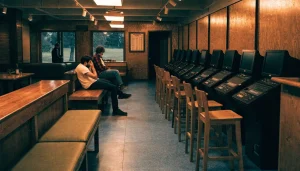
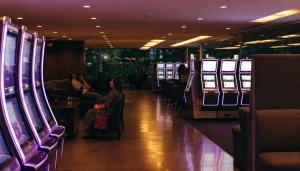
Separate map proximity from confirmed venue facilities and machine information, including claims about returns and opening hours.

A map can answer a narrow question: where a place is in relation to Melbourne Airport, the CBD or another landmark. It cannot, by itself, establish that a particular venue has pokies, which machines are there, or the conditions under which they operate. I keep those questions separate because a nearby pin and a verified machine detail are not the same thing.
That distinction matters for searches around the airport. A result described as being near Melbourne Airport may refer to a broad area, rather than a venue inside the airport or within a short walk of it. “Near” has no fixed meaning in a search result: it may reflect a chosen map radius, a page’s wording or a place’s general location. The label is a starting point for checking, not proof of what is on the floor.
The same applies to searches combining the airport with Melbourne more generally. They may express a practical need to find somewhere in the city before or after travel, but they do not establish that airport premises offer pokies. Nor does a page mentioning the airport confirm a venue’s present facilities. Search results can bring together directory entries, old descriptions and loosely worded location pages; proximity is easy to display, while current operating detail takes separate confirmation.
I would treat “best” with the same care. In a location-based search, it can mean closest, easiest to reach or simply most visible online. It does not identify a tested ranking of machines. A venue’s address offers no evidence about game selection, return settings or the outcome of a session. A machine’s presence, if confirmed, would still not make it a “best” machine in any measurable sense.
Nearby inner-city searches have a similar limitation. Melbourne Central is a useful landmark for orienting a search around the centre, but the landmark does not verify machines at a particular nearby address. A result might be close on a map while requiring a longer route on foot or by transport; the map position alone says little about access. The phrase “near the CBD” is broader still, and may pull in places that are not especially convenient from the point someone has in mind.
Port Melbourne introduces another geographic label, not a machine inventory. A result associated with the suburb does not show that pokies are available at the listed venue, or that every venue in the area has the same facilities. The suburb name can help narrow the part of Melbourne under consideration. It cannot stand in for venue-level information.
This is where location pages can create more certainty than they deserve. A listing may show an address, a category and a pin. Those details can be useful for orientation, but they answer different questions from whether pokies are currently offered or how they are operated. Even a venue name appearing repeatedly across directories is not independent confirmation if the entries draw on the same underlying description.
The more reliable distinction is between a geographic clue and a venue-specific statement. “In this area” describes an approximate location. “This venue has these machines” is a claim about a particular place and needs evidence tied to that place. “These machines are operating under these conditions” is narrower again. One statement cannot be safely inferred from another.
I have seen how easily a neat map result becomes shorthand for a decision. The result appears precise because the pin is precise; the information behind it may not be. A pin is not an audit. A venue description may also become stale without the map changing, leaving the location correct while the facility details are not.
For Melbourne Airport, Melbourne Central, Port Melbourne and the CBD, the practical reading is therefore modest: location can help sort the geography, but it cannot verify machines, venue conditions or suitability. The same principle applies when a search is framed as somewhere “near me.” That wording depends on the searcher’s position and the map’s interpretation; it does not supply evidence about a venue.
A useful venue check keeps these categories apart: where the address is, what the venue says it offers, and what is confirmed about its present operation. If only the first point is clear, the rest should remain open rather than being filled in by the map. No shortcut.
Attention: A map pin or a venue's address is not proof of which pokies are available or their current operating conditions.
A Melbourne venue can be open without every part of its operation being available. A restaurant, bar or hotel may welcome customers while gaming areas follow separate operating conditions. That distinction matters when a listing says a venue is open: the listing answers a question about the premises, not necessarily about whether pokies are operating at that moment.
I have seen the difference get lost in the handover between a venue’s public-facing information and what a customer expects on arrival. A business-hours panel may be current for the venue as a whole, yet say nothing precise about a gaming area, temporary interruptions or changes made on the day. “Open now” is a useful status, but it is not a machine-by-machine confirmation.
The same applies to early or late visits. A time shown on a map or directory can be out of date, can refer to a different service, or can reflect a general venue schedule rather than the conditions for gaming. Without a current statement from the venue, a specific opening time should not be treated as confirmation that pokies are available. A direct check with the venue is the practical way to establish what its own current arrangements are.
That limitation is not a technicality. Opening a building and operating gaming machines are distinct decisions, and responsible-gambling obligations attach to the latter. A venue’s door being open does not tell the public whether its gaming area is open, nor does it establish what staff or support arrangements are in place while machines are running.
A report by regionriverina.com.au describes a requirement taking effect from 1 July: venues operating more than 20 gaming machines are to have a dedicated Responsible gambling officer (RGO) on duty whenever those machines are operating. The report also describes a one-month transition period for venues to remove signage and put the officer arrangements in place. These are operational requirements, not a public timetable. They do not tell a customer when a particular Melbourne venue opens, and they should not be read as confirmation that a named venue currently meets a condition.
The reported changes also include keeping a gambling incident register. Its purpose is to record events, including situations where a patron shows signs of being at risk of gambling harm or already affected by it. That record-keeping requirement makes clear that responsible-gambling work is not just a sign at the entrance. It involves identifying and documenting incidents as they arise. Still, the existence of a rule does not confirm that a particular venue’s machines are operating at a given hour.
This is where venue information tends to blur two separate questions: “Is the venue open?” and “Are pokies operating under the relevant conditions?” A general listing can help with the first, but the second needs information specific to the gaming area and current operation. Even a posted schedule is not necessarily a live status update.
“Open” sounds definite. In practice, it may describe only the premises. The useful distinction is between a venue’s published hours and confirmation from the venue about gaming operations at the time in question. Neither one establishes a payout percentage. Nor does a visible gaming area prove that machines are currently operating.
For a reliable answer, the information needs to come from the venue itself and refer to the gaming area, not merely the business address. If that detail is unavailable, the honest answer is that the current machine status has not been confirmed. A search result can point towards a place; it cannot stand in for the venue’s own operational update.
The RGO and incident-register measures concern what happens while gaming machines operate, not what appears in a general opening-hours field. That is the useful distinction: open premises, active machines, and responsible-gambling arrangements are related, but none automatically proves the others. Short version: separate checks.
Choosing pokies in Melbourne for 2026 is easier when you focus on the details that matter to your play, such as licensing, deposit minimums and payout methods. Use these notes as a starting point and check the terms that apply to Australian players before signing up.
Uptown Pokies
Uptown Pokies has operated since 2017 under a Curacao license. Its minimum deposit is A$20.
JustCasino
JustCasino is listed with a license from the Curacao Gaming Control Board. This licensing detail is the available point of reference for assessing the operator.
WinSpirit Casino
WinSpirit Casino holds Curacao eGaming license OGL/2024/923/0383, issued by Antillephone N.V. Its minimum deposit is A$30.
MrPacho
MrPacho lists crypto payouts in 30–120 minutes and fiat payouts in 24–72 hours. The minimum deposit is A$30.
Kingmaker
Kingmaker lists crypto payouts at around 90 minutes and fiat payouts in 1–5 days. Its minimum deposit is A$30.
DragonSlots Casino
DragonSlots Casino is licensed by the Curacao Gaming Authority, with Jumpman Gaming Ltd named in connection with the license. This provides a clear licensing detail for readers to consider.
Thor Casino
Thor Casino is licensed in Curacao by Antillephone N.V., with Versus Odds B.V. named in connection with the license. Its minimum deposit is EUR 20.
Wild Tokyo
Wild Tokyo lists crypto payouts in 30–60 minutes and fiat payouts in 1–5 days. Its minimum deposit is A$10, and it has a Curacao license.
Neospin
Neospin is listed with Curacao Gaming Control Board license OGL/2023/176/0095, held by Hollycorn N.V. This licensing information is the available basis for considering the operator.
LuckyVibe
LuckyVibe is listed with Curacao Gaming Control Board license OGL/2023/176/0095, held by Hollycorn N.V. The license is the available factual detail for readers to consider.
“Best paying” sounds like a simple comparison, but a published return does not tell the whole story. A return-to-player figure, or RTP, describes a game setting; it does not establish which setting a particular venue has selected. A specialist review reports that some providers make multiple RTP settings available to casinos for the same pokie. As a result, one title can carry different return percentages in different venues.
That distinction matters when comparing Melbourne casino pokies. A figure attached to a game name may describe one configuration, not every machine bearing that name. Unless the setting used by a particular venue is established, the published figure cannot confirm the return of a machine there. The title alone is not enough.
I have seen how a single headline number can flatten those conditions. It looks like a clean basis for choosing between games or venues, while leaving out the question that matters most to the comparison: which setting applies? A percentage without that context can make a claim sound more precise than the available information allows. Polished, but incomplete.
RTP also should not be read as a promise about the next session or an individual result. Each spin is produced through a Random Number Generator, so its outcome is determined separately from the previous one. A run of wins does not make another win due, and a losing run does not mean a return is about to arrive. The game does not remember the sequence in the way a person watching it might.
That is why a claimed “best paying” option cannot be established by a short run of play, a story about a jackpot, or a venue’s reputation. Those may describe someone’s experience or an impression of a place. They do not identify a machine’s selected RTP setting, and they cannot turn random individual outcomes into a reliable prediction.
The same caution applies to searches for pokies in Melbourne CBD or the city centre. A venue’s location can narrow down where a machine might be found, but it does not reveal its configuration. Nor does a title appearing in a list prove that the same return setting is in use across Melbourne. A ranking that does not disclose the relevant setting is not a meaningful comparison of returns.
I would separate three things that are often bundled together: the game’s name, the return setting offered to a casino, and the outcome of a particular spin. The name identifies the title. The setting may affect the published return associated with that title at a venue. The spin remains an independent random result. None of those facts substitutes for the others.
A game's name identifies the title, but the return setting offered to a casino may affect the published return at a venue, while each individual spin remains an independent random result.
So “best pokies in Melbourne” is not a dependable payout ranking unless the comparison establishes what setting each venue actually offers. A published RTP can be useful context, but it is not proof of a particular machine’s configuration and it cannot forecast an individual result. For a “best paying” claim, the missing detail is decisive. No setting, no sound comparison.
A venue’s reputation and its records answer different questions. In my experience, the word “best” tends to blur them: a place may be familiar or well located, but that does not establish what its records show about machine operation, or what will happen during an individual visit. A Melbourne venue name alone is not evidence of a particular machine’s performance.
Reporting is most useful when its scope is clear. A record about a venue can describe an operational or compliance matter at that site. It cannot, by itself, show that a particular person will have a particular result. Nor does a record of an incident establish a ranking among Melbourne pokies venues. Those are different claims, and they require different evidence.
One reported responsibility concerns staff oversight. Regionriverina.com.au reported that, from 1 July, venues operating more than 20 gaming machines would need a dedicated responsible gambling officer (RGO) present while those machines are running. The threshold and the operating condition matter: the requirement described is tied to machine numbers and operating time, not to a venue’s reputation or a promise about outcomes.
The same report described a gambling incident register for recording events, including situations where a patron’s behaviour suggests they may be at risk of, or experiencing, gambling harm. That kind of record is about recognising and documenting incidents. It is not a scorecard for comparing venues, and it cannot predict how a session will go for another patron. The distinction is practical. Oversight records concern how a venue responds; they do not turn chance into a forecast.
When assessing claims about pokies venues in Melbourne, the useful question is therefore not simply whether a venue has “good” machines. It is what the claim is based on. A count of machines, a staffing requirement, or an incident entry each describes something different. None should be stretched into a statement about which venue pays best. That is a category error.
I would treat an unqualified “best pokies venue in Melbourne” label as a conclusion in search of its method. Without a stated measure and records that actually support it, the label tells little. A venue-level requirement can show what oversight is expected under the reported rule; an incident register can document events that call for attention. Neither establishes a machine-by-machine comparison or a player’s likely result.
This also applies to CBD venues. A location and a venue name do not tell the reader what machine-level information is available, whether two sites can be compared on equivalent terms, or what a specific person will experience. A responsible account keeps those limits visible instead of dressing one kind of information up as another.
The useful standard is modest: distinguish documented venue processes from claims about machines, and distinguish both from an individual result. Reporting can support scrutiny of responsibilities and recorded incidents. It cannot promise a winning session. No shortcut.
A search for pokies at Crown Melbourne can sound like a request for a machine-by-machine guide. That is not what venue rules provide. Rules describe how gaming must be managed; they do not establish which games are on the floor, their settings, or what a particular player will receive. I would keep those questions separate. A venue name is not a payout record.
One reported requirement concerns venues with more than 20 gaming machines: from 1 July, a dedicated Responsible gambling officer (RGO) must be on duty while the machines are operating. The report on regionriverina.com.au also describes a one-month grace period for venues to remove signage and introduce the officer. Those details should be read as reported requirements, not as confirmation of Crown Melbourne’s machine count, staffing arrangements or present compliance.
The practical point is the link between operation and oversight. The reported RGO duty applies while machines are running, rather than merely when a venue is open. That distinction matters: a building’s opening status does not, by itself, show what gaming facilities are operating or who is on duty for them. Specific claims about Crown’s arrangements need their own evidence.
The same report describes a gambling incident register for recording occurrences, including signs that a patron may be at risk of, or affected by, gambling harm. That kind of record is about events and responses, not a scorecard for pokies. It cannot tell a prospective player which room is “best,” identify a favourable machine, or predict an individual result. Oversight is not a recommendation. Different job.
Signage is also part of the operating environment. Directional signs to gaming lounges should not be placed within sight of ATMs or EFTPOS terminals, and signs directing patrons to ATMs should not be visible from gaming machines. These are placement requirements, not clues to a venue’s machine selection or return settings. A photograph of a sign, or its absence, would not establish how a game performs.
I have seen promotional language collapse these categories: a responsible-gambling measure is presented as though it certifies the experience as a whole. It does not. An RGO, an incident register and signage controls concern management and harm response. None verifies a list of Crown Melbourne pokies, a “best pokies room” ranking, or machine-level payout information.
So a Crown-specific account should be precise about what it can support. Venue rules can explain responsibilities attached to operating gaming machines. They do not substitute for current, machine-specific evidence, and they should not be stretched into claims about payouts, availability or the quality of a room. The distinction is plain, even when the advertising is not.
A Melbourne address does not change the rules for real-money online pokies. The Interactive Gambling Act 2001 prohibits companies from providing these services to people in Australia unless they hold a domestic licence. No Australian online casino has been licensed, so there is no locally licensed route for playing real-money pokies online.
The distinction matters: the law targets the operator, not the individual player. Australians are not criminally liable simply for playing with an offshore site that accepts them. That does not make the service lawful for the company to provide, or give the player the protections and remedies that a domestic licence might suggest.
Legal Risk
Real-money online pokies are prohibited in Australia under the Interactive Gambling Act 2001, and players have no local legal recourse if offshore casinos refuse to pay winnings.
I have seen “available in Australia” used as if it meant approved here. It does not. A website loading, accepting a payment method or showing Melbourne-themed language is not evidence of Australian authorisation. Nor does a cashless payment option alter the legal status of online gambling. Payment convenience and legal protection are separate questions.
The practical risk becomes clearest when a dispute arises. If an offshore casino refuses to pay winnings, Australian players have no legal recourse in Australia to compel payment. A displayed licence from another country does not create an Australian licence or an Australian remedy. That is the part promotional language tends to leave out.
Access is also not a reliable sign of legality. The Australian Communications and Media Authority (ACMA) enforces the law and blocks illegal offshore gambling sites; internet service providers must comply with its blocklist. A site’s appearance in a search result, or its continued availability at a particular moment, should not be mistaken for approval. Blocking is part of enforcement, not a certification system for sites that remain reachable.
BetStop has a similarly specific boundary: it applies to Australian-licensed operators and does not bind offshore sites. Since there is no Australian-licensed online casino, it should not be treated as a safeguard that controls offshore casino accounts or play.
“Best paying” is not a legal category. A claim about returns cannot establish that an online service is permitted in Australia, and a payment brand cannot establish either legality or fairness. I would separate those questions before giving any claim weight: first, whether the service is lawful here; then, what enforceable protection exists if something goes wrong. In this market, the gap is decisive.
For anyone encountering an offshore gambling account, identity and address documents should be verified before a first withdrawal is attempted. That is a practical account condition, not a substitute for Australian legal protection or a guarantee that a withdrawal will be honoured. An overseas operator’s terms govern its own process, while Australian players have no local legal recourse if it withholds winnings. The risk remains with the player.
A venue described as open around the clock is not necessarily offering pokies around the clock. The label, even when accurate for the building, does not establish that gaming machines are operating at every hour. Food service, bars and other parts of a venue can follow different schedules from its gaming area. I treat those as separate questions: when the doors are open, and when machines are running.
That distinction matters when a listing says “open now”. It may be reporting the venue’s general trading status, not confirming the state of its gaming floor at that moment. Opening hours can also change, while search results and directory entries may lag behind a venue’s own updates. A claim about hours is a starting point, not a machine-by-machine status report. No shortcut.
Operating Requirements
Venues with more than 20 gaming machines must have a dedicated Responsible gambling officer (RGO) on duty whenever those machines are operating.
There is a separate responsibility requirement tied specifically to machine operation. A report by regionriverina.com.au says that, from 1 July, a venue with more than 20 gaming machines is to have a dedicated responsible gambling officer (RGO) on duty whenever those machines are operating. The relevant condition is not simply whether the venue is open; it is whether the machines are in operation. That is the practical difference between a general opening-time claim and information about the gaming floor.
The same report says venues will be required to maintain a gambling incident register. It is intended to capture events such as a patron showing signs of being at risk of, or affected by, gambling harm. That record-keeping responsibility concerns what happens during venue operations; it does not verify a public listing’s stated hours or establish that a particular set of machines is available.
I have seen how “24 hour” works as a convenient label: it compresses a complicated operating picture into two words. The phrase may be useful for describing a venue’s general access, but it can leave out separate schedules and conditions inside. A late-night opening claim therefore cannot, on its own, answer whether pokies are operating then or what oversight is in place while they are.
For anyone comparing Melbourne pokies hours, the sound distinction is between a venue’s published trading times and confirmed gaming-floor operation. The first can be listed. The second is a more specific operational detail, and should not be inferred from a round-the-clock label. A clock is not confirmation.
Regional labels can make a venue search feel more precise than it is. “East Melbourne” may refer to a particular inner-city area or be used loosely for a wider part of the city. South-east and western-suburb searches are broader still. None of those labels, by itself, identifies a venue or confirms what machines are available there.
I learned to separate the map from the machine floor. A suburb name can help narrow a location, but it says nothing reliable about a venue’s current offering, the settings on a particular pokie, or whether a particular game is operating. Those are separate details. A polished venue description does not close that gap.
St Kilda is a recognisable location, but its name alone is not evidence of a particular pokie selection. The same applies to searches covering Melbourne’s west or south-east: regional wording is useful for orientation, not for establishing machine-level facts. A listing that repeats a suburb beside gaming language may still leave the central question unanswered.
Some searches combine Newcastle and Melbourne. Those are distinct place names, so the combination should not be treated as evidence that a Melbourne venue is in Newcastle, or that information about one location applies to the other. The wording may reflect a comparison or a mixed-up location, not a verified venue detail.
“Best” is another word that does little work on its own. A regional label cannot establish that one venue has better-performing pokies than another. Nor does a request for maximum-bet machines show which venues offer them or what their settings are. I would not infer a game’s return or a player’s likely result from a suburb, a venue description, or a bet label. Each spin remains an independent random event.
The useful distinction is modest but important: location information can help describe where a venue is, while machine information concerns what is actually installed and operating. They are not interchangeable. A regional roundup that names places without substantiating those details may look comprehensive, but it does not answer what is available on the floor.
Suburb names help narrow a location but do not verify machine availability or settings.
East, South-East, and West Melbourne labels are for orientation, not machine guides.
Regional labels cannot establish if one venue has better-performing pokies than another.
For Melbourne’s east, south-east and west, the same standard applies. Treat geographic wording as a starting point, not a machine guide. No shortcut.
A club’s records can tell a more useful story about oversight than a promotional description can, but they are not a guide to which pokie pays best. Venue reporting concerns what happens around gambling operations: incidents, staff responses and whether required procedures are in place. It does not predict a particular player’s result.
A report by regionriverina.com.au describes a requirement for venues to keep a gambling incident register. The register is intended to record occurrences, including situations where a patron’s behaviour suggests they may be at risk of, or experiencing, gambling harm. That creates a record of an event and its handling; it does not, by itself, establish how often harm occurs, whether every concern was noticed, or what any machine will return.
The same report describes a requirement for venues operating more than 20 gaming machines to have a Responsible gambling officer (RGO) on duty while those machines are operating. The practical point is accountability during operation, rather than a badge of quality. A record of an officer’s presence cannot establish that a venue’s machines are more favourable, or that a session will end well.
That distinction matters in Melbourne’s CBD and in club settings. A search for the “best” pokies can encourage comparisons based on venue labels or reputation. Reporting is a different kind of evidence. It may help establish whether a venue documents incidents and has specified oversight arrangements; it cannot substantiate a ranking of clubs by player outcomes.
Self-exclusion is another matter from machine performance. It is a responsible-gambling measure, not a way to identify a better-paying venue. In operational terms, the important questions concern how exclusion is handled and what support is available, rather than which pokie is on the floor.
I have seen how easily a compliance record gets mistaken for a performance claim. It is not one. Venue-level documentation can show that a process is being recorded; it cannot settle whether a particular club in central Melbourne offers better results. Records matter. They have limits.
North Melbourne and South Melbourne are distinct localities, but a suburb name alone does not establish that a particular venue has pokies, or what machines it may offer. I have seen location treated as if it were a useful proxy for the gaming floor. It isn’t. A map can narrow a journey; it cannot describe a venue’s machines or conditions.
That distinction matters when comparing nearby options. A venue’s name, address or general description does not confirm that pokies are operating there. Nor does it support a claim that one local area has better machines than another. Without dependable venue-level detail, a neighbourhood comparison risks turning familiarity into a ranking. Thin evidence.
The baseline for gambling in Australia is clear: the legal age is 18. That requirement applies to gambling generally, including online pokies. It is not a measure of whether a particular venue is suitable, or evidence about the machines inside it.
Responsible-gambling tools are another part of the picture. Deposit limits can restrict how much is put in; loss limits can set a boundary on losses; session time limits can help contain time spent gambling; and self-exclusion offers a way to bar access. These tools address different points in the process, so one does not replace the others. They are practical controls, not a promise that gambling will be harmless.
I would keep local claims narrow: North Melbourne and South Melbourne identify places, not verified machine inventories or outcomes. For any venue decision, the useful distinction is between what is established about the place and what is merely inferred from its postcode. A short distance proves little.
Yes, Australians can play on offshore sites that accept them, but companies cannot legally offer real-money online pokies to Australians without a domestic licence, and no such licences have been issued. There is no Australian-licensed online casino, and players have no legal recourse in Australia if an offshore casino refuses to pay.
Each spin is an independent random event determined by a Random Number Generator, so no spin’s outcome can be inferred from previous ones. The same game can have different RTP settings at different casinos, so check the stated RTP for the version you are playing.
Compare the wagering requirement with the bonus and any deposit included in the calculation: a $500 bonus at 40x requires $20,000 in bets, while 35x on a $500 deposit plus a $500 bonus requires $35,000. Free-spin offers may also cap the winnings you can withdraw.