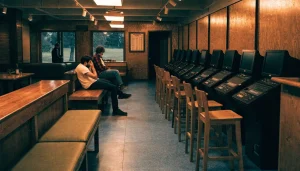
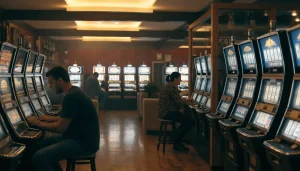
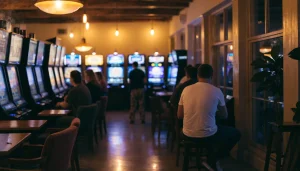
Venue listings can show premises hours, but they do not confirm gaming-area operation or machine availability.
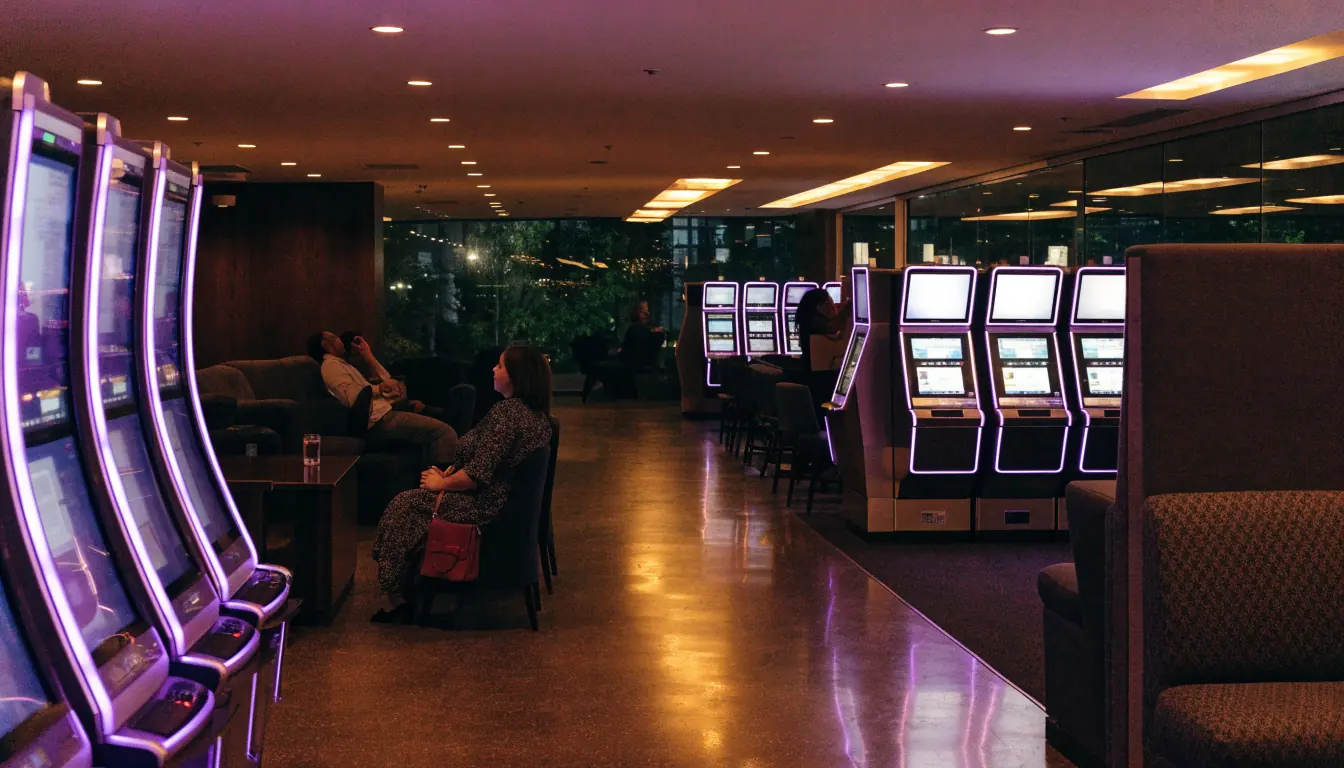
“Open now” sounds like a simple status: the doors are open, so the pokies must be available. In practice, those are separate questions. A venue’s advertised operating hours describe when it is open to customers; they do not, by themselves, confirm that its gaming area is operating at that moment or that a particular machine is available.
I learned to treat the distinction as a basic one. A venue can have several parts with different purposes and schedules. A listing may reflect the venue overall, while the gaming area has separate operating arrangements. A search result can therefore be accurate about the premises and still leave the important detail unresolved: whether pokies can be played at the time in question.
That matters for Brisbane searches made early in the morning, late at night or simply during an unplanned visit. A result marked open is a useful lead, not a live confirmation of machine availability. Opening information can also become stale when a venue changes its schedule or updates its public listing. Even a recently updated listing is not necessarily a live view of what is happening on the floor.
Choosing pokies to play in Brisbane in 2026 starts with checking the details that matter to you, such as licensing, minimum deposits and payout information. This list offers a concise reference to the available facts for each operator.
Uptown Pokies
Uptown Pokies has operated since 2017 and holds a Curacao license. Its stated minimum deposit is A$20.
JustCasino
JustCasino is licensed by the Curacao Gaming Control Board. That licensing detail is the key stated fact about this operator.
WinSpirit Casino
WinSpirit Casino holds Curacao eGaming license OGL/2024/923/0383, issued through Antillephone N.V. Its stated minimum deposit is A$30.
MrPacho
MrPacho lists crypto payouts at 30–120 minutes and fiat payouts at 24–72 hours. The stated minimum deposit is A$30.
Kingmaker
Kingmaker lists crypto payouts at around 90 minutes and fiat payouts at 1–5 days. Its stated minimum deposit is A$30.
DragonSlots Casino
DragonSlots Casino is licensed by the Curacao Gaming Authority, with Jumpman Gaming Ltd named in its licensing details.
Thor Casino
Thor Casino is licensed in Curacao through Antillephone N.V., with Versus Odds B.V. named in its licensing details. Its stated minimum deposit is EUR 20.
Wild Tokyo
Wild Tokyo lists crypto payouts at 30–60 minutes and fiat payouts at 1–5 days. Its stated minimum deposit is A$10, and it holds a Curacao license.
Neospin
Neospin holds Curacao Gaming Control Board license OGL/2023/176/0095, with Hollycorn N.V. named in the licensing details.
LuckyVibe
LuckyVibe holds Curacao Gaming Control Board license OGL/2023/176/0095, with Hollycorn N.V. named in the licensing details.
An opening time is about access to a venue, unless the listing clearly specifies something more. It does not automatically establish that every service inside is running, that the gaming area has opened, or that machines are free to use. Nor does a general “open” label show whether a temporary change has affected that particular day.
This is where the wording of listings can mislead without being deliberately false. “Open” is broad. It may refer to the main premises, while the reader is trying to establish the status of one specific facility. The gap is not a technicality if the trip depends on it.
For a Brisbane venue, current confirmation needs to come from information that actually addresses the gaming area and the relevant time. A general map listing can help identify a place and its reported hours, but it cannot settle every operational detail. If the venue publishes separate information for its gaming area, that distinction is more useful than a single overall opening label. Where the details are unclear, direct confirmation is the sensible check.
I would not turn a search result into a promise. “Open now” is a snapshot of what a listing reports, not a guarantee that circumstances have not changed since it was updated. Nor does it tell anyone how busy the venue is or whether a machine will be free on arrival. Those are different questions again.
Some searches combine opening times with questions about payout percentage. The two subjects do not establish one another. A venue being open says nothing about a pokie’s return setting, and a published return figure does not confirm that the machine is operating or accessible at that time.
A return percentage, where disclosed, describes a theoretical measure over a large volume of play, not a forecast for a particular visit. Each spin is generated separately by a random-number system; a sequence of recent results does not make a particular outcome due. I have seen promotional language make a figure sound more immediate than it is. The practical meaning is narrower.
There is another detail worth keeping in view: some game providers allow different return settings for the same title. The version available can therefore matter, and the game name alone may not tell the whole story. That does not make a return figure a way to identify which Brisbane venue is open, nor does it establish what is installed on a particular machine. It is a separate piece of information to verify.
The phrase “high payout” often carries more certainty than the underlying number warrants. A theoretical setting is not a promise of a win, and it cannot show how a short session will go. An advertised percentage also needs to relate to the specific game version in use, rather than being treated as a universal property of a title.
For anyone checking whether Brisbane pokies are open now, the useful sequence is straightforward: establish which venue the listing refers to, check whether its current hours are published, then confirm whether those hours apply to the gaming area. If the timing matters, rely on the most current venue-specific information available rather than assuming the map label answers everything.
That process does not produce a verified shortlist by itself. It simply keeps two claims from being collapsed into one: that a venue is open, and that pokies are available there at that moment. Without current confirmation of both, the honest answer remains limited.
No live status. No assumption.
A Brisbane label does not change the legal position. The same national rules apply whether someone is looking for pokies in the city, in the central business district or somewhere else in Australia. The Interactive Gambling Act 2001 prohibits companies from providing real-money online pokies to people in Australia without a domestic licence. No such licences have been issued, so there is no Australian-licensed online casino.
That distinction is easy to blur in commercial language. A site may call itself a casino, describe its games as available to Australians or display a licence issued overseas. None of those details creates an Australian licence. The legal question is whether the operator is authorised to provide the service to people in Australia under Australian law. For real-money online casino games, including pokies, the domestic authorisation needed for that offer does not exist.
The law is directed at the providers, not at individual players. Australians are not made criminally liable simply for playing on an offshore site that accepts them. That does not make the service legal in Australia, or give the player the protections available through a domestic licensing system. The operator remains on the wrong side of the Australian rule.
This is the point that gets lost when a search for the best pokies in Brisbane 2026 is treated like a local shopping exercise. Online games are not brought within Australian regulation by being marketed to Brisbane, by using Australian currency, or by carrying familiar titles. The location in the search phrase does not supply a licence, and a polished presentation does not change the law.
There is also a practical consequence when a dispute arises. If an offshore casino refuses to pay winnings, an Australian player has no legal recourse in Australia to compel payment through a domestic online-casino licensing framework. A payment promise or a page of terms may set out what the operator says it will do; it is not the same thing as an Australian remedy. From the other side of the counter, that difference matters more than a banner calling a site “trusted”. The word is not enforcement.
The Australian Communications and Media Authority enforces the Interactive Gambling Act 2001. It can block access to illegal offshore gambling sites, and internet service providers are required to comply with its blocklist. A site appearing online at one moment therefore does not establish that it is authorised, stable or protected from blocking. Access can be interrupted; legal status is not inferred from a working page.
Legal Warning
The Interactive Gambling Act 2001 prohibits providing real-money online pokies in Australia without a domestic licence, and no such licences have been issued.
Nor does the word “best” settle what a pokie returns. A game’s title and appearance can be identical while its settings differ. A specialist review has reported that some providers allow casinos to choose between multiple RTP settings for the same game, so the return percentage may vary by casino. That is a reason not to assume that a familiar game has one universal return figure. It is not evidence that a particular Brisbane-facing site uses a particular setting, and it does not establish that the site is licensed.
Even a published RTP figure describes an aggregate theoretical return, not the result of a session. Each spin is an independent event generated by a Random Number Generator. A previous loss does not make a win due; a run of wins does not make the next spin safer. “Best paying” is a persuasive phrase, not a forecast of what one player will receive.
I have seen how easily these separate ideas get folded into one sales pitch: a game name, a return figure and an overseas licence presented as if together they meant local protection. They do not. The game setting concerns the mathematics; the foreign licence concerns another jurisdiction; Australian law concerns whether the operator may offer the service here. Three different questions.
So the legal line is straightforward, even when the storefront is not: Australian law prohibits companies from supplying real-money online pokies to people here without a domestic licence, and none is available. The player is not the target of that prohibition, but an offshore operator’s promise does not become an Australian guarantee. No domestic recourse.
A high maximum bet can sound like a mark of a better pokie. It is not. It tells how much a player may stake on a single spin under the stated rules; it does not predict how often the game pays, how large a return will be, or whether the game is more favourable. A limit is a boundary, not a quality rating.
I have seen the same distinction blurred in promotional language. “High limit” describes the permitted stake, not the likely outcome. Nor does a large stake make a spin more predictable. Each spin is generated as a separate random event, so previous results do not tell anyone what the next one will be. Bigger bets can make balances change faster. That is the practical difference. No edge implied.
Bonus figures need the same sort of reading. The headline amount is only one part of the condition. A wagering requirement, also called a turnover multiplier, says how much must be staked before bonus-linked winnings can be withdrawn. The multiplier may apply to the bonus alone or to the deposit and bonus together; that distinction changes the required turnover substantially.
Bonus Turnover Calculation
Identify the base
Determine if the requirement applies only to the bonus or to the deposit plus bonus.
Apply the multiplier
Multiply the base amount by the turnover requirement (e.g., $500 bonus × 40x = $20,000).
Determine the total stake
Calculate the total amount of bets required before winnings can be withdrawn.
A specialist review suggests treating requirements of 35x or less as a more manageable benchmark and describes anything above 40x as punishing. That is the review’s assessment, not a rule about every offer or a guarantee that a lower multiplier makes an offer worthwhile. The base used in the calculation matters just as much as the multiplier.
Consider a $500 bonus with a 40x requirement applied to the bonus. The arithmetic produces $20,000 in required bets before winnings can be withdrawn. The figure is turnover, not a bill to be paid, and it does not mean that $20,000 will be lost or returned. It means repeated stakes must add up to that amount under the offer’s terms. The balance can change while that turnover is being completed.
Now consider a different structure: the same $500 bonus is matched to a $500 deposit, and the 35x requirement applies to both amounts. The calculation starts with $1,000, not just the bonus, producing $35,000 in required bets. That is why “35x” by itself does not tell the whole story. The wording should specify what gets multiplied.
The bet limit and turnover rule can also interact. A maximum stake may restrict how quickly turnover can be accumulated, or a bonus may impose its own maximum bet while it is active. The exact conditions decide which stakes count. A stake above a stated cap may not contribute as expected and could breach the offer’s terms. A larger allowed stake does not erase those conditions; it only changes the size of each permitted wager.
Free spins require another check: a specialist review notes that an offer may cap the winnings that can be cashed out. A displayed win is therefore not necessarily the amount that can ultimately be withdrawn under the promotion. The cap, eligibility rules and any associated turnover condition are separate details, not footnotes to the headline.
When assessing an offer’s mechanics, the useful questions are plain: is turnover calculated on the bonus or on deposit plus bonus; what stakes count; does a maximum bet apply; and is there a cash-out cap? Those terms explain the number. The maximum bet does not explain the game’s quality, and the bonus amount does not explain its value on its own.
A venue name or a polished gaming-room photograph says little about what happens once someone sits down. In my experience, the useful distinction is between the room’s presentation and the operating practices behind it: who is responsible on the floor, how signs are positioned and whether concerning behaviour is noticed and recorded. That is more meaningful than calling somewhere the “best pokies venue in Brisbane” without evidence to compare its machines or service.
A venue’s own description can explain its facilities, but it is not independent confirmation of how its gaming area operates. Marketing language is not a floor audit.
Operational Marker
Venues operating more than 20 gaming machines are required to have a dedicated responsible gambling officer (RGO) present while machines are running.
One reported rule does give a concrete operational marker. RegionRiverina.com.au says that, from 1 July, a venue operating more than 20 gaming machines is required to have a dedicated responsible gambling officer (RGO) present while those machines are running. The threshold matters: the reported requirement is tied to the number of machines and their operating period, not simply to whether a venue has a gaming room. An RGO is a staff role, not a promise that harm cannot occur.
The same report describes a one-month transition period for venues to remove signage and put the officer arrangements in place. It also says venues will need to keep a gambling incident register. That record is intended to capture relevant events, including occasions when a patron’s behaviour suggests they may be at risk of, or experiencing, gambling harm. The point is procedural: noticing a concern is one step; recording the incident gives the venue a way to document what happened.
Signage has a practical role on the floor, but placement matters. Signs directing patrons towards gaming areas should not be in the sightline of ATMs or EFTPOS terminals, and signs directing patrons to ATMs should not be visible from gaming machines. A venue’s compliance is therefore not established by having a responsible gambling message somewhere in the room; the location and direction of signs matter too.
When assessing Brisbane pokies venues, I would separate what can be observed from what needs direct confirmation. A public description may identify a club or gaming area, while staffing arrangements and incident procedures are operational details. Neither a venue label nor an attractive room proves how consistently those duties are carried out. The useful question is not which place has the strongest claim to “best”, but what evidence supports the claim. A headline is easy. Floor practice is harder to verify.
A payment option is a route for moving funds, not evidence that a gambling service is licensed, fair or transparent. That distinction matters when Brisbane searches lead from local venues to online offers promising real-money play or a no-deposit bonus. The payment screen describes a transaction; it does not settle whether the service is lawful or what protections apply.
PayID works as an alias layer over Australia’s New Payments Platform (NPP). Instead of entering a bank account’s full details, a transfer can be addressed through an email address, mobile number or ABN linked to the recipient. The NPP is available through all major banks and uses end-to-end encryption. Those are features of the payment infrastructure, not a certification of the business receiving money.
A service claiming to accept PayID for gambling may require the account holder to link PayID to a bank account before a deposit can be made. The practical step is separate from the transfer itself: the alias has to be registered and associated with the relevant account. I have seen payment pages make this look like a minor setup detail, when it can be the point at which a transaction stops.
Attention Some Australian banks, including members of the Big Four, may block PayID transfers to recognised gambling merchants.
Bank decisions are another variable. A specialist review has reported that some Australian banks, including members of the Big Four, may at times block PayID transfers to gambling merchants they recognise. That is a reported possibility, not a promise that a particular bank will block—or approve—a particular payment. A declined transfer does not, by itself, explain whether the cause is the recipient, the bank’s controls or an account setting.
There is no Australian-licensed online casino. PayID support cannot change that position, and it should not be read as a sign that an offshore service is regulated in Australia. BetStop is also limited in scope: it applies to Australian-licensed operators and does not bind offshore sites.
Withdrawals bring a different checkpoint. Identity and address documents need to be verified before a first withdrawal; the payment method alone does not complete that process. The name on the payment account, the account details and the identity records may all be relevant to a review. A deposit going through is not proof that a later cash-out will be approved or arrive on the same route.
That gap between deposit and withdrawal is easy to miss in promotional wording. “Simple payments” describes the first screen, not every stage of the transaction. In practice, the useful information is the service’s stated verification process and the bank’s own treatment of the payment—not the presence of a familiar logo.
A result for pokies near Brisbane Airport can establish that a listing has been associated with the airport area. By itself, it does not establish that a venue is inside the airport, close to a terminal, or even at the address shown. Those are separate claims, and each needs evidence tied to the venue rather than to the wording of a search result.
I learned to treat map pins as starting points, not directions. A pin can represent a business address, a broad area, or a location inferred from a listing. The label may be accurate while the apparent proximity is misleading: a venue described as “near the airport” could still require a substantial journey, and a result shown on an airport map need not be part of the airport complex.
The distinction matters for searches about pokies in Brisbane Airport itself. Airport-related wording can pull together results for places in the surrounding district and places associated with airport travel. Neither the wording nor the order of listings confirms that gaming machines are available within a terminal or elsewhere on airport property. That requires direct confirmation from the venue or an authoritative property listing.
I also separate the place name from the actual address. “Brisbane Airport” can refer to the airport precinct, nearby suburbs, or the wider area a map chooses to display. A result that appears near the airport at one zoom level may sit outside the boundary at another. Before treating it as a local option, the venue’s own address should match the map, and the route should be checked from the relevant point of departure.
That is the practical test. Check that the business is a real, identifiable venue; compare its published address with the map pin; and confirm that the venue itself says it has pokies. A generic directory entry, an old review, or a search snippet can be incomplete or out of date. A listed category is not proof of current facilities.
Nearness is also not the same as convenience. Airport journeys involve a particular starting point, such as a terminal or transport interchange, and a map’s estimate may refer to a different point in the precinct. The word “near” has no fixed distance in a listing. Without a confirmed address and route, it is not a useful measure.
When I see a result for pokies near Brisbane Airport, I read it as a lead to verify, not a confirmed airport venue or recommendation. The same care applies to results that mention Brisbane broadly: a location label can narrow the map without proving what is on the floor. Details first. Then the distance.
“24-hour pokies” sounds like a simple promise: the doors are open, and the machines are available at any time. In practice, those are two separate claims. A venue’s general operating hours do not necessarily establish when its gaming floor is operating, and a listing marked open all day is not, by itself, confirmation that pokies can be played throughout that period.
I learned to treat the label as a starting point, not a schedule. Online listings can compress several kinds of information into one status: a venue may be open for another service, its hours may refer to a different part of the premises, or the listing may not have been updated. The wording can be accurate in one sense and still leave the important detail unanswered.
A useful check is specific. Does the stated schedule apply to the venue as a whole, or to the gaming area? Does it cover the day in question? Is it the venue’s own current information, rather than a third-party listing? If those points are unclear, the “24 hour” label has not settled the question.
There is a difference between a venue being accessible and its pokies being available. A venue might have more than one operating area, and the hours shown for one should not automatically be read as the hours for another. That distinction is easy to miss when a short search result presents one opening status beside the venue name.
For Brisbane pokies hours, the most dependable approach is to check the venue’s own published opening information and confirm that it refers to gaming operations. If the wording does not say, a direct enquiry can clarify whether the machines are operating at the time in question. The answer should be about the gaming area, not simply whether the premises are open.
I would also check again close to the planned visit. Opening information can change, and an old listing can remain visible after the underlying schedule has changed. A current venue notice carries more weight than a generic label copied across directories.
“Open all day” is not the same as “pokies available all day.” That small distinction matters more than the headline. For any claim of round-the-clock play, the useful evidence is a current schedule that explicitly covers the gaming area—not an assumption drawn from the venue’s general hours.
South Brisbane and South Bank are often treated as interchangeable in casual directions, but a place name on its own does not establish that a particular venue operates there or has pokies. I have seen how a broad location label can survive in listings long after the practical details have changed. It is a starting point, not confirmation.
The same applies to references to Brisbane’s northern suburbs. A result describing a Northside venue may cover a large area, and the label does not prove its exact address, current gaming facilities or operating status. South and north are useful ways to narrow a map; they are not evidence about what is on a venue’s floor.
For a local check, the useful details are concrete: the venue’s own current address, whether it lists gaming facilities, and whether those details match an authoritative or direct source. A map pin can place a business in a district, but it cannot confirm that pokies are available there. Third-party directories can also carry outdated descriptions. I treat them as leads, not as a reliable venue list.
The same discipline matters when a listing uses broad promotional language such as “gaming lounge”. That phrase may describe an area or service without showing what machines are present, or whether the description is current. A venue’s name, a nearby landmark or a district label cannot fill that gap. No shortlist should be built from geography alone.
Questions about the maximum cash payout need a separate check. A suburb does not determine a machine’s payout conditions, and a headline figure without the relevant game and machine rules can mislead. Any payout information needs to be tied to the specific machine and its displayed terms; a location result cannot supply it. The label “maximum” sounds definite. The conditions behind it matter.
There is also a difference between finding a venue and confirming what it offers. A listing may help identify a business, but gaming facilities and payout details require direct, current confirmation. I would not infer either from a South Bank or South Brisbane label, nor from a Northside description. Location is only one piece. No shortcut.
A request for the “best” pokies in Brisbane’s CBD often folds two separate ideas into one: a central-city location and a club that has gaming machines. The wording alone establishes neither. A club name, map pin or directory entry is not proof that pokies are available there, and a polished listing can make an assumption look like a fact.
I have seen how easily a venue description becomes a recommendation by repetition. One listing is copied into another, then the same claim appears to have several sources behind it. The useful distinction is between a club’s identity and its facilities: the latter needs confirmation from the venue itself, not inference from its name or category. No shortlist should be treated as a ranking unless the basis for comparing venues is clear. “Best” is a label, not evidence.
That matters particularly in the CBD, where a result may refer to a club, a hotel, a restaurant or another kind of business. A central address does not establish that gaming machines are on site. Nor does a club’s membership or hospitality offering establish anything about pokies. The details can change, so a venue’s own current information is the sensible point of confirmation.
Self-exclusion is a separate consideration from choosing a venue. It is a responsible-gambling tool, but its reach depends on the scheme involved. BetStop applies to Australian-licensed operators; it does not bind offshore sites. That distinction matters when an exclusion request is intended to prevent access across different forms of gambling. Self-exclusion should not be assumed to cover every venue or service automatically.
For physical pokies, the relevant question is what exclusion arrangements the venue recognises and how they operate. That needs to be established with the venue or the relevant scheme, rather than inferred from a general statement that self-exclusion exists. A clear answer matters more than a crowded directory page.
No reliable CBD club recommendation can be made from location wording alone. The practical standard is plain: confirm that the named place is a club, confirm that pokies are actually available, and understand the scope of any exclusion arrangement before relying on it. A name is not a facility. A label is not a safeguard.
A reference to Crown alongside Brisbane pokies is not, by itself, evidence that a Crown casino operates in Brisbane or that a particular gaming floor is there. Search results can combine a brand name, a city name and material about gambling without establishing that the venue described actually exists at that location. The wording may look definite. The underlying details still need checking.
I have seen how quickly a label can harden into a supposed fact. A directory entry gets repeated, a page title is treated as confirmation, and soon “Crown Brisbane” sounds like a settled venue name. Repetition is not verification. Nor does a page about a brand elsewhere establish a Brisbane address, a local pokies room or the machines available on a floor.
The same caution applies to claims about the “best pokies room” in Brisbane. That phrase suggests there is a confirmed shortlist to compare, but a ranking cannot establish that the venues named are operating or that they have gaming machines. Without reliable venue-level details, a list would give a false impression of local knowledge. Better left out.
A useful check starts with the specific claim, not the familiar name. Is there a clearly identified Brisbane address? Does the venue itself confirm that it operates there and has a gaming area? Do current official records support the same location and operation? If these details do not line up, the name alone should not settle the question. A map pin, old listing or promotional snippet can be a lead, not proof.
It also helps to separate a venue’s identity from what is offered inside it. A business name or hotel listing does not establish that pokies are present, and an image or review may refer to another property or an earlier period. Claims about machine availability need confirmation from the venue’s own current information.
The practical conclusion is narrow: “Crown” and “Brisbane” appearing together does not verify a Crown Brisbane casino or pokies at Crown in Brisbane. Until an address and gaming-floor details are confirmed through dependable, current records, the responsible description is that the claim remains unsubstantiated. No invented shortlist. No assumed venue.
You must be 18 or older to gamble online in Australia.
Australian players are not criminally liable simply for playing on offshore sites that accept them, but offering real-money online pokies to Australians without a domestic licence is illegal. No Australian-licensed online casino exists.
Most operators set minimum deposits of AU$10 to AU$20, while some accept AU$5.
Yes. PayID is treated like any other qualifying deposit method at the recommended sites.