A practical guide to game features, odds and payment concerns, with the legal distinction between operators and players in Australia.

The legal line for online pokie machine games in Australia falls on the operator, not on the person placing a spin. Under the Interactive Gambling Act 2001, operators commit an offence if they offer real-money online pokie games to people living in Australia. There is no Australian licence that authorises an operator to provide that service to Australian residents.
That distinction can be obscured by the way a site presents itself. A page may load, a game may open and a deposit button may work. None of those things establishes that the service is lawful here. Nor does an offshore licence make an online casino authorised to offer real-money play to people in Australia. The relevant question is not whether the site operates legally somewhere else; it is whether it may provide the service to customers in Australia.
The law does not treat the player in the same way as the operator. An Australian resident who plays real-money pokie games online with an offshore operator does not commit an offence under the Act simply by playing. That does not turn the operator’s offer into a lawful Australian service. I find that distinction important because marketing often puts the whole issue under the vague label “legal pokies,” as though the player’s position and the business’s position were one and the same. They are not.
Choosing a pokie site is about more than picking a game: licensing, deposit options and payout information can help you decide what to check before you play. Use these brief profiles as a starting point and verify the current terms for Australia.
Uptown Pokies
Uptown Pokies has operated since 2017 and lists a Curacao license. Its minimum deposit is A$20.
JustCasino
JustCasino lists a license from the Curacao Gaming Control Board. That licensing detail is the available basis for considering it.
WinSpirit Casino
WinSpirit Casino lists Curacao eGaming license OGL/2024/923/0383, issued through Antillephone N.V. Its minimum deposit is A$30.
MrPacho
MrPacho lists crypto payouts in 30–120 minutes and fiat payouts in 24–72 hours. The minimum deposit is A$30.
Kingmaker
Kingmaker lists crypto payouts at approximately 90 minutes and fiat payouts in 1–5 days. Its minimum deposit is A$30.
DragonSlots Casino
DragonSlots Casino lists a Curacao Gaming Authority license, with Jumpman Gaming Ltd identified. This licensing information is the available point of note.
Thor Casino
Thor Casino lists a Curacao license through Antillephone N.V. (Versus Odds B.V.). Its minimum deposit is EUR 20.
Wild Tokyo
Wild Tokyo lists a Curacao license and a minimum deposit of A$10. Its stated payout times are 30–60 minutes for crypto and 1–5 days for fiat.
Neospin
Neospin lists Curacao Gaming Control Board license OGL/2023/176/0095, with Hollycorn N.V. identified. Licensing is the available detail to consider.
LuckyVibe
LuckyVibe lists Curacao Gaming Control Board license OGL/2023/176/0095, with Hollycorn N.V. identified. Licensing is the available detail to consider.
The Australian Communications and Media Authority, or ACMA, is the federal agency responsible for enforcing the Interactive Gambling Act and monitoring compliance with federal interactive gambling rules. It can ask Australian internet service providers to block access to websites that provide prohibited gambling services or advertise them in Australia.
Blocking is an enforcement measure, not a licensing system. A website being reachable at a particular moment does not show that ACMA has approved it, that the operator has an Australian licence, or that the service is permitted. Access may change as enforcement action is taken, and a site can be available before a block is applied. The practical point is simple: a working link is not legal clearance.
ACMA reports that, following enforcement actions since November 2019, it has blocked more than 1,455 illegal gambling and affiliate websites. Those blocks show that enforcement can affect both gambling services and sites promoting them. They do not mean every prohibited service is instantly inaccessible, or that a new domain signals a different legal status. A site can change its address; the legal test remains the same.
There is also a discrepancy in reported figures for services that have left the Australian market since ACMA began enforcing the rules in 2017. One account puts the number above 210, while another reports more than 190. What both accounts indicate is that enforcement has been followed by withdrawals from the market.
The distinction matters when comparing an online pokie machine with a physical machine or a no-stakes game. A game’s familiar layout, software or branding does not decide whether that offer is allowed; the real-money service and the location of its customers are central. A page styled as a casino does not acquire Australian approval through appearance.
The same applies to advertising. ACMA’s role includes monitoring compliance with federal rules, and it can seek blocks for websites providing prohibited services or advertising them. A promotional claim that an operator is “licensed” needs context: an offshore authorisation is not an Australian licence for serving local players. Calling a site secure or established does not answer the legal question either.
I have seen how labels can do quiet work. “Available” describes access, not permission. “International” describes reach, not local authority. The wording may sound reassuring while leaving out the point that matters: Australian law prohibits operators from offering real-money online casino-style games, including pokies, to people in Australia.
This is why legal status should not be inferred from a search result, a game loading successfully, or an operator’s own description. ACMA’s blocking powers and enforcement figures make clear that prohibited services are actively monitored, while the player’s position under the Act remains distinct from the operator’s. Access is not approval.
Legal Warning
Australian law prohibits operators from offering real-money online casino-style games, including pokies, to people in Australia.
A pokie’s appearance can make two games seem similar while their rules produce quite different sessions. I start with the paytable and paylines, not the theme. Those details show what combinations count, how prizes are structured and how a spin can return a win. The screen may be busy; the rules are the useful part.
Paytables set out the prizes attached to symbol combinations. The same symbols can carry different values from one title to another, and a game may have special symbols or features that change how a combination pays. A large top prize can draw the eye, but it does not describe the whole game. Smaller combinations and the route to them shape much of the ordinary play.
Paylines determine which symbol arrangements qualify for a prize. Some games use a fixed set of lines; others offer variable paylines. That changes the pattern a player needs to land and, where the game permits a choice, which lines are active for a spin. A wider layout does not automatically mean better value. It means the rules for forming winning combinations differ.
I have seen people judge a game by its graphics or by a single memorable win. Neither tells much about how the machine is built. The useful comparison is between the paytable, the line structure and the way the game distributes wins. Read together, those features explain why one pokie can feel busy with frequent small returns while another can have longer stretches without a notable hit.
Volatility describes that broad rhythm. Low-volatility games tend to pay smaller amounts more often. High-volatility games pay less frequently, but can produce larger wins. Neither style makes a game more likely to pay on the next spin. A lower-volatility pokie may suit someone who prefers frequent, more consistent wins; a higher-volatility one can feel less steady. Different taste, different pace.
That distinction matters because “exciting” is often used as if it were a technical feature. In practice, it may refer to animated effects, bonus rounds or the possibility of a large prize. Those elements do not erase the underlying pattern of payouts. A vivid feature can arrive rarely, and a modest-looking game can still have a paytable that rewards combinations more regularly.
When comparing pokies, I separate what the screen advertises from what the rules specify. I check whether paylines are fixed or variable, what combinations pay, and whether a feature changes the way prizes are awarded. Then I consider volatility as a description of the game’s general feel, not a promise about a session. That is a more grounded way to decide whether a pokie suits a preferred pace.
There is no single best pokie machine for every player. One person may prefer straightforward lines and frequent smaller wins; another may accept a less regular rhythm in exchange for the possibility of a larger result. The title, cabinet and sound can help a game stand out, but they do not settle that choice. Mechanics do.
The term “best” is doing a lot of work. It can mean an easy-to-follow paytable, a particular style of paylines or a payout rhythm someone enjoys. Those are different criteria, and they can point to different games. A careful comparison is less glamorous than a lucky story. More useful, too.
The practical difference between pokie machines is therefore not just how they look, but how their rules organise play. Paytables define qualifying rewards; paylines define the routes to them; volatility describes how often and at what scale wins tend to appear. None can turn a random spin into a forecast. They can, however, make the choice of game less of a guess.
“Free” can describe two different things on a pokie screen. A demo version lets a person try the game without staking money. Promotional free spins, by contrast, are offered under an operator’s bonus terms. They may look similar while the reels turn, but the balance they produce can have very different status.
In demo play, the displayed credits are not a cash balance. No deposit is being wagered, and a result on screen does not create money that can be withdrawn. Demo mode can show how a game’s buttons, reels and bonus rounds work; it cannot show what a real-money session will produce. The pokie software uses a random number generator, and each spin is determined independently. A run of demo wins does not make a later real-money spin more likely to win. Nor does a dry spell in the demo predict the next result.
That distinction matters because a demo is useful for learning the interface, not for testing a winning system. I treat claims that free play reveals a profitable pattern with caution: it may help identify how a feature is triggered or how the paytable is presented, but it cannot turn independent outcomes into a forecast. Theme, animation and pace are presentation choices. They do not make demo results transferable to cash play.
Promotional spins are different. They are attached to an offer, and any winnings can be treated as bonus funds rather than immediately withdrawable cash. The terms may require wagering before cashout, restrict which games count, or set a cashout cap. The word “free” describes the promotional entry point; it does not necessarily describe the conditions attached to the resulting balance.
A specialist affiliate review illustrates the arithmetic with a $100 bonus carrying a 30x wagering requirement: the player would need to place $3,000 in bets before cashout. That is a worked example from a particular review, not a standard condition for every offer. The practical point is to read the offer’s own wording: the requirement may apply to the bonus, the bonus plus deposit, or another defined amount. A large balance on the screen can therefore remain locked until the stated rules are met, and a separate cashout limit may still apply.
Free-spin terms also matter before play begins. The promotion can specify when spins expire, which pokie they apply to, and whether winnings move into a bonus balance. Those details determine what the promotion actually delivers. A headline number of spins says little about withdrawal eligibility on its own. The conditions do.
Demo access should not be mistaken for a licence to play for money. In Australia, real-money online pokie services are prohibited for operators offering them to people in the country. A site displaying a free demo does not establish that its real-money service is lawful, and the demo itself does not validate an operator’s claims about payouts or fairness. Free access is not regulatory approval.
Bonus Wagering Calculation
Identify the bonus and requirement
An example bonus of $100 is offered with a 30x wagering requirement.
Calculate the total bet amount
Multiply the bonus amount by the wagering requirement ($100 × 30).
Determine the cashout threshold
$3,000 in bets must be placed before the balance can be withdrawn as cash.
There is a place for no-stakes play: checking controls, understanding a feature, or deciding whether the presentation is appealing. There is also a limit to what it can tell. Demo outcomes are not evidence of future real-money outcomes, and promotional spins are not cash until the applicable terms allow withdrawal. Keep those categories separate. No shortcut exists.
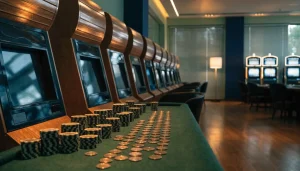
Crown Perth is the only legal land-based casino in Perth. Its gaming floor gives a clearer picture of what “available” means in this market: a physical venue, machines on site and rules displayed on each legal pokie. It is not a stand-in for an online casino. Western Australia has no legal online casino market.
The scale is substantial. Crown Perth has more than 2,500 gaming machines, so the choice is not limited to a handful of cabinets or one style of play. But a large floor does not make one Australian pokie machine objectively the best. The right fit depends on what a player wants from the session and on the rules of the particular machine. A familiar cabinet or eye-catching theme says little about its payout settings.
I have seen how the floor changes the way people make that choice. In a venue, the machine is right there: its instructions are visible, and its play can be understood by reading the screen and the posted information. That is different from trying to judge a game from a title or promotional image alone. The practical detail is on the machine.
Every legal pokie in Western Australia must show its rules, paylines and prize table. Those details tell players how the game is structured and what combinations are listed for prizes. They are more useful than a general claim that a machine is “popular” or “generous”. Advertising describes an impression; the displayed rules describe the game.
The term “payout percentage” can also be misleading when treated as a promise about a particular visit. Most machines on Crown Perth’s floor operate within an RTP range of 87% to 92%, but the casino does not publish an RTP list for each individual machine. So a visitor cannot use a public machine-by-machine table to identify a single highest-paying option on the floor.
That limit matters. I would not read the range as a ranking, or assume that one machine’s setting can be identified from its appearance. The information available is more specific for the rules, paylines and prize table than for each machine’s individual RTP. Read what is displayed, and keep those categories separate.
A pokie machine simulator can show how a game works, but it cannot reproduce the physical venue’s full context or establish the settings of a particular Crown Perth machine. Nor does a simulation identify a “best” machine. The useful comparison begins with the machine’s own instructions, not the expectation that a certain cabinet must pay more.
The physical casino and online gambling are separate matters. Crown Perth’s machines are located at a land-based venue; their presence does not mean that an online casino is legally available in Western Australia. There is no legal online casino market in the state.
That distinction is easy to blur when the same game names appear on screens and casino floors. But the setting changes what is being offered. At Crown Perth, a casino pokie machine is part of a regulated physical venue, with required information on the machine. An online version does not become a legal local option simply because the title looks familiar.
Most machines on the Crown Perth gaming floor operate within an RTP range of 87% to 92%, though individual machine lists are not published.
For an on-floor choice, the reliable starting point is modest: check the displayed rules, paylines and prize table, then treat the RTP range as broad context rather than a machine-specific promise. The floor offers plenty of choice. It does not publish a secret shortlist.
Some pokie features change the scale of a possible prize; others let a player pay to reach a bonus round sooner. They can look similar in the game window, but the money moves differently. A progressive jackpot can grow across linked machines, while a feature buy is an extra charge attached to an individual play.
With a networked jackpot, several machines—or machines across multiple casinos—contribute to a shared prize pool. Titles such as Lightning Link, Dragon Link and Cash Express use this structure. The jackpot can become much larger than a prize funded by play on a single machine, because activity across the network feeds the same progressive prize.
The important detail is the network, not the name or artwork. A title may be familiar, but that does not establish that every machine bearing it is connected to the same jackpot. The displayed game information is the practical guide to the feature on a particular machine. A jackpot graphic can make the prize feel like the main event; mechanically, it is a shared pool attached to a specific network.
Feature-buy games work in another way. Instead of waiting for the bonus to arrive through ordinary play, the player pays a premium to trigger it immediately. The bonus is commonly a free-spins round, but the exact feature depends on the game. Specialist reviews describe buy prices in a range of 50 to 100 times the base bet; that is a reported design range, not a universal setting or promise about every title.
That distinction matters at the point of purchase. The price is not a larger ordinary spin: it buys entry to a separate feature, with its own possible outcomes. A quick route into bonus play is still a paid decision, and the advertised feature does not guarantee a particular prize. The charge should be visible before it is accepted.
From the operator’s side of the counter, these mechanics serve different purposes. A networked jackpot gives a machine a prize that can accumulate across locations. A feature buy puts a clear price on access to a bonus, rather than leaving entry to a naturally triggered event. Both can make a game feel more eventful, but neither changes what the displayed rules say.
The design language can blur the distinction: a flashing jackpot and a dramatic bonus button both suggest a special opportunity. Their costs and prize structures are not interchangeable. One is a shared progressive pool; the other is a paid shortcut into a game feature. Check the machine’s own information. The detail matters.
RTP is a long-run measure, not a forecast for a particular session. It describes the share of all money wagered on a pokie that is returned to players across a very large number of spins. That scale matters: a short run can look nothing like the published figure, and a high RTP does not ensure a win.
Attention: RTP is a long-run measure and not a forecast for a particular session; a high RTP does not ensure a win in the short term.
A specialist review reports an RTP of 96.5% for Gates of Olympus and 96.48% for Sweet Bonanza. Those figures identify the versions assessed by that review; they should not be treated as universal settings for every casino offering either title. Some providers allow operators to select among different RTP settings for the same game. The version available at a particular casino may therefore differ from the one described in a review or promotion. I check the game’s stated RTP at the casino itself, rather than treating a familiar title as proof of a particular setting.
RTP also does not tell the whole story of how a game feels to play. Volatility describes the pattern of payouts. A low-volatility pokie tends to return smaller amounts more often; a high-volatility one pays less frequently, but can produce larger wins. Neither pattern changes the underlying uncertainty of an individual spin. A game with frequent small payouts can still leave a session in loss, while a high-volatility game can go through a long stretch without a substantial return. The difference is the shape of the swings, not a promise about their timing.
Every online spin is generated by a random number generator and is independent of the previous one. A run of losses does not make a win due, and a recent win does not make another one more or less likely. I have seen players read a machine’s history as if it were a clue to what comes next. It is not. The record describes what happened, not what the next spin will do.
That distinction is more useful than searching for a “best” pokie to win. RTP can help compare stated long-term returns, while volatility gives a rough sense of payout frequency and size. Neither can identify a reliable way to play a pokie for a short-term profit. Sound effects, near-misses and celebratory animations are presentation; they do not alter the odds or make a result more likely.
Before playing, set a loss limit and treat it as a boundary, not a target to recover losses. Check the specific RTP shown for the game at the chosen casino, and keep the long-run meaning of the figure in view. Short sessions vary. That is the point.
The dividing line between a demo and real-money play is not how realistic the screen looks. It is whether money is staked and winnings can be withdrawn as cash. A pokie in demo mode may use the same graphics and bonus features as its cash version, but the results are not indicative of real-money outcomes. They are not a trial run for a future session.
The legal position also distinguishes the player from the operator. Under the Interactive Gambling Act 2001, an Australian resident who plays online pokies for money with an offshore operator is not committing an offence. That does not make the service lawful to offer in Australia. The prohibition is directed at operators providing the service to people here.
No Local Recourse
Offshore licences do not provide Australian players with the protections of a local regulator, meaning there may be no effective local route to resolve payment disputes.
An offshore licence can describe the rules applying where an operator is based. It does not amount to Australian approval, and it does not give an Australian player the protections of a local online-casino regulator. The distinction is easy to blur in promotional language: “licensed” sounds like a general assurance, when in practice its meaning depends on the jurisdiction that issued the licence.
The practical problem becomes clearer when a dispute arises. If an offshore operator refuses to pay winnings, closes an account or interprets its terms against the player, there may be no effective Australian regulatory route to compel a remedy. A complaint process in the operator’s home jurisdiction may exist, but that is not the same as local recourse, and an overseas licence does not guarantee that a claim will be resolved in the player’s favour.
I have seen the word “secure” do too much work in gambling promotions. It can refer to account technology or a company’s stated procedures; it does not settle whether a player can enforce a disputed withdrawal from Australia. Read the terms as the operator’s rules for access, verification and payment, not as a promise that an Australian authority stands behind the transaction.
That is the real-money risk. A demo keeps the play fictional; a cash balance creates a claim against a business operating outside the local framework. The distinction matters more than whether the interface looks like a real pokie. No local backstop.
A pokie app is an access point, not a separate kind of machine. Some operators provide a downloadable app; others make their games available through a mobile browser. Either way, the screen is only the front end. Game delivery and account functions sit behind it, and the presence of an app does not establish that the service can lawfully offer real-money pokies in Australia.
The same distinction matters when an app mentions a pokie machine API. An API is a technical connection that lets software exchange information—for example, between an operator’s platform and a game provider’s systems. It is not a badge of approval, a guarantee of fair treatment, or evidence that a jackpot is available to every player. “Seamless” is the sales word. The practical question is what the service can do with deposits, balances and withdrawals.
A specialist review of online operators serving Australian players reports that payment menus may include Visa, Mastercard, bank transfers, Bitcoin and Ethereum. These descriptions can change, and a method appearing in an operator’s interface does not settle whether the underlying gambling service is lawful in Australia. Nor should a payment logo be mistaken for a promise that funds can be recovered if a dispute arises. Payment access is not legal protection.
The withdrawal stage is where the wording deserves close attention. A request may remain pending for 24–72 hours, and during that interval a site may invite the customer to reverse it and put the balance back into play. That choice can undo the withdrawal request; it does not make the money safer or bring a payout closer. I regard a reversal prompt as a material condition, not a harmless convenience.
The interface can make the distinction easy to miss. A balance displayed inside an app may look settled while a withdrawal is still awaiting processing. Before funds are treated as received, the status needs to be clear: requested, pending, approved or paid are not interchangeable labels. If a site makes reversal prominent while the withdrawal remains unresolved, that is a reason to pause rather than treat the displayed balance as cash in hand.
There is no meaningful “best” app based on appearance alone. App access, payment options and a pokie machine jackpot are separate matters; none proves the others are dependable. And “free” installation says nothing about the cost of playing. The important mechanics are the payment terms and what happens after a withdrawal is requested. In practice, that is where the fine print bites.
A title can feel new because it has just appeared on a floor or in a game menu, but the name alone says little about when the pokie was released. It may be an established game that has become newly visible in a different venue. “New” describes the player’s encounter as often as the game’s age.
That distinction matters with familiar pokie machine names such as Lightning Link and Dragon Link. They are examples of networked games: machines, sometimes across multiple casinos, contribute to a shared pool that can build a progressive jackpot. Cash Express is another title in this category. The network is the meaningful signal; the wording on the cabinet is not evidence that a game is newly launched.
The word “progressive” sounds like a promise of momentum. It describes a jackpot that can grow through linked play, not a schedule for when it will be won or an indication that a particular machine is due. A name associated with a large jackpot does not make the next spin more favourable. Familiarity is not a forecast.
I have seen how a recognisable name can do useful work for a venue: it helps people identify a game they already know, and it makes a bank of linked machines easier to spot. That is a presentation choice, not a performance claim. A refreshed cabinet or newly encountered title can create the impression of a fresh opportunity without changing what the name establishes.
So a new pokie machine game should be judged by information about the actual game, not by a title that sounds recent or by a jackpot label. If the title is Lightning Link, Dragon Link or Cash Express, the reliable inference from the name is that it belongs to a networked-jackpot format. The name does not establish how new the game is, what any particular machine will pay, or whether a jackpot is near.
Names travel. Outcomes do not follow them.
A figure in a game advertisement can describe one version of a pokie, not necessarily the version configured by an operator. Some providers make several RTP settings available for the same title, so the displayed percentage needs checking against the specific game offered. A familiar name is not enough to establish that the settings match.
RTP describes the share of total wagers returned to players across a very large number of spins. It is not a forecast for a session. A high stated RTP does not ensure a win, and an individual session can finish far below or above that long-run measure. I have seen promotional figures treated as if they were a promise about tonight’s play. They are not.
The practical check is the game information available for the particular version: confirm its stated RTP rather than relying on a general figure attached to the title elsewhere. If the setting is not clear, the advertised number cannot settle the question. Small print matters.
Playing limits matter for a different reason. RTP says nothing about how much a particular session may cost before it ends, and it does not make losses easier to recover. Decide in advance what amount can be lost without affecting essential spending, and stop when that limit is reached. Do not raise it to chase a result or because a game’s advertised RTP looks favourable. That boundary is more useful than treating a long-run statistic as a personal prediction.