A practical look at casino stays in Victoria, including how accommodation, casino access and amenities may be separate claims.
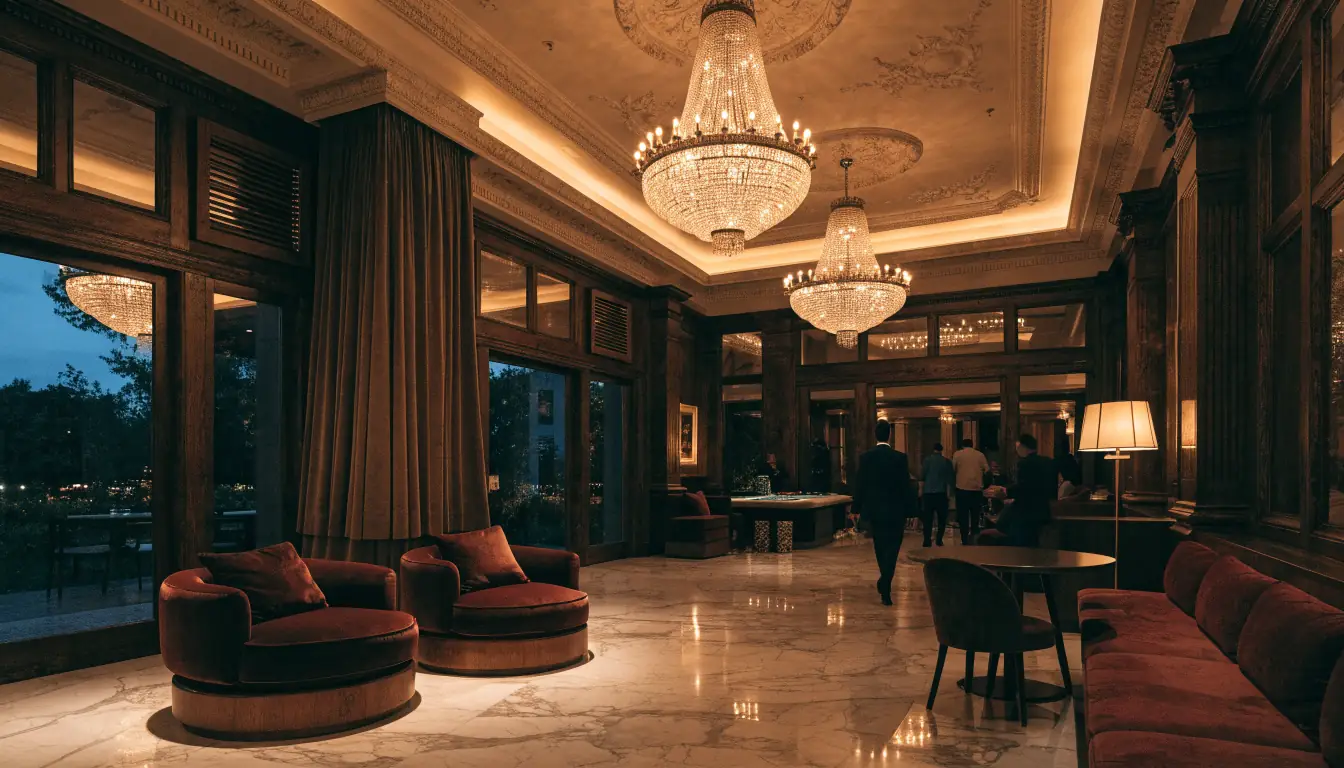
A casino hotel sounds like one booking, but it combines two separate things: a place to sleep and access to a casino. The label alone does not establish that a particular Victorian casino has rooms on site, what those rooms include, or whether a room deal is available. I have learned to treat those as separate claims rather than assume one follows from the other.
The first distinction is location. An on-site hotel is part of the same property as the casino; accommodation elsewhere in the city is a separate booking, even if it is marketed as being near a casino. That difference affects the practical shape of a stay: whether the room and casino are genuinely connected, what the booking covers, and which business handles questions about the reservation. A hotel’s proximity is not proof of an on-site arrangement.
In hospitality copy, “casino hotel” can function as a broad label. It may describe accommodation associated with a casino, or simply a hotel considered alongside a casino destination. Those are not interchangeable. Before treating a room as part of a casino stay, the listing should identify the accommodation provider and make the relationship clear.
Choosing a casino for Victoria in 2026 calls for attention to the details that can be verified, such as licensing, deposit minimums and payout information. Use these operator notes as a starting point when considering your options.
Uptown Pokies
Uptown Pokies has operated since 2017 and holds a Curaçao licence. Its minimum deposit is A$20.
JustCasino
JustCasino is licensed by the Curaçao Gaming Control Board. That licensing information is its notable detail here.
WinSpirit Casino
WinSpirit Casino holds Curaçao eGaming licence OGL/2024/923/0383, issued through Antillephone N.V. Its minimum deposit is A$30.
MrPacho
MrPacho lists crypto payouts at 30–120 minutes and fiat payouts at 24–72 hours. The minimum deposit is A$30.
Kingmaker
Kingmaker lists crypto payouts at around 90 minutes and fiat payouts at 1–5 days. Its minimum deposit is A$30.
DragonSlots Casino
DragonSlots Casino is licensed by the Curaçao Gaming Authority, with Jumpman Gaming Ltd named in the licensing details.
Thor Casino
Thor Casino holds a Curaçao licence associated with Antillephone N.V. and Versus Odds B.V. Its minimum deposit is EUR 20.
Wild Tokyo
Wild Tokyo lists crypto payouts at 30–60 minutes and fiat payouts at 1–5 days. Its minimum deposit is A$10.
Neospin
Neospin is listed with Curaçao Gaming Control Board licence OGL/2023/176/0095, held by Hollycorn N.V.
LuckyVibe
LuckyVibe is listed with Curaçao Gaming Control Board licence OGL/2023/176/0095, held by Hollycorn N.V.
I pay particular attention to the booking terms. A room advertised alongside casino content is not necessarily sold by the casino, and a casino visit does not necessarily form part of a hotel reservation. The name on the booking confirmation is the useful operational detail: it indicates which business is responsible for the room, changes and service issues. Marketing proximity is not a contract.
A “deal” needs the same scrutiny. The word can describe a package, a reduced room rate, or simply a promotional label. Without clear terms, it says little about what is included. The meaningful comparison is between the stated room price and the actual conditions attached to it, including cancellation rules and any restrictions on the booking. A headline is not the whole offer.
Room descriptions are useful only when they specify what is being sold. A photograph or a broad category name cannot establish the room’s layout, view, inclusions or suitability for a particular stay. Those details belong to the accommodation listing and its booking conditions, not to the general idea of a casino hotel.
This is where assumptions can quietly accumulate. A casino setting may suggest a resort-style stay, but that impression is not evidence of particular room features or hotel services. I separate what the listing expressly promises from what its branding encourages a guest to imagine. Small distinction. Real consequence.
 Best Casino in Western Australia: What to VerifyLearn how to distinguish a Western Australian venue search from online gambling. The Interactive Gambling Act bars Australian-based operators from offering
 Pokies in Brisbane: What Listings Can ConfirmLearn how to read Brisbane pokies listings: venue hours may be accurate, but they do not confirm gaming-area operation or machine availability.
There is also a difference between choosing a room for convenience and choosing one because it is part of a casino property. In the first case, the deciding factors are the accommodation’s own location and terms. In the second, the connection between hotel and casino needs to be explicit. If that connection is unclear, it is safer to understand the stay as a hotel booking and the casino as a separate destination.
Casino opening hours and hotel access are different questions. A casino’s operating schedule does not, by itself, establish when a hotel guest can check in, reach a room or use any particular facility. Likewise, a hotel reservation does not prove that casino entry is available at all times. Each service has its own conditions.
I would not infer current casino hours from an accommodation page. Hours can be venue-specific and may change, while room access is governed by the booking. For a stay that depends on timing, the relevant information needs to come from the business responsible for that part of the arrangement.
For Victoria, the practical starting point is therefore modest: establish whether the accommodation is genuinely on-site, identify who is selling the room, and read the room and booking terms as written. A casino-themed label may help describe the trip. It cannot fill in the details.
A poker room, a poker tournament and a bank of poker machines are three different things. They are often blurred together in casual descriptions of a casino, but the distinction matters: a machine count does not confirm a staffed poker area, a tournament calendar or even the format of games available at tables.
A specialist review reported that Crown Casino has more than 3,500 poker machines, but this figure describes one property and does not reflect poker tables or tournament activity across Victoria.
A specialist review has reported that Crown Casino has more than 3,500 poker machines. That is a specific claim about machines at one named venue, not a measure of poker tables or tournament activity across Victoria. It should not be read as evidence that the casino runs poker tournaments, or that every casino in the state offers the same facilities. The figure describes one property, and machine numbers can change.
A poker room generally means an area arranged for table poker, while a tournament is a scheduled competition with its own entry conditions and structure. Neither follows automatically from the presence of poker machines. In my experience, promotional language can make “poker” sound like one seamless offering; operationally, these are separate products, with different staffing, scheduling and customer information.
That distinction is useful when assessing claims about poker at a Victoria casino. A clear confirmation would identify the venue and the specific facility or event. A tournament listing would also need to establish that the event is current, rather than a past promotion or a general reference to poker. Without those details, a broad claim about poker does not tell a reader whether there is a dedicated room or a tournament to attend.
Machine gaming is a separate category. The reported Crown figure concerns poker machines, not live poker tables. No inference about a tournament schedule can be drawn from it. Different thing.
 Casino in Brisbane: What the Available Evidence ShowsSee how hotel, poker, dining, parking and accommodation searches differ, and why venue-level claims need current evidence before they can be treated…
 Pokies in Canberra: Checking Hours, Access and ClaimsLearn why “open now” does not confirm gaming-area access, what return figures and random spins mean, and what the article says about…
The phrase “casino rooms” is ambiguous. It may refer to gaming areas inside a casino, private or reserved spaces, or accommodation rooms associated with a casino hotel. Those meanings should not be treated as interchangeable. Hotel rooms are a stay-related question; a gaming room is a venue-layout question. The word “room” alone does not establish what is being offered.
The same care applies to descriptions of poker facilities. A casino floor containing machines does not by itself establish a separate poker room, private gaming space or room booking option. Claims should be tied to a named facility and a current description, rather than inferred from general casino imagery.
A sports bar is also a distinct amenity, not another name for a poker room or gaming floor. A venue’s poker-machine count says nothing about whether it has a sports bar, what it shows or whether it is operating at a particular time. Those details need venue-specific confirmation.
Likewise, a casino being known as a venue does not establish that it is open now or on a particular day. Opening status can depend on the location and the service in question; the gaming floor, a bar and an event space need not share identical hours. A search for “open today” cannot be answered by a machine count or a general description of casino facilities.
I separate these questions before treating a venue description as useful: machines, table poker, tournaments, rooms, bars and operating hours each require their own confirmation. A category label is not a schedule.
Breakfast, buffet, resort and rewards are often grouped together in casino searches, but they describe different things. A buffet is a dining format; breakfast is a meal or service period; “resort” suggests a broader accommodation-and-amenity proposition; and rewards refers to a customer programme. One label does not establish the others.
I learned to read those labels literally. “Resort” is a positioning word, not a room description or an inventory of facilities. It does not, by itself, establish that a property offers breakfast, a buffet, a pool or a particular package. Likewise, a casino search that includes breakfast does not establish that breakfast is served on site, or what the service includes. Those details matter because a meal attached to a stay and a separately available dining service are not interchangeable.
The same discipline applies to buffet claims. The word tells something about the style of service, but nothing on its own about menu, hours, price or whether access is included with a room or another purchase. Those are distinct conditions. If they are not stated plainly in the information for a particular venue, the word “buffet” cannot fill in the gaps.
Rewards language needs the same close reading. A programme might describe membership, points, offers or recognition, but the label alone says nothing about eligibility, how benefits are earned, or what can be redeemed. In my experience, promotional wording can make a programme sound like a package of guaranteed value when the actual terms determine what a member receives. The terms do the work.
A search combining casino, breakfast and rewards may therefore bring together several separate decisions: whether to stay, where to eat, and whether a customer programme has practical value. Treating them as one offer risks assuming that a benefit in one category automatically applies to another. It does not follow from the wording alone.
 Best casino in Canberra: what can be confirmedLearn how to assess hotel, gaming, and online-casino claims; a hotel’s room inventory confirms accommodation, not that it operates a casino.
 Best Pokies in Tasmania: Venue Hours and ChecksLearn how to check gaming-room hours, venue-level information and travel details, and why a venue being open does not mean its pokies…
“Casino jobs” is a different kind of search again. It concerns employment, not a guest amenity or a loyalty benefit. A job listing would need to identify the employer, role and application route; a resort or rewards label cannot establish any of those. The Victorian Commission for Gambling and Liquor Regulation is the state body responsible for regulating live casinos and horse racing, but that regulatory role is not a source of venue recruitment information.
The useful test is simple: separate the claim from the implication. Breakfast does not mean buffet; buffet does not mean included; resort does not specify accommodation or facilities; rewards does not define value; and casino employment searches do not describe the visitor experience. Those distinctions are less glamorous than a bundled headline. They are more reliable.
Parking and online play are separate questions, even when both are attached to a search for a casino in Victoria. A venue’s parking arrangements do not establish anything about the legality of gambling online; nor does a website appearing to serve Victorian visitors mean that it can lawfully offer casino games to people in Australia.
For an in-person visit, parking terms need to be checked against the relevant venue’s own current information. “Free parking” and “valet parking” are specific service claims, not generic features of a casino. I have seen how a small word such as “free” can carry the decision: it may refer to a particular condition rather than every visit. Without confirmed venue terms, neither free parking nor valet service should be assumed. Keep the two questions distinct. Practical detail matters.
Lawful Boundary
Under the Interactive Gambling Act 2001, operators cannot lawfully offer casino-style games, such as slots, roulette, and blackjack, to customers in Australia.
Online casino searches lead to a different boundary. Under the Interactive Gambling Act 2001, operators cannot offer casino-style games to Australian customers. That prohibition covers slots, roulette, blackjack and online poker. Victoria has no locally licensed online casinos offering slots, roulette or blackjack.
This does not mean that Victoria has no regulated gambling activity online. The state’s framework covers land-based casinos as well as online betting and wagering services. Casino games are treated differently: the federal law prevents them being supplied to people in Australia. The distinction is about the product and how it is offered, not simply whether a site uses the word “casino” or accepts visitors from Victoria.
I would not treat a casino-branded website as evidence of a lawful Victorian online casino. A foreign registration or an offshore licence does not create a Victorian licence, and it does not remove the restriction on providing online casino games to Australian customers. The legal focus is on the operator’s offer. That is the boundary.
The same distinction helps when the phrase “best casino in Victoria” is being used loosely. For a physical venue, the relevant practical questions may include location and parking conditions. For online slots or table games, the issue is not a local ranking: no Victorian-licensed online casino offers those games, and Australian law bars operators from supplying them to local customers. A result that combines venue details with online-play language can blur two unlike things.
 Casino in Tasmania: What Can Be VerifiedThis overview separates casino-hotel language from confirmed venue facts, covering accommodation, poker, dining, facilities and details that still need checking.
 Adelaide Casino: Rooms, Dining and Visitor InformationLearn how to distinguish casino-operated rooms from nearby accommodation, and what to check in hotel offers, dining, parking and visitor information.
I separate claims into what can be checked and what should not be inferred. Parking labels need venue-specific confirmation; online casino availability is constrained by law. A search for casino dining or bingo does not change either point, and an online listing cannot turn a prohibited casino-game service into a locally licensed one. Clear distinctions are more useful than a broad “best” label.
Staying near a casino is a different decision from booking a room inside one. The first choice is about the accommodation itself; the second adds the journey between the room and the venue. I treat those as separate costs, even when a booking page presents them as one convenient package.
“Close by” is not a useful measure on its own. A map can show the route, but the practical comparison also depends on how the trip will be made and whether the route suits the time of arrival and departure. A short distance on screen does not tell the whole story. The useful details are the actual address, the route, transport arrangements and any parking conditions attached to the stay.
For a Victoria casino accommodation deal, the headline price is only one part of the comparison. I look at what the rate includes, what is charged separately and which conditions apply if plans change. A package can sound generous while bundling services that would not otherwise be needed. “Special” is a label, not a saving. The final cost and the booking terms matter more.
That distinction also applies when a casino is mentioned alongside a hotel. A casino reference does not, by itself, establish that the room is on-site, that transport is included or that access to any particular facility comes with the booking. Accommodation descriptions should make the property’s location and inclusions clear. If they do not, the wording should not be treated as a promise.
A sensible comparison keeps the casino visit separate from the lodging decision. The accommodation should work for the wider trip as well: check-in arrangements, cancellation terms, transport and parking can matter whether or not the casino is the main destination. I would compare the full booking conditions rather than relying on a banner or a short promotional description. Fine print does the work.
Casino promotions and accommodation offers are also different things. A hotel rate does not establish that a gambling promotion is available, and a casino promotion does not establish that nearby lodging is included. The terms may belong to different businesses and may be subject to different conditions. Keeping those claims separate avoids treating a lodging discount as a casino benefit—or the reverse.
The same separation helps with practical planning. Venue opening times and trading hours are venue information, not a feature of a hotel booking. Poker machines and other gaming facilities are likewise separate from the room rate. Those details should be checked through the relevant venue’s own information rather than inferred from where a guest chooses to stay.
For anyone comparing accommodation near a Victoria casino, the reliable approach is to verify the address, route, rate inclusions and cancellation conditions as distinct parts of the decision. That gives a clearer picture than relying on the word “near” or a package headline. No assumptions needed.
A request for a casino’s contact details is different from a request about gambling regulation. I keep those channels separate: the Victorian Commission for Gambling and Liquor Regulation (VCGLR) oversees live casinos and horse racing in the state, but it is not a substitute for a venue’s customer-service contact.
That distinction matters when a matter concerns a booking, a bar, a lost item or access to the property. Those are operational questions for the venue, and the relevant contact route can depend on the issue. A regulator’s remit is oversight; it does not make the regulator the right desk for day-to-day venue enquiries.
Phone numbers, email addresses and service hours can change. I would not treat an old directory entry or a number repeated on an unrelated page as dependable. The safer reference point for a contact number is the casino operator’s own current information. The same applies to maps: a map listing can help with orientation, but it should not be confused with an official guide to entrances, internal facilities or accessibility arrangements.
Car-park questions also belong with venue information rather than casino oversight. A search for parking may mean directions, entry arrangements, fees or availability, and those details cannot be inferred from the fact that a casino operates in Victoria. Without current property-specific information, a precise answer would be guesswork.
The same caution applies to bars. A bar-related enquiry may concern a venue, a particular service or a booking; the word alone does not establish what is available or when it operates. Current venue channels are the place to confirm those particulars.
Responsible for property services, booking enquiries, lost items, and event particulars.
The state body providing oversight for live casinos and horse racing in Victoria.
The only dependable source for current phone numbers, email addresses, and service hours.
Baccarat and craps are game names, not proof that either is offered at a particular Victorian casino. I would not read a general casino description as confirmation of a specific table, format or schedule. Venue-specific information is needed before making that claim.
Concerts are another separate category. A casino-related event search does not establish that a performance is scheduled, that tickets are on sale or that a casino itself is the event organiser. Dates and venue arrangements are time-sensitive, so only a current listing from the venue or event organiser can settle those details.
In practice, the cleanest way to sort these enquiries is to identify who controls the information. The operator handles property services and event particulars; the VCGLR provides the state-level reference point for casino oversight. Mixing the two can send an enquiry to the wrong place.
That is the useful distinction. Oversight is not customer service, and a search phrase is not confirmation of a venue offering.
A search for whether a Victorian casino is open can mean two different things: whether the venue is operating at all, or whether a particular part of its programme is available on a chosen date. Those are not interchangeable. I learned to treat a general “open” label as a starting point, not a promise about every service, event or activity inside the venue.
Opening and reopening information is time-sensitive. A change to operating arrangements, a temporary closure or a return after refurbishment needs to be confirmed through the venue’s current official information. Older reviews and event listings can remain visible after circumstances change. That is how an apparently clear answer becomes a wasted trip.
The same distinction matters for entertainment and events. A casino may be associated with performances or functions, but that does not establish what is scheduled now, whether tickets are available, or whether an event is open to the public. I would look for a dated listing from the venue or event organiser and check its terms before treating a third-party calendar as current. A promotion saying “what’s on” can be useful; the practical detail is the actual date and access conditions.
Development news needs similar care. Announcements about a proposed project, a planning step and completed work describe different stages. Headlines often compress them into “development”, which can make an intention sound like a finished change. For employment, an announcement about roles is not the same as a live vacancy. Recruitment details should come from the employer’s current careers information, rather than an old listing or a general claim that a venue is hiring.
Searches that mention a menu or a review can also point to different needs. A review reflects someone’s experience at a particular time; it cannot confirm today’s entertainment schedule or current operating status. Menu information belongs to the relevant dining venue, not to the general question of whether a casino is open. Those details are best checked separately.
There are two stable points worth keeping in view. Gambling in Victoria is restricted to people aged 18 or older, whether the activity is online or in person. Gambling winnings are not taxed in Australia. Neither point confirms that a venue, event or service is available on a particular date.
In practice, the useful distinction is between a standing fact and a live update. Age rules and tax treatment are broad legal conditions; opening arrangements, event schedules, development progress and job vacancies can change. Treating them as the same kind of information is where outdated pages mislead. Current, venue-issued details matter.
A search for a casino address can mean a venue somewhere in Victoria, or a particular casino whose name includes “Victoria”. Those are different location questions. The state name alone does not identify a property, and a broad result should not be treated as a confirmed street address. I separate the venue’s full name from the suburb and street details before treating an address as useful. A map pin without a matching venue identity is not enough.
Spa searches need the same discipline. “Casino spa” can describe an amenity at a casino resort, a spa near a casino, or simply a business using similar wording. The phrase itself does not establish that a casino has a day spa, what treatments it offers, or whether access is limited to guests. Those are property-specific details, not something that can be inferred from the casino label. Marketing language tends to blur the distinction. The distinction matters.
Dress-code questions are practical, but there is no single rule that can safely be applied to every casino or every area within a venue. Entry conditions may depend on the specific property, the space being visited and the occasion. I would not turn a general idea of “smart” dress into a promise of admission. A dress policy is operational, and only the venue’s current terms can settle it. Guesswork at the door is still guesswork.
Career searches are separate from guest information. A casino’s recruitment process belongs to the employer, not to the venue’s leisure or gaming descriptions. Job titles, requirements and application routes can change, so an old listing or a third-party summary may not reflect an open role. The useful distinction is between a casino employer’s own recruitment information and commentary about working in the sector.
Questions about casino games also need a precise venue context. A search phrase may refer to games offered in a physical casino, online games, or general information about gambling. These are not interchangeable. In Victoria, the minimum gambling age is eighteen, and the Interactive Gambling Act 2001 bars operators from providing real-money online casino games to people in Australia. That legal boundary does not confirm which games a particular venue offers.
I keep amenity claims, entry rules, employment information and gambling law in separate boxes. A spa listing does not establish a dress code; a location result does not prove a career vacancy; and online game descriptions do not establish a lawful local casino service. Small distinctions. Useful ones.
Restaurant searches around Victoria’s casinos often imply that a venue has a known dining offer: named places, particular menus, rooftop seating or a clear way to book. Those details should not be assumed from the word “casino” alone. I have seen venue copy use broad dining language to signal atmosphere, while leaving the practical questions—what is open, what is served and how access works—unanswered. A polished description is not a menu.
Attention A polished dining description is not a menu; confirm the restaurant's identity, location, and current service details before relying on a listing.
That distinction matters when looking for a restaurant inside a casino, one nearby, or a rooftop bar attached to a casino venue. These are different arrangements. A restaurant may be part of a larger property, located in the surrounding area, or simply appear in a search result because the venue and location are associated. Without confirmed venue information, none of those possibilities establishes that a restaurant or rooftop bar is available at a particular Victorian casino.
The same caution applies to claims about cuisine, booking, service hours, dress expectations or whether dining is open to people who are not gambling. I would treat each as a separate operational detail, not infer it from a casino’s name or from general promotional language. “Dining destination” is a positioning phrase; it does not tell anyone what the kitchen serves or when it operates.
For Crown Casino, a specialist review reports more than 3,500 poker machines. That figure concerns gaming equipment, not restaurants, and should not be used to infer the size or quality of any dining offer. It also comes from a review rather than a current venue dining listing. Different subject. Different evidence.
A useful way to assess any restaurant claim is to look for information tied directly to the venue: a current menu, booking information, the restaurant’s own service details, and clear confirmation of its location. A rooftop bar deserves the same checks; the label alone does not establish a rooftop setting, food service or access arrangements. Where those details cannot be confirmed, a nearby restaurant should not be presented as being inside the casino.
Victoria’s casino regulation is handled by the Victorian Commission for Gambling and Liquor Regulation, but that role is about oversight of gambling and liquor, not a substitute for restaurant information. Dining details need to come from the venue or restaurant itself. In my experience, separating regulatory facts from hospitality claims prevents a common mistake: treating a casino’s regulated status as proof that every amenity has been independently verified.
For anyone comparing options, the practical distinction is simple: confirm the restaurant’s identity, location and current service details before relying on a listing. A casino setting does not, by itself, establish a restaurant, a particular menu or a rooftop bar. No assumptions.
A food court and a pool answer different practical questions. Neither should be assumed from the word “casino”, or from a venue being described as a resort. In my experience, amenity language can make a property sound more comprehensive than the information actually establishes. The label is not the facility.
For food-court searches in Victoria, the useful distinction is between a dedicated food-court area and other dining options. They are not interchangeable. A restaurant, café or takeaway counter does not, by itself, establish that a food court is available. The same applies in reverse: finding a food court would not confirm particular outlets, menus or service arrangements. Those details need to come from current venue information, not from assumptions based on the casino name.
Pool searches need the same discipline. A pool is a separate amenity, not an automatic part of a casino visit or hotel stay. Even where accommodation and gambling are associated with one property, that does not prove a pool is on site, accessible to casino visitors or included with a room. Those are distinct conditions, and promotional wording can leave them blurred.
I would treat both facilities as specific features to confirm with the venue before making plans. For a food court, that means establishing whether one exists and what access arrangements apply. For a pool, it means confirming its location and who may use it. Without that confirmation, neither amenity belongs in the decision.
The distinction is plain. A casino is not evidence of a food court; a hotel is not evidence of a pool. In Victoria, those questions should be settled by venue-specific information, rather than inferred from the broader category of the property.
Individuals are not generally criminalised for playing at offshore-licensed online casinos, but online casino-style games cannot legally be offered to Australian customers under the Interactive Gambling Act 2001. Victoria has no locally licensed online casinos offering slots, roulette or blackjack.
Yes. Victoria regulates land-based casinos and licensed betting and wagering services; the Victorian Commission for Gambling and Liquor Regulation oversees live casinos. The Australian Communications and Media Authority enforces the Interactive Gambling Act 2001 at the federal level.
Offshore gambling sites are outside Victoria’s gambling licensing system, so players may have fewer protections if payment, account or complaint disputes arise. Playing at such a site does not make the operator subject to Victorian regulation.
Online sports betting and wagering on horse, harness and greyhound races are allowed when supplied by operators licensed in Australia. Online casino-style games such as slots, roulette, blackjack and poker cannot legally be offered to Australian customers.
You must be at least 18 to gamble in Victoria, whether online or in person.
Check which payment methods the site accepts and whether they work for both deposits and withdrawals. Review identity-verification requirements and the wagering contribution rules, since table and live games may count less or not at all.