Hotel listings, gaming claims and online access are separate questions, and labels alone do not establish how a venue or offer works.
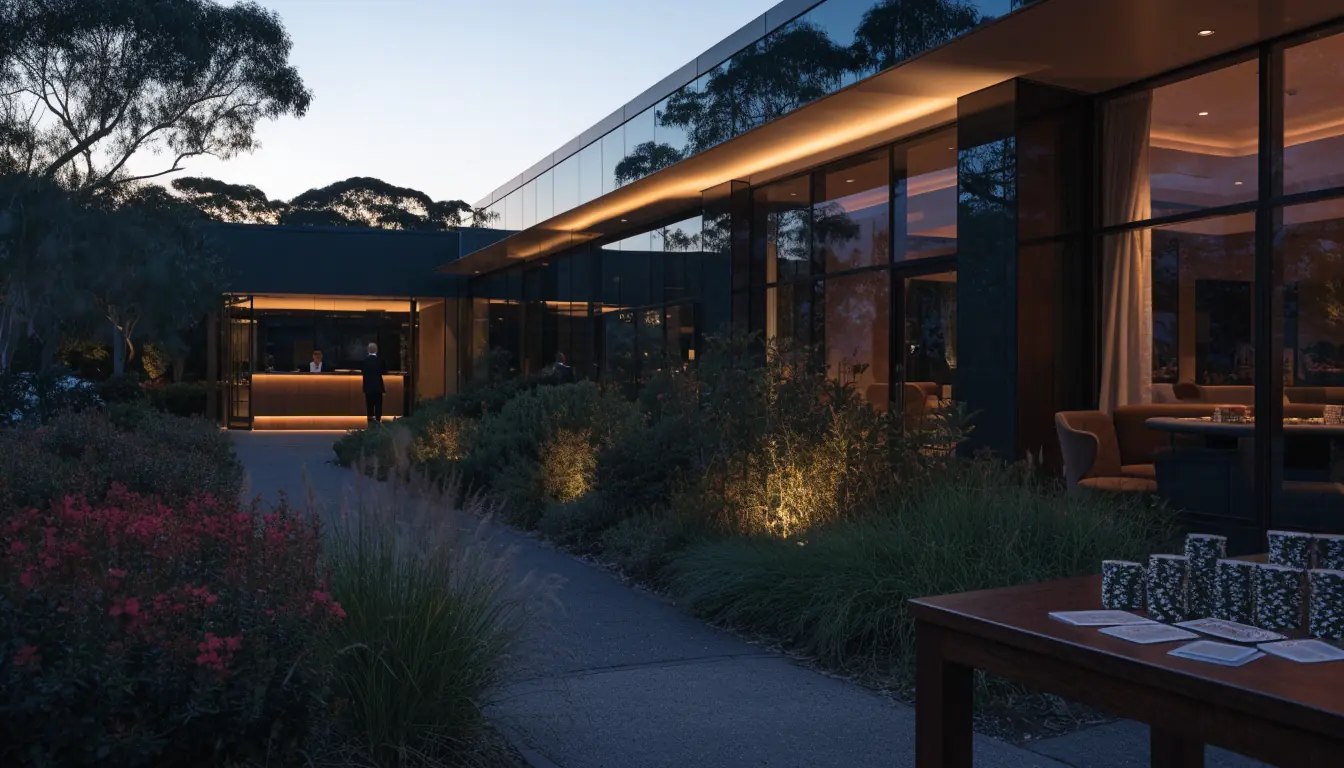
A hotel and a casino are separate claims, even when a listing places both words together. “Casino hotel” can describe a property with gaming on site, a hotel marketed alongside a nearby venue, or simply a search category assembled from unrelated pages. The wording itself does not establish which arrangement applies in Canberra.
That distinction matters when comparing rooms or offers. A hotel’s room inventory is evidence of accommodation, not proof that the hotel operates a casino. A casino listing, in turn, does not establish that rooms are available under the same ownership, at the same address, or through a shared booking system. I have seen promotional language blur those boundaries; the practical detail is in the booking conditions, not the label.
A Canberra casino hotel deal should therefore be read as a package claim, not as a confirmed feature of a property. The offer would need to identify the accommodation provider, the room being sold, and what—if anything—is included beyond the stay. A headline that pairs a room with “casino access” may leave out whether access means entry to a venue, a gaming promotion, or merely a nearby location. Those are not interchangeable.
Choosing a casino for Canberra means weighing the details that matter to you, such as licensing, deposit minimums and payout times. Use these notes as a starting point and check the current terms before signing up.
Uptown Pokies
Uptown Pokies has operated since 2017 and lists a Curacao licence. Its minimum deposit is A$20.
JustCasino
JustCasino lists a Curacao Gaming Control Board licence. This provides a licensing detail to consider when assessing the casino.
WinSpirit Casino
WinSpirit Casino lists Curacao eGaming licence OGL/2024/923/0383, issued through Antillephone N.V. Its minimum deposit is A$30.
MrPacho
MrPacho lists crypto payouts in 30–120 minutes and fiat payouts in 24–72 hours. The minimum deposit is A$30.
Kingmaker
Kingmaker lists crypto payouts at around 90 minutes and fiat payouts in 1–5 days. Its minimum deposit is A$30.
DragonSlots Casino
DragonSlots Casino lists a Curacao Gaming Authority licence held by Jumpman Gaming Ltd. That licensing detail is its key point here.
Thor Casino
Thor Casino lists a Curacao licence through Antillephone N.V. (Versus Odds B.V.). Its minimum deposit is EUR 20.
Wild Tokyo
Wild Tokyo lists crypto payouts in 30–60 minutes and fiat payouts in 1–5 days. Its minimum deposit is A$10, and it lists a Curacao licence.
Neospin
Neospin lists Curacao Gaming Control Board licence OGL/2023/176/0095, held by Hollycorn N.V. This licensing detail may help readers assess the operator.
LuckyVibe
LuckyVibe lists Curacao Gaming Control Board licence OGL/2023/176/0095, held by Hollycorn N.V. The listed licence is its notable detail.
“Special offer” is sales language. The conditions decide its value: dates, cancellation rules, what is included, and whether the price changes at checkout. Without those particulars, a low headline rate cannot establish that a casino hotel package exists or that it is better than booking accommodation separately. No magic in the label.
Room descriptions also need to be tied to a named accommodation provider. A room photo or amenity list can describe a hotel without establishing any connection to casino operations. Conversely, a casino name used in a hotel search does not confirm room types, availability, or an on-site stay. The cleanest comparison keeps the accommodation record and the gaming claim in separate columns until each is supported by its own terms.
The same discipline applies to descriptions such as “luxury,” “resort,” or “exclusive.” They are positioning, not evidence of a particular service. A booking page should say who supplies the room and who is responsible for the offer. If that relationship is unclear, the safest reading is that the accommodation and casino references have not been joined into a single verified product.
Opening hours are another detail that should not be inferred from a room offer. A hotel may have its own reception or check-in arrangements; those do not establish when a casino venue operates. Nor does a page’s availability for booking demonstrate that gaming is open at the time of a proposed stay. Hours need to be stated for the specific venue and date, rather than borrowed from a hotel’s general service information.
 Darwin Casino: Facilities, Events and AccommodationSee how to check current event listings and assess leisure facilities, stays, dining, parking and other practical details at Darwin Casino.
 Victoria Casinos: Hotels, Dining and PracticalitiesLearn how to distinguish an on-site casino hotel from nearby accommodation, and what to check about dining, parking, poker and other casino…
For a search for a hotel in Canberra associated with a casino, the useful question is not whether the wording sounds plausible. It is whether a named property publishes the room terms and whether a named casino independently confirms the relationship being advertised. If either side is absent, the phrase “casino hotel” remains a category, not a dependable description of a stay.
I would not treat a room rate, a venue name, or a package headline as a substitute for that distinction. Accommodation can be assessed on its own booking terms; casino affiliation and operating details need their own confirmation. That is how vague marketing becomes a usable decision. No assumptions.
Poker-room and tournament enquiries describe a different product from pokies. A poker room is a place for table play; a tournament is an organised format with its own entry conditions, structure and schedule. Those details cannot be inferred from a general casino label, and a sports bar is a separate venue feature, not evidence of poker tables or a tournament programme.
I keep those categories separate because the wording around them can blur quickly. “Poker” may mean a live table game, a tournament, or a game on a screen. “Fair” may refer to how a game is run, whether its rules are clear, or how an online pokie produces each result. Those are not interchangeable checks.
A Random Number Generator used by online pokies to produce independent outcomes for each spin, ensuring that past results do not influence future ones.
A tournament’s practical terms concern how play is organised: who can enter, what the format is, how the event is scheduled and what rules govern the table. A poker-room listing, by itself, would not answer all of those points. Nor would a result from an online pokie tell anything about the conduct or conditions of a live poker event. Room details and event terms need to be considered on their own.
Pokies work differently. Every online pokie uses a Random Number Generator, or RNG, to produce outcomes. Each spin is independent: the previous result does not make a win more or less likely on the next one. The RNG does not keep score of a run of losses or wins and then adjust the following spin to compensate.
That distinction matters because familiar explanations can sound persuasive while describing a mechanism that is not there. A machine is not “due” after a losing streak, and a recent win does not mean the next spin must be cold. Past spins do not form a pattern that predicts the next result. A streak is a sequence of outcomes, not a signal from the game.
It is also important not to stretch the RNG explanation into a broader assurance. Knowing that spins are independent explains one part of pokie mechanics; it does not establish that a particular venue has a poker room, that a tournament is running, or that every other condition around a game is suitable. The claim is narrower than the advertising language often makes it sound. One mechanism, one question.
 Perth casino stays, dining and access: what to checkThis guide separates Perth casino search terms from confirmed booking details, covering stays, dining, parking, events and questions that need checking.
 Casino in Melbourne: Hotel, Dining and Visit GuideReview room categories and booking conditions, plus on-site facilities, dining, transport and practical details for planning a casino visit.
For someone comparing poker with pokies, the useful first step is to identify which activity is actually being described. Live poker and tournament play involve table rules and event arrangements. Online pokies use RNG-generated spins, with each spin standing alone. Calling both “casino games” does not make their fairness questions identical.
I would treat claims about a poker room or tournament as operational details, not as proof of pokie fairness. And I would treat the RNG statement as an explanation of spin independence, not as a promise of a particular outcome. That is the boundary worth keeping clear: poker arrangements on one side, random pokie results on the other.
“Canberra casino” can point to two different things: a physical venue someone expects to visit, or casino-style games reached through a website or app. The words alone do not establish that an online service is based in Canberra, or that a particular local venue offers gaming. Those are separate questions, and treating them as one is how a location label becomes an implied endorsement.
Requests about baccarat or craps concern table games. A bar or concert, by contrast, is a venue feature; a map or contact number is a way to identify and reach a place. These details cannot be inferred from a game catalogue or a page using Canberra in its wording. I learned to separate the label from the operation behind it. A city name is not a licence.
That distinction matters because Australian law treats online casino services differently from many ordinary entertainment services. Under the Interactive Gambling Act 2001, an Australian-run online casino cannot offer its services to people located in Australia. Online casino games such as pokies, blackjack and roulette are restricted when offered by operators based in Australia. A website’s local-sounding name does not change that rule.
Legal Restriction
Under the Interactive Gambling Act 2001, Australian-run online casinos are prohibited from offering their services to people located in Australia.
Sports betting sits in a different category and remains widely accessible and legal in Australia. That does not make casino games another form of sports betting, even when both appear on the same screen or are described with similar promotional language. The product and the applicable rules matter more than the branding.
For a physical-place lookup, the useful evidence is information that identifies the venue itself: an address, an official contact channel, or a map tied to the operator. A result that merely repeats “Canberra casino” does not confirm a venue, its services, or its entertainment schedule. Nor does a game page prove that a bar or concert space exists at the place named. Those are different claims.
The same caution applies when a site presents baccarat or craps as immediately available. A game appearing online is not evidence of a Canberra location, and a Canberra reference in a page title does not turn an online gambling service into a local casino. Promotional wording can blur that line; the operating model does not.
I would read the location and the product separately. First establish whether the information describes a physical venue or an online service. Then consider the legal distinction: Australian-run online casino services are prohibited from serving people in Australia under the Act, while sports betting remains a separate, widely available category. No branding shortcut makes those rules interchangeable.
A contact listing or map can help identify a place, but it does not answer what gambling services may lawfully be offered online. Likewise, a casino game’s name says nothing about a physical bar, event or address. Keep the categories apart. That is the useful distinction.
 Adelaide Casino: Rooms, Dining and Visitor InformationLearn how to distinguish casino-operated rooms from nearby accommodation, and what to check in hotel offers, dining, parking and visitor information.
 Queensland Casino Guide: What Venue Details Are VerifiedThis page separates casino hotels from nearby stays and explains which details on rooms, dining, parking, events and facilities remain unverified.
Parking, bingo and gaming are separate questions, even when they appear together in a search for a Canberra casino. A phrase such as “free parking” or “valet parking” can describe a particular property’s service, not a general feature of casino venues. The same applies to bingo: a listing for a local bingo session would need to identify its organiser and venue. I would not treat any of these details as established merely because they are attached to a casino-related description.
That distinction matters because practical details can change independently. Parking access, charges and arrangements belong to the property operating the car park; bingo times and entry conditions belong to the organiser. Dining is another separate service, not evidence that a gaming venue exists or that it offers a particular facility. Without a named, current venue record, there is no sound basis for presenting parking, bingo or dining arrangements as facts about a Canberra casino.
The online-casino question is different again. A website’s use of “Canberra” does not turn it into a Canberra venue, and an offshore platform is not a locally regulated casino simply because someone in the city can reach its website. The Interactive Gambling Act 2001 prohibits operators based in Australia from providing real-money online casino games to people in Australia. That is the key distinction: local operation and offshore access are not the same legal arrangement.
Regulatory Status
While using offshore casinos is technically not illegal for players, these platforms are not regulated under Australian law and lack local regulatory oversight.
Australian players’ position with offshore platforms is more complicated than the wording of a promotional page may suggest. It is technically not illegal for a player to use an offshore casino, but those platforms are not regulated under Australian law. A reputable offshore gambling jurisdiction may license an operator, and that can make real-money play technically possible; it does not make the operator an Australian-licensed casino or provide Australian regulatory oversight. “Licensed” needs a jurisdiction attached to it. The word alone settles little.
From the counter side, I learned to separate a service claim from the conditions behind it. A venue’s parking offer, if one exists, is a property matter. A bingo listing is an event matter. An online casino is an operator and legal-status matter. Folding all three into a single “casino” label makes the description sound simpler than the underlying arrangements are. Different questions. Different rules.
For a physical visit, the useful evidence would be a current listing from the property or event organiser, with the location and terms stated plainly. For online play, a venue address or a local-sounding name does not answer whether the operator is based in Australia, what jurisdiction licenses it, or whether it is regulated here. Those checks cannot be replaced by branding.
So a request for casino parking in Canberra should not be answered with assumed valet service or free spaces, and a bingo query should not be treated as proof of a casino bingo programme. Likewise, an online platform should not be described as a Canberra casino merely because it accepts visitors from the city. Local amenities and offshore gaming sit in different categories. The label is not the arrangement.
A stay described as “near a casino” and a casino-operated hotel are different arrangements. The first is about where a property sits in relation to a venue; the second implies a direct operating or commercial link. I keep those categories separate when assessing accommodation in Canberra. A hotel booking does not, by itself, confirm that a casino runs the property, that gaming is available there, or that a room price includes anything beyond the stated stay.
The practical question is what the accommodation listing actually promises. A named property, its address, the room conditions and the booking terms belong to the lodging decision. A casino name in a headline or promotional label is not a substitute for those details. If a package is advertised, its inclusions should be set out in the terms rather than inferred from the wording. “Casino deal” can sound like one joined-up offer; in practice, it may simply place a stay and a separate activity beside each other.
I have seen how labels do their work: they borrow the familiarity of a destination to make separate products feel connected. That does not establish who supplies each part, whether the offer is current, or what happens if one element changes. The booking conditions matter more than the banner. Read the accommodation cancellation rules as accommodation rules, and treat any gaming promotion as a separate set of terms.
Location also needs a plain reading. “Near” is not a measurement, and a map pin or distance claim should be checked against the actual property address and the route relevant to the trip. Travel time can depend on the route and transport chosen; a broad promotional description cannot settle that. Parking is another independent detail: a place to stay may describe its own parking arrangements, but that does not establish parking at a casino or a connection between the two.
The same separation applies to opening times, gaming machines and poker machines. Those are venue-operating questions, not features established by booking a nearby room. A room reservation cannot confirm that a venue is open, that particular facilities operate, or that a gaming offer is attached to the stay. Promotional language may bundle these ideas together, but the underlying terms still belong to different services.
For anyone comparing Canberra accommodation around a casino visit, the sensible order is straightforward: identify the lodging provider, confirm the property location, then read the room and cancellation terms. Only after that should a separate venue or promotion be considered, on its own stated conditions. This avoids treating a search label as evidence of a hotel relationship or a package.
A clean boundary is useful. Accommodation sells a place to stay; a gaming offer, where one is made, has its own provider, eligibility rules and conditions. Neither should be assumed from the other. Separate contracts. Separate claims.
Breakfast and buffet wording can make a venue sound like a complete destination. It does not establish that a Canberra casino operates a dining room, serves breakfast or runs a resort. Those are separate claims, and each needs evidence about the specific business behind it. A gaming reference in a listing is not proof of a hotel, buffet or food package.
I learned to read “resort” as a label, not a description. In advertising, it can suggest that accommodation, dining and entertainment sit under one offer; the practical question is whether each element is actually provided by the same operator and on stated terms. Without that distinction, a breakfast promotion can be mistaken for part of a casino package when it may belong to a nearby hotel or another business altogether.
The same care applies to a casino breakfast or buffet in Canberra. A search result, old listing or generic travel page can repeat wording without confirming current service. Before relying on a meal as part of a stay, the useful details are the named venue, who operates it, what is included and whether the offer has conditions. No assumption should be made that a casino-branded resort or buffet exists locally.
Rewards language needs a different kind of reading. “Free spins” sounds unconditional, but the winnings may be subject to wagering requirements before withdrawal. A report on psu.com describes free-spin winnings as carrying requirements in the range of 20x to 50x. That is a reported range, not a universal term. A specialist review, meanwhile, describes one offer where winnings had to be wagered 30 times before withdrawal. The precise offer rules matter; neither figure should be treated as a standard applying to every promotion.
Wagering Requirements
Free spin winnings are often subject to wagering requirements, typically ranging from 20x to 50x, before they can be withdrawn.
When pokies count toward a wagering requirement, they typically contribute 100% of the qualifying play. That does not mean every spin reduces the requirement by its full stake in cash, nor does it make the bonus equivalent to withdrawable money. The promotion’s wording determines which games qualify, how winnings are counted and what happens if a condition is not met. “Reward” is the sales word. The conditions do the work.
There is also a basic market distinction. Real-money online casino games offered to people in Australia by Australian-based operators are prohibited under the Interactive Gambling Act 2001. Offshore services are not regulated under Australian law, so a bonus description should not be read as evidence of a locally authorised casino rewards programme or a Canberra venue benefit. Not the same thing.
Employment searches belong in another category. A phrase about casino jobs does not establish that a Canberra casino is hiring, or even identify an employer. A real vacancy should name the business and describe the role; a rewards page or resort advertisement is not a job listing. Breakfast, benefits and employment all need separate confirmation. Claims should stand on their own.
Questions about whether a Canberra casino is open, reopening, developing a new venue or hosting entertainment events all concern a physical place. They cannot be answered by an online game lobby. Nor does a page describing games establish a local venue’s opening hours, event calendar, employment opportunities or menu. I keep those categories separate: a venue announcement needs to be checked as a venue announcement, not inferred from casino-themed online content.
That distinction matters when a page uses broad words such as “events” or “entertainment”. Those labels can describe a physical programme, a game feature or promotional material. In my experience, the wording is often less informative than it looks. A genuine event listing should identify what is happening and where; a menu should belong to an identifiable venue. Without that connection, the label proves little.
“Open” is also ambiguous. It may refer to a venue’s doors, a particular service, or access to an online platform. These are different operating questions. An online platform can be available while particular games are not, and a game appearing in promotional material does not establish that it can be accessed from Australia.
The reason can be geographic. Online casinos may restrict access to games or entire software providers according to the player’s country. One way this is applied is by checking the IP address, which indicates the connection’s geographic location. An operator can then block IP addresses associated with excluded countries.
For someone accessing a lobby from an Australian IP address, a region-blocked game will not appear there. That can make the lobby look different from screenshots, reviews or promotional pages prepared for users elsewhere. The title may still be described online, but its absence from the Australian-facing lobby is consistent with a location restriction—not evidence that the game has been removed everywhere.
This is why an online “reopening” notice needs careful reading. It might refer to a platform or game becoming available in a particular market, rather than a Canberra venue reopening. Likewise, an entertainment listing attached to a gaming site is not proof of a local event. The location and subject have to match.
Online casinos may use IP addresses to determine a player's geographic location and block access to specific games or software providers based on regional restrictions.
I would treat claims about a Canberra development, local casino employment, opening times or scheduled events as claims requiring their own venue-specific confirmation. An online casino page cannot supply that confirmation simply by using local place names. And a lobby is not a timetable.
The practical test is straightforward: physical opening and event information should clearly identify the venue; online availability depends on what the platform serves from the user’s location. Those answers can differ. One is about a place. The other is about access.
An address, dress code, bar, careers page or spa listing describes a physical property. Those details need to belong to a named venue; a Canberra label alone does not establish where a venue is, what it offers or what staff and visitors should expect. The same distinction applies to searches for casino games: a local-sounding phrase does not turn an online game lobby into a Canberra venue.
I learned to separate the practical questions from the access question. A dress code is a property’s entry policy. A spa or bar is a physical amenity. Geo-blocking is a technical restriction on digital content. Treating one as evidence for another is how an ordinary listing becomes an implied promise.
For online games, location can determine what appears. A platform or software provider may restrict access from Australia when its licensing jurisdiction requires that restriction. Some providers have also been described in a specialist review as blocking Australian access in anticipation of possible future changes to gambling law; that is a reported rationale, not a rule that applies to every provider.
A specialist review has also reported that a game can fail to load because of regional blocking. The cause may sit behind the screen: a platform can use the player’s IP address to estimate location, and the game may then be withheld or refused. A loading error, by itself, does not establish that a game is available in Australia or that a Canberra venue is involved.
A VPN can make a connection appear to come from another country while the player remains in Australia. That change in apparent digital location does not remove the underlying restriction. Using a VPN to reach region-blocked pokies sites is against the site’s terms of service and may lead to account suspension. A workaround is not permission.
The clean distinction is straightforward: venue details belong to the property that sets them; game access depends on the platform’s location rules and applicable restrictions. A local address cannot explain a blocked screen, and a game lobby cannot verify a venue’s address or dress code. Different questions. Different answers.
Restaurant and rooftop-bar searches raise a practical venue question: where to eat or meet, and what facilities a particular property actually has. The wording “Canberra casino” does not establish that a casino operates in Canberra, or that any restaurant or rooftop bar is attached to one. I would not treat a venue name, menu, booking option or dining offer as confirmed without checking it directly with the business responsible for that venue.
Blocked wide-area progressive jackpot pokies, such as Mega Fortune and Hall of Gods, from Australian access in mid-2016.
Also known as Next Gen, this provider blocked games including Foxin’ Wins and Doctor Love from Australia.
That distinction matters because accommodation, food and gaming are separate claims. A restaurant near a place described as a casino is not necessarily part of it; a rooftop bar mentioned in a listing is not proof of a casino facility. Search results can merge nearby businesses, old information and promotional descriptions. The useful check is the specific venue’s own current information, not an assumption built from the phrase.
Game availability is a different question again. An online platform’s catalogue can change according to the player’s location and the provider’s restrictions. A game’s presence in an international product list does not mean it will appear for someone connecting from Australia. Region-blocked titles may be absent from the lobby, rather than displayed with a clear explanation.
There are concrete historical examples. NetEnt blocked its wide-area progressive jackpot pokies from Australian access in mid-2016. Mega Fortune and Hall of Gods were among the titles affected. NYX Gaming, also known as Next Gen, had games blocked from Australia too, including Foxin’ Wins and Doctor Love. These examples show why a familiar game name is not evidence that a platform currently offers it in this country.
The mechanics are location-based: a platform can use an IP address to identify the country of access, and a provider or operator may restrict games because of its own licensing conditions. Restrictions can change, so an old list of available titles is not a dependable guide to what loads now. A game that fails to appear or open may be subject to a regional restriction, rather than a device fault.
I have seen “full library” used as if it meant every title was accessible everywhere. It does not. A VPN can make a connection appear to come from another country, but using one to reach region-blocked pokies is against a site’s terms and may result in account suspension. Location controls are not a reliable workaround.
Keep the questions separate: confirm dining details with the venue, and assess game access independently. One does not verify the other. Short version: check the claim itself.
Food and pool facilities are separate questions from gaming. I would not treat a listing for a Canberra casino as proof that a particular venue has a food court, dining service or swimming pool. The name may be used loosely, and a polished listing can blur the difference between a casino, a hotel and nearby businesses. Without a confirmed venue and its own current facilities information, menus, access arrangements and pool availability should not be assumed.
A pokie’s return-to-player figure, or RTP, is a theoretical measure: the share of wagered money the game is designed to pay back across a very large number of spins. It describes a long-run average, not a forecast for one person’s session. A high RTP does not mean that a particular player will receive that share back, or that losses will be balanced by later wins.
I have seen return figures treated in promotion as if they were a practical promise. They are not. Each session can end far from the theoretical result, and a short run of spins tells little about the long-run calculation. The number is a property of the game model, not a guarantee attached to a meal, a venue or a visit.
The distinction matters when food and facilities are part of the appeal: those amenities do not change how a pokie works. Gambling should not be treated as a way to cover groceries or rent, and increasing bets to recover losses can make the position worse. A session budget should be set from available bankroll, with losses left alone rather than chased.
In Australia, real-money online casino games are prohibited for operators providing them to people in the country. Any gambling site operating lawfully in Australia must hold an ILGA licence; an offshore claim does not make an online casino a local Canberra venue. No shortcut.